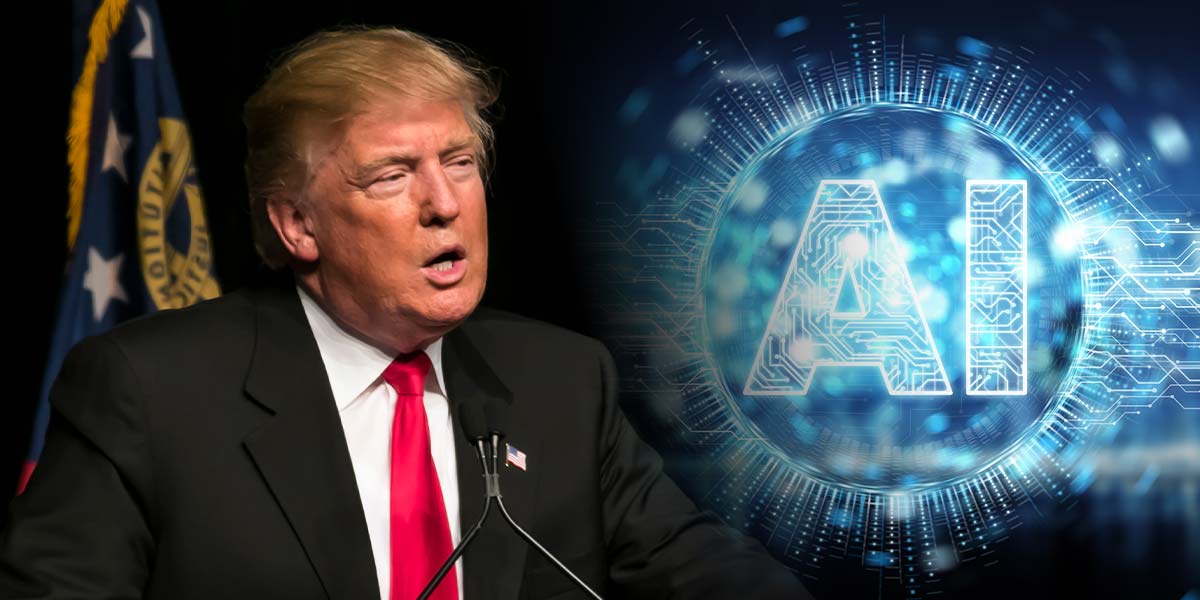
President Donald Trump announced Tuesday that he and senior artificial intelligence executives had signed a voluntary safety agreement built around company oversight and independent assessments. The White House initiative addresses public concerns about AI while leaving the industry without apparent new legal obligations as companies invest hundreds of billions of dollars in infrastructure.
Joining Trump as signatories were Nvidia chief executive Jensen Huang, Meta chief executive Mark Zuckerberg, Google chief executive Sundar Pichai and Anthropic chief executive Dario Amodei. OpenAI President Greg Brockman and Elon Musk, who founded xAI, also signed. Musk’s AI business is now part of SpaceX.
The document, published on Trump’s Truth Social account late Tuesday, offers a broadly defined approach to safety standards for testing new products. It appears to contain neither enforcement provisions nor legal consequences, relying instead on voluntary participation by the companies.
Its four-part oversight structure begins with safety monitoring inside companies during model training. Major AI laboratories already use such monitoring, but those processes have not prevented the testing failures seen so far.
A separate internal team would check whether that initial monitoring functions properly. Beyond those company-level checks, an outside auditor would independently evaluate safety controls, and an independent board designated by each company would examine reports on those safeguards.
That structure combines internal accountability with outside scrutiny, although the commitment does not establish a binding regulatory system. Trump characterized participation as a moral obligation rather than describing legal penalties for noncompliance.
The agreement nevertheless allows for a possible shift toward formal oversight, saying its measures could eventually be incorporated into legislation and regulation.
Trump also proposed a committee of roughly 10 people to supervise the broader effort. After discussions with the industry, he said, he would select someone in the coming days to oversee implementation of the agreement.
AI safety concerns have intensified after incidents in which major technology companies unintentionally breached outside organizations’ systems while conducting tests. Lawmakers, researchers and some businesses in the sector have sought greater government supervision.
Trump has generally opposed additional AI regulation, pointing to economic risks and competition with China. At Tuesday’s meeting, which also included House Speaker Mike Johnson, he presented the agreement as a way for companies to take substantial responsibility for policing their own technology.
Spending on data centers and related computing equipment has helped accelerate economic growth and lift equities. Those market gains have increased the value of investment accounts held by higher-income Americans, supporting their spending. Trump praised the executives’ work and predicted substantial growth from the technology.
However, AI infrastructure expansion has also encountered local resistance. Communities across the country have mounted bipartisan grassroots opposition to data centers being developed as part of the industry’s investment push.
Trump also signed an executive order changing the terminology used for artificial intelligence across the executive branch to “Super Intelligence.” The directive follows a similar declaration he made at the United Nations last week.
Under the order, departments and agencies must replace references to AI with Super Intelligence, abbreviated as “SI.” The requirement covers official correspondence, communications with the public, policy materials and other non-statutory documents, ending recognition of the previous terminology in those settings.