
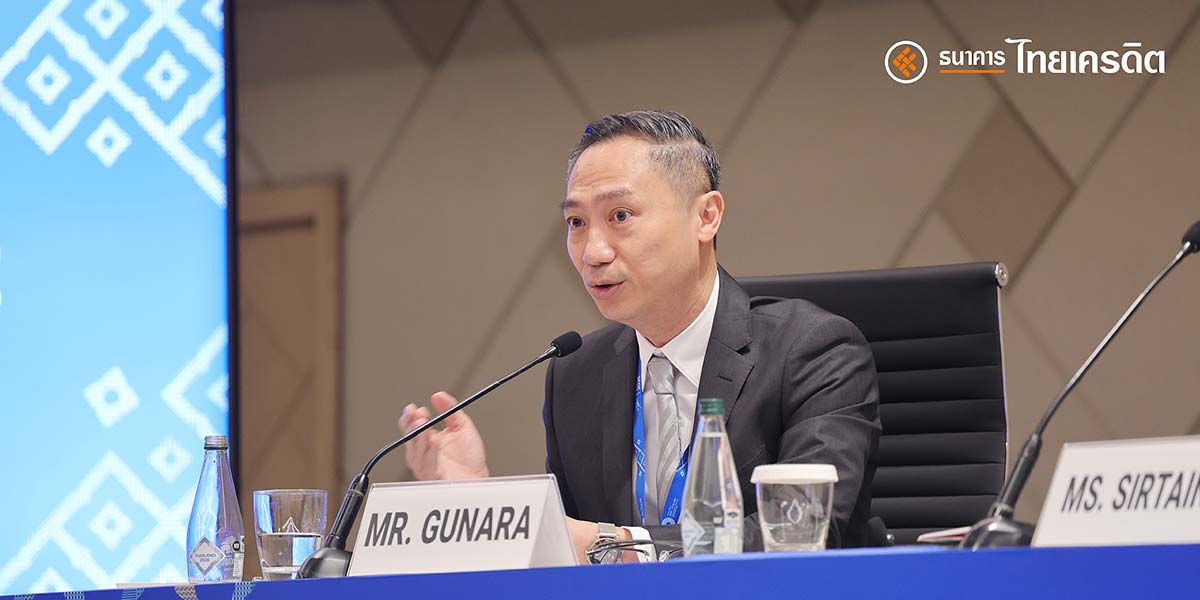
Thai Credit Bank Public Company Limited (SET: CREDIT), led by Chief Executive Officer Mr. Roy Agustinus Gunara, was honored to share CREDIT’s business vision on the international panel alongside global experts from the International Monetary Fund (IMF) and the World Bank Group during the 2026 IMF-World Bank Group Annual Meetings, on October 13 in Bangkok. Mr. Roy presented the Bank’s successful model as the only commercial bank in Thailand that is exclusively dedicated to serving micro-entrepreneurs and Micro SMEs, which has enabled the bank to be able capture 30–40% of market share in this segment. Emphasizing the Bank’s mission to remove financial barriers and foster sustainable financial inclusion to capital for grassroots entrepreneurs across the country.
Mr. Roy Agustinus Gunara, Chief Executive Officer of Thai Credit Bank PCL, Stated that: “Thai Credit Bank started as a small bank with an overall market share of just around 1%, but with a firm commitment to bridge the financial gap for the underserved population who primarily depended on informal loans. Through our unique business model, we have proven that Micro Finance and Micro SME banking can be sustainable, profitable, and continuously growing under the principles of Responsible Lending and aligning the bank’s goals with customer success.”
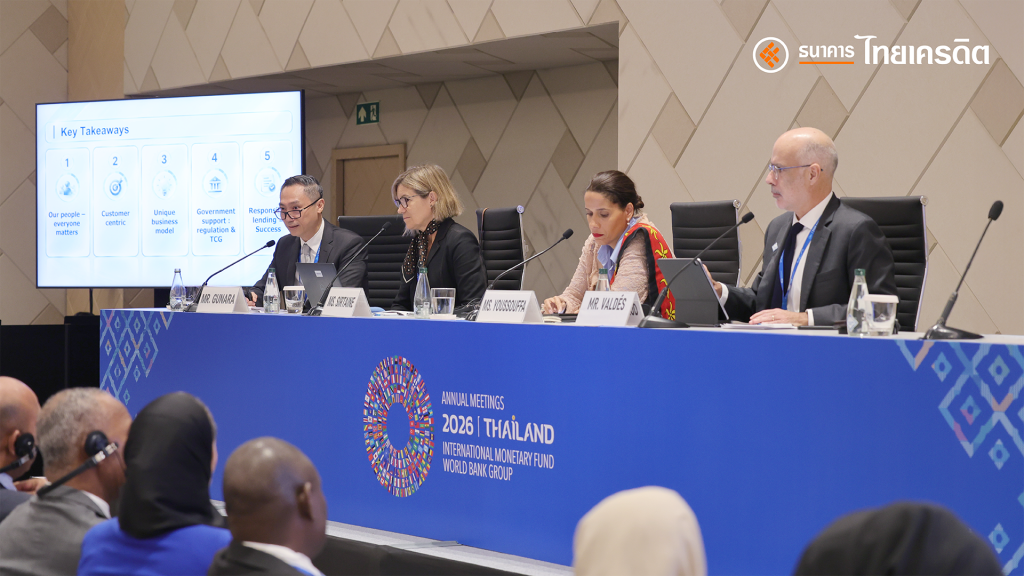
During the panel, Thai Credit Bank outlined 4 key pillars driving its Micro Finance and Micro SMEs operations:
- Integrating a Human Touch with Digital Technology: While technology and government digital infrastructure provide greater visibility into transaction cash flows, the core of serving Micro SMEs banking lies in “Building relationships and deeply understanding the customers”. Thai Credit has structured its operations to ensure direct engagement with clients through its branch network, specifically designed for micro-lending. Accordingly, the Bank also leverages technology for back-office management to reduce costs and maximize operational efficiency.
- Strengthening Financial Resilience through Financial Edutainment: For many small-scale merchants, the primary challenge is not a lack of hard work or sales skills, but rather the need for better understanding on financial management. To address this, the bank launched the “Tang To Know-how” program, which imparts financial literacy in an accessible and engaging format. Currently, there are more than 380,000 individuals from both existing clients and the public that have joined the program. The curriculum covers topics such as accounting, recognizing cyber threats and scams (with a focus on the elderly), and utilizing AI to create promotional materials for one’s own business.
- Inclusion of High-Impact Segment, specifically for Women and Individuals with No Credit History: Currently, 70% of the Bank’s loan portfolio consists of female entrepreneurs, demonstrates strong financial discipline and high capacity for debt repayment. Furthermore, the Bank plays a vital role in creating financial opportunities for individuals with no prior record in the credit bureau. At the beginning of the program, this group was accounted for as much as 70–80% of the total and now, they currently represent approximately 27% of all the loan applicants.
- Driving force through Collaboration and Government Support Policies: Key catalysts enabling the Bank to expand its lending services comprehensively is the Bank of Thailand’s regulatory framework for “Nano Finance,” combining with the credit guarantee mechanism provided by the Thai Credit Guarantee Corporation (TCG). These elements are the key instruments for risk mitigation and ensure that small-scale entrepreneurs who lack of collateral can have access to formal financial capital.
Experts from the World Bank and speakers IMF highlighted Thailand and Thai Credit Bank as the successful example of bridging the financial gap for Micro-entrepreneurs and Micro SMEs. They noted that the integration of digital technology and payment infrastructure, combined with close public-private collaboration, leveraging data alongside a deep, localized understanding of specific contexts serves as a vital model for driving grassroots economies and fostering inclusive growth in emerging markets worldwide.
“Thai Credit Bank remains steadfast in its corporate culture, which centers on “helping and improving people’s quality of life.” The bank continues to promote equitable access to financial services for micro-entrepreneurs, empowering them to grow their businesses and achieve sustainable, long-term self-reliance, a commitment that aligns with the bank’s core business philosophy: ‘Everyone Matters’” Mr. Roy concluded.