

Prime Minister Anutin Charnvirakul has outlined a four-pillar strategy to reinvent Thailand’s economy, focusing on energy security, new growth industries, workforce development and political stability, as the government seeks to attract investment in semiconductors, artificial intelligence (AI) and data centers.
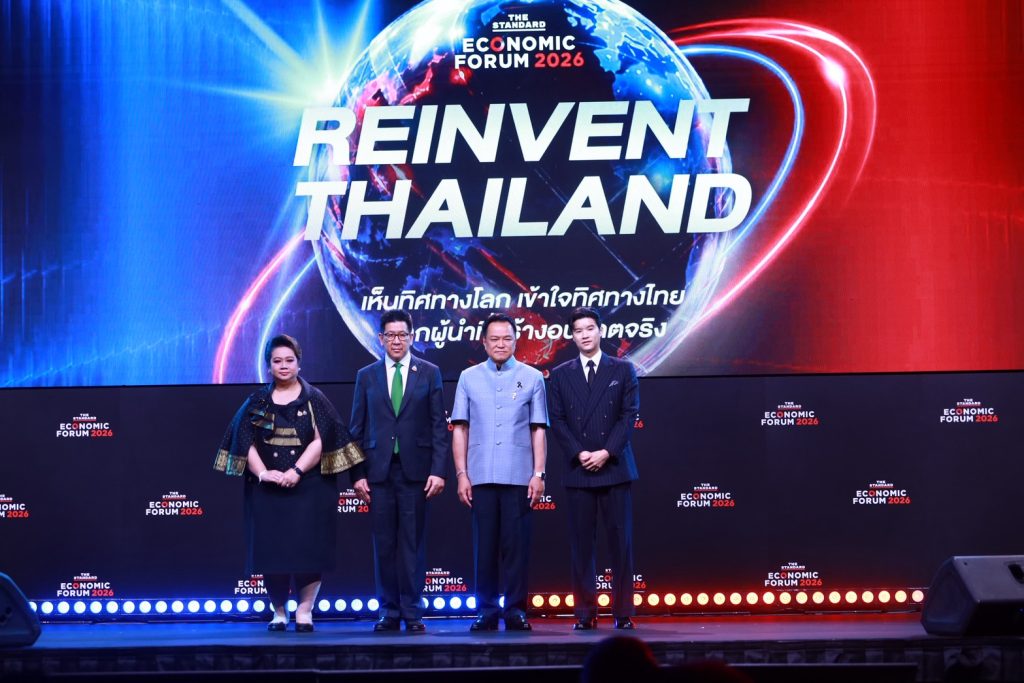
Speaking at THE STANDARD ECONOMIC FORUM 2026, held under the theme “Reinvent Thailand,” Anutin said the strategy was not about rebuilding the country from scratch but rather strengthening existing advantages and resources to improve Thailand’s competitiveness amid growing global uncertainty.
The strategy comprises Reinvent Energy, Reinvent Economy, Reinvent People and Reinvent Politics, aimed at building a more resilient economic foundation while positioning Thailand to capture opportunities from shifting global supply chains and technological transformation.
Nakarin Wanakijpaibul, CEO of The Standard, said Thailand had regained international attention following its successful hosting of the IMF-World Bank Annual Meetings, which attracted more than 18,000 participants.
“Thailand is back,” he said, describing an opportunity for the country to become a “Trusted Connector” linking capital, technology and economic opportunities, while building long-term “Trusted Partnerships.”
However, Nakarin stressed that rebuilding international confidence must go hand in hand with earning “Trust at Home,” emphasizing that economic policies must translate into tangible improvements in employment, incomes and people’s quality of life.
Under the Reinvent Economy agenda, Anutin highlighted modern agriculture, food technology, defense industries, semiconductors and data centers as key growth sectors, supported by infrastructure investment and a more business-friendly regulatory environment.
The government is also accelerating its Thailand Fast Pass initiative, assigning the Board of Investment (BOI) a central role in coordinating with government agencies to remove regulatory bottlenecks and speed up investment approvals. Anutin said investors should not have to navigate multiple agencies independently, with the BOI expected to resolve obstacles on behalf of the government.
On energy, the prime minister highlighted the need to diversify supply sources and strengthen domestic security, while promoting household solar power to expand access to clean energy and give consumers greater control over electricity costs.
For workforce development, the government plans to strengthen AI-related skills through cooperation with educational institutions and employers. Anutin also called on foreign technology companies to create local jobs and transfer knowledge and technology to Thai workers.
He said Thailand’s pursuit of self-reliance was consistent with the Sufficiency Economy Philosophy, which emphasizes resilience and prudent development rather than isolation from global markets.
The final pillar, Reinvent Politics, calls for a more constructive political environment to ensure policy continuity and investor confidence. Anutin argued that political stability and cooperation among government agencies were essential to implementing long-term reforms, while stressing that constructive criticism and parliamentary scrutiny remained important to democracy.
He concluded that reinventing Thailand required cooperation among the government, private sector, educational institutions and the public to build sustainable growth and improve the country’s long-term competitiveness.