
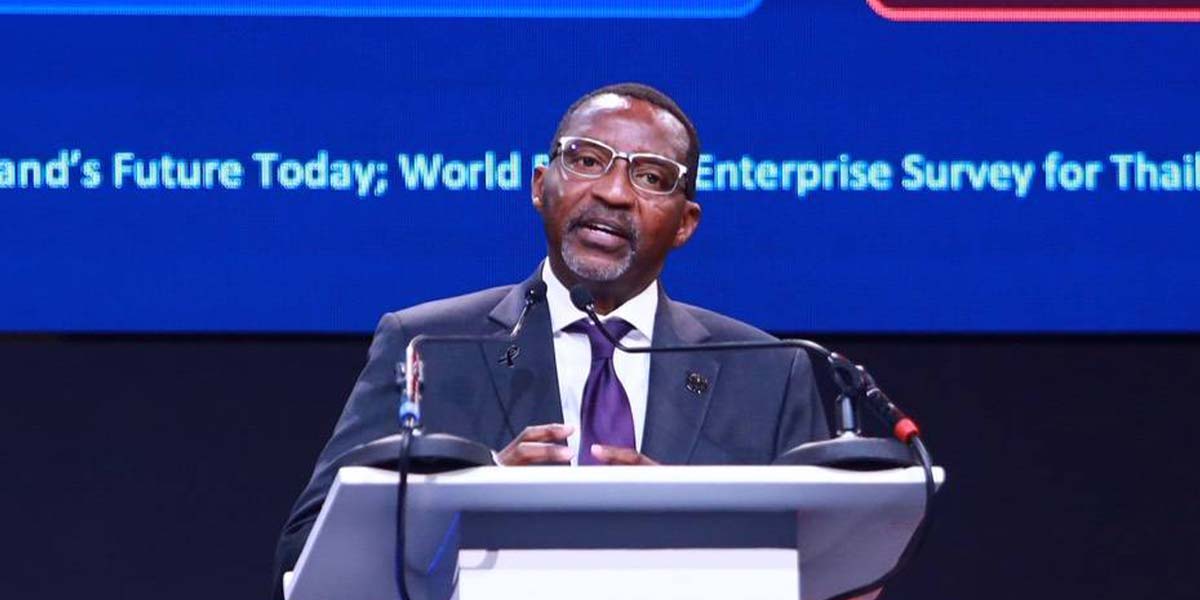
Thailand must reignite its economic productivity, expand practical artificial intelligence adoption, and broaden small-business financing if it hopes to achieve high-income status by 2037, according to Stephen N. Ndegwa, the World Bank Division Director for Thailand and Myanmar.
Speaking at The Standard Economic Forum 2026, Ndegwa warned that Thailand’s per capita income growth has slowed to 2.2% annually since the pandemic, down from 8% during the 1990s. To hit its 5.4% annual growth target for high-income status by 2037, Thailand must reverse this slump; at its current pace, the nation will not cross the high-income threshold until 2067.
Ndegwa emphasized that restoring productivity is critical as Thailand contends with a shrinking workforce. Comparing economic strategy to a football team’s tactical formation, he noted that investment currently stands at 22% of GDP, lagging the 30% average seen in upper-middle-income peers. While Thailand has successfully attracted major data centers, Ndegwa argued that the largest economic gains will come from “small AI”—practical, affordable tools for everyday firms and workers. Currently, only 12% of Thai firms use AI compared to 43% in the US, with adoption among small Thai businesses standing at just 7%. Contrary to fears of job displacement, World Bank research indicates that Thai firms adopting AI report increased employment alongside higher productivity.
Unlocking the potential of micro, small, and medium enterprises (MSMEs) forms another core pillar of the World Bank’s strategy. Small businesses generate the majority of employment in Thailand, yet only 40% of small firms hold bank loans, compared to 60% of medium-sized companies. Furthermore, micro-enterprises comprise 81% of Thai manufacturers but account for only 16% of manufacturing jobs. To accelerate business dynamism, Ndegwa urged policymakers to complete regulatory reforms, level the playing field between private companies and state-owned enterprises, and leverage digital transaction data to expand credit access for firms lacking traditional collateral.
Finally, Ndegwa highlighted the need to deepen trade integration across ASEAN’s market of over 700 million people. Intra-ASEAN trade currently accounts for just 20% of the region’s total trade, far behind the two-thirds benchmark in the European Union. Integrating more small businesses into export supply chains offers significant upside, as exporting firms pay at least 10% higher wages and demonstrate greater productivity. Ndegwa concluded that with clear alignment between the public and private sectors, Thailand possesses the resilient fundamentals required to reach its high-income goals within the next 12 years.