
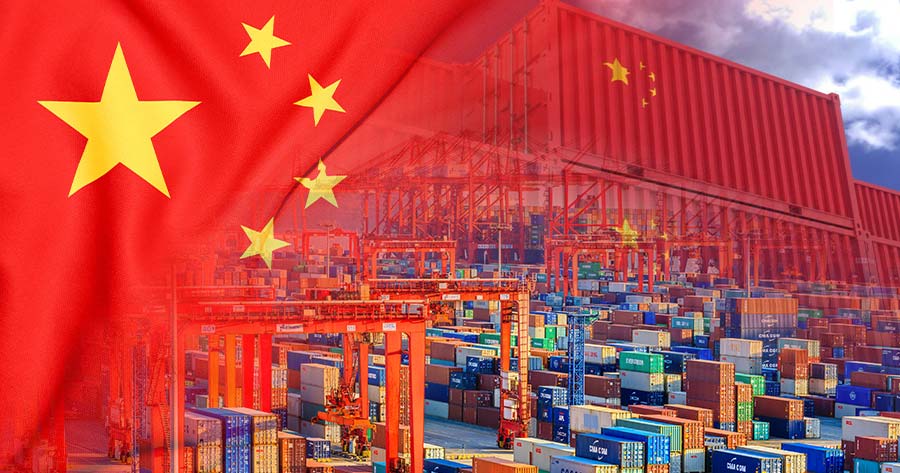
China’s trade surplus exceeded $1 trillion in the first ten months of 2026, propelled by robust global demand for artificial intelligence hardware and related technology exports. The record surplus coincides with a sharp rise in both exports and imports, despite enduring weakness in domestic consumption and challenges within the property sector.
Recent customs data show Chinese exports increased by 35.2% in October compared to the previous year—a figure that, while slightly below the 36.3% rise in September, surpassed analysts’ expectations. Imports also registered a notable gain of 41.6% year-over-year, reflecting the strongest monthly pace since 2021, driven chiefly by technology goods, essential minerals, and energy resources.
The export boom, fueled substantially by shipments of semiconductors and other AI-related components, has helped offset subdued consumer activity at home. High-tech product exports surged by nearly 48% in value over the period, while semiconductor exports more than doubled.
On the import side, high-tech purchases climbed 72% in October from a year earlier, while imports of crude oil, LNG, and coal saw substantial value increases of 40-60%.
China’s monthly trade surplus reached $105.3 billion in October, its lowest level since April, though the cumulative surplus for the year so far is already ahead of last year’s pace, having crossed $1 trillion a month earlier than in 2025. This has intensified calls from major trading partners for Beijing to enact measures aimed at strengthening domestic demand and reducing reliance on external markets.
Trade dynamics remain a focal point ahead of the Asia-Pacific Economic Cooperation (APEC) summit scheduled to take place in Shenzhen. Chinese President Xi Jinping and U.S. President Donald Trump are expected to meet for their third discussion of the year, with economic relations and trade issues high on the agenda.
In October, Chinese exports to the United States rose by almost 33%, while imports increased by approximately 35%, leaving the trade surplus with the world’s largest economy at $32.7 billion—a slight decrease from the previous month. Meanwhile, Beijing and Washington recently agreed to extend a trade truce by two months, alongside measures such as reciprocal tariff reductions and export-control waivers for critical minerals.
On the other hand, tensions continue to build with the European Union. An agreement reached in October between China and the EU aims to limit exports of Chinese hybrid vehicles to the bloc starting December 1. Despite these planned restrictions, analysts expect their immediate impact on export volumes to be limited.
China’s export reliance has provided policymakers with room to maintain moderate economic support, though retail sales and household spending have remained sluggish. According to recent surveys and purchasing managers’ index data, factory and order activity slowed in October, with some analysts anticipating that export growth may decelerate as the AI investment cycle matures.
Nevertheless, most experts expect demand for China’s AI and technology goods to remain high in the coming months, even amid volatility in global equity markets.
With the global artificial intelligence buildout continuing, China’s export momentum is likely to persist in the short term. However, external pressures and the evolution of trade policies with major partners will shape outcomes for the months ahead.