Shares of B.Grimm Power Public Company Limited (SET: BGRIM) surged 5.5% to THB 21.80 at the close of the morning session on November 19, 2026, even as the SET Index fell 0.70% to 1,461.81 points. The rally was driven by the start of commercial operation at the 364.8 MW Nakwol offshore wind farm in South Korea, together with a proposed increase in industrial electricity tariffs in Thailand.
Nakwol passed its final energization test on November 17 and began selling power to the grid at full capacity on November 18. Its fixed combined tariff of KRW 307.144 per kWh, about THB 7.79, is set under a 20-year REC agreement with KOSPO, a KEPCO subsidiary. That term starts after the final Korea Power Exchange inspection in December, but BGRIM can recognize revenue in the meantime.
Nakwol matters because it marks the payoff of a long-running expansion in Korea. BGRIM’s Korean business began with a 49.9% stake in KOPOS and its 75.6 MW inland wind farm in 2021. The company then committed to two offshore wind plants, Nakwol and Hanbit, with a total capacity of 740 MW and grid connection agreements from KEPCO.
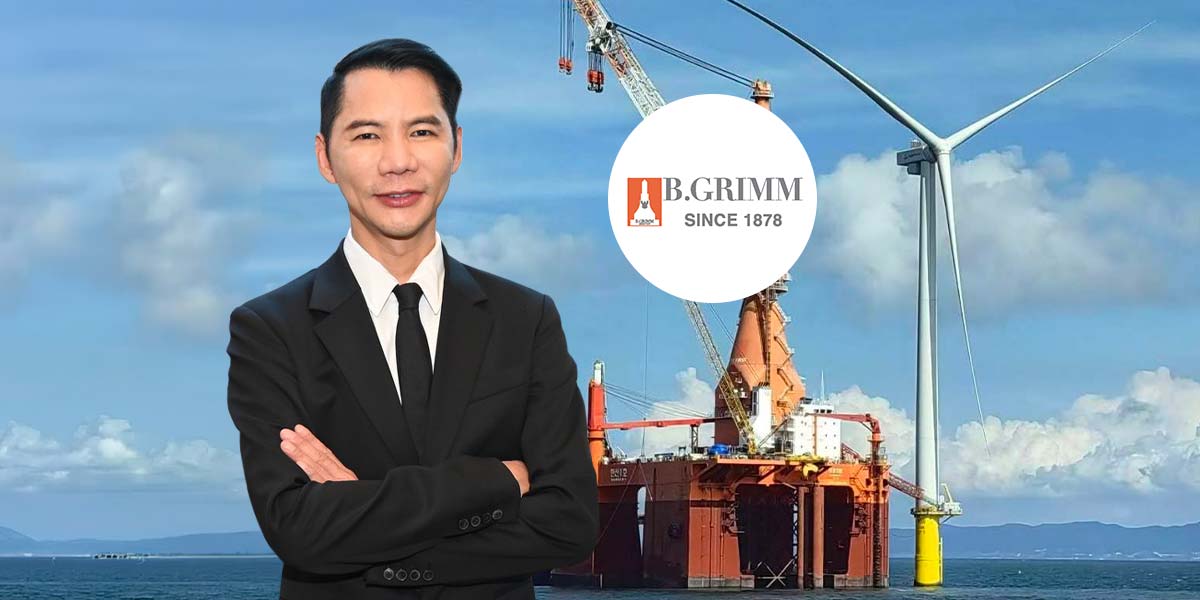
BGRIM’s overseas push, particularly in South Korea, has been spearheaded by Mr. Peradach Patanachan, President – Renewable Energy Business. He plays a vital role in driving the company’s renewable business at home and abroad, notably in pioneering large-scale projects in key markets. He is also listed as co-CEO of B.Grimm Power Korea, the subsidiary that holds the company’s Korean investments,
Nakwol is now the largest offshore wind project in Korea to reach full commercial operation. Its capacity is about 3.6% more than the roughly 352 MW of all other operating offshore wind projects combined.
The milestone also reflects how much trust Korea has placed in the company. BGRIM was recognized by the South Korean government with an award at Investment Korea 2023. BGRIM is the first foreign private company to be entrusted by the Korean government and private sector to develop renewable energy. That trust has extended to chairman Dr. Harald Link personally. He was honored by the Korean National Olympic Committee and the Ministry of Culture, Sports and Tourism for his contributions to the Korea Equestrian Federation. He is the first non-Korean citizen to receive approval for this honor.
The 340 MW Hanbit project signed 20-year REC agreements with three offtakers on November 2 at a similar tariff of KRW 307.169 per kWh, and it targets commercial operation in December 2029. BGRIM will also redeem its Unison convertible bonds early for about KRW 33.95 billion. It will then invest KRW 60 billion for an 80% stake in Unison Energy, which plans to put KRW 75 billion into convertible bonds of the Nakwol and Hanbit operators.
On the domestic side, the Energy Regulatory Commission (ERC) is consulting on the fuel tariff (Ft) for January–April 2027, with public hearings from November 18 to 24. Under the ERC’s first option, medium-to-large businesses would pay an Ft of 103.34 satang per unit, an average tariff of THB 4.73, while households and small businesses would stay at the current 16.23 satang. The second option would set a single Ft of 132.48 satang, lifting the average tariff to THB 5.02 per unit.
Final rates await the hearing, but either option would raise the grid price paid by industrial users. Small power producers (SPPs) such as BGRIM, which sell electricity directly to industrial customers, could see the benchmark for their own pricing rise, which would support revenue.