

Bangkok Bank hosted the “Indonesia Economic Outlook 2027” seminar on Tuesday, gathering regional financial leaders and investors to examine Southeast Asia’s largest economy amidst global monetary tightening, currency volatility, and structural digital transformation. Keynote speaker Mr. Josua Pardede, Chief Economist at Permata Bank, presented an in-depth macro outlook highlighting resilient domestic growth balanced against significant external headwind risks.
Indonesia’s economic outlook remains underpinned by its massive domestic market of 280 million people and favorable demographic structure, providing a layer of insulation against softening global growth. The Permata Institute for Economic Research (PIER) projects Indonesia’s real GDP growth at 5.25% in 2027 (and 5.36% in 2026), establishing a cautious baseline compared to the government’s ambitious 6.0% GDP growth target outlined in the approved IDR 4,106.3 trillion State Budget.

While the draft 2027 budget maintains a fiscal deficit target of 2.40% of GDP, sovereign credit rating outlooks reflect diverging institutional views: Moody’s (Baa2) and Fitch (BBB) recently revised their outlooks to Negative, citing fiscal predictability and governance concerns, whereas S&P affirmed a Stable outlook at BBB.
Elevated US bond yields and volatile global oil prices continue to challenge corporate cost structures and exchange rate stability. To defend the currency and control imported inflation, Bank Indonesia (BI) raised its benchmark BI-Rate by 25 basis points to 6.00% in November 2026, bringing cumulative rate hikes to 125 bps.
PIER forecasts that BI may implement an additional 50 bps in rate hikes, bringing the policy rate to 6.50% by end-2027. Concurrently, the Rupiah faces ongoing depreciation pressure, with PIER projecting the exchange rate at IDR 18,340 per USD at end-2026 and potentially weakening to IDR 19,528 per USD in 2027 under capital outflow risks due to MSCI reclassification.
MSCI Consultation and Regulatory Interventions
A major focal point during the seminar was MSCI’s October 16 proposal to reclassify Indonesia’s equity market from “Emerging Market” to “Standalone Market” status, driven by persistent concerns over ownership transparency, free-float reliability, and market manipulation.
Mr. Pardede detailed how Indonesia’s Financial Services Authority (OJK) has aggressively responded by introducing reform measures. Key actions include establishing a 15% minimum free-float requirement, expanding ultimate beneficial ownership disclosures, and enforcing IDR 2.23 trillion in administrative penalties on market manipulators.
Mr. Pardede clarified that while the direction of Indonesia’s recent regulatory reforms is encouraging, current implementation measures are “necessary but not sufficient” to guarantee preventing an MSCI reclassification. He noted that MSCI will judge actual, observable market outcomes rather than regulatory announcements alone.
Although OJK and Indonesia Stock Exchange (IDX) have taken active steps, he stated that evidence is not yet sufficiently convincing to confirm Indonesia will retain its Emerging Market status. Mr. Pardede emphasized that his main concern is not the willingness of Indonesian regulators to act, but whether they can demonstrate measurable and sustainable results in transparency and enforcement within the short window before MSCI’s June 2027 verdict.
Data Center Boom & Industrial Opportunities
In the real economy, Indonesia’s digital infrastructure represents one of the fastest-growing investment sectors, supported by digital economy Gross Merchandise Value (GMV) targets of USD 188 billion by 2030. Driven by data localization mandates and 5G deployment, the country’s data center pipeline reached 204 reported facilities as of September 2026, concentrated heavily in Greater Jakarta and Batam.
With government targets aiming for 3.5 GW in IT capacity by 2030 and digital economy contribution reaching 20.7% of GDP by 2045, Mr. Pardede identified prime entry points for Thai companies in power utilities, cooling technology, and connectivity infrastructure.
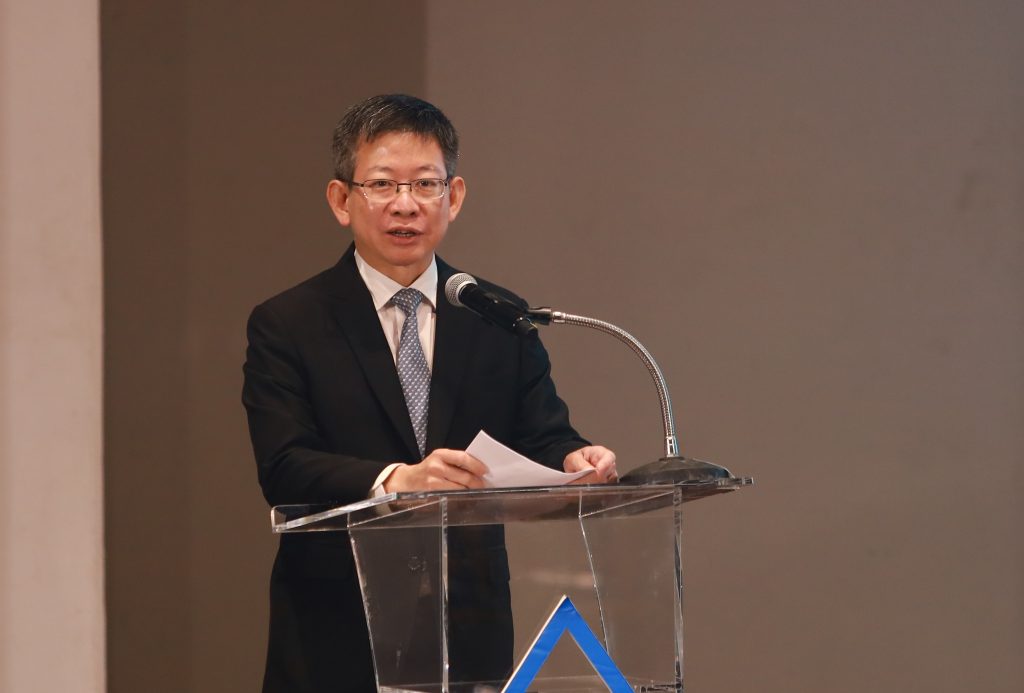
In the closing remarks, Dr. Kobsak Pootrakool, Director and Senior Executive Vice President at Bangkok Bank, emphasized that Thai corporations expanding into Indonesia should align their core capabilities with verified local demand rather than relying on top-line GDP expectations. He reaffirmed that Bangkok Bank and Permata Bank are committed to supporting cross-border investors through comprehensive trade finance, hedging, and regional banking networks to navigate macroeconomic uncertainties effectively.