The severe flooding in Southern Thailand in late November 2025 not only caused widespread damage to homes and livelihoods but also severed communication networks across many areas. Amid this crisis, True Corporation PCL (SET: TRUE)’s frontline teams continued to carry out their duties with unwavering dedication.
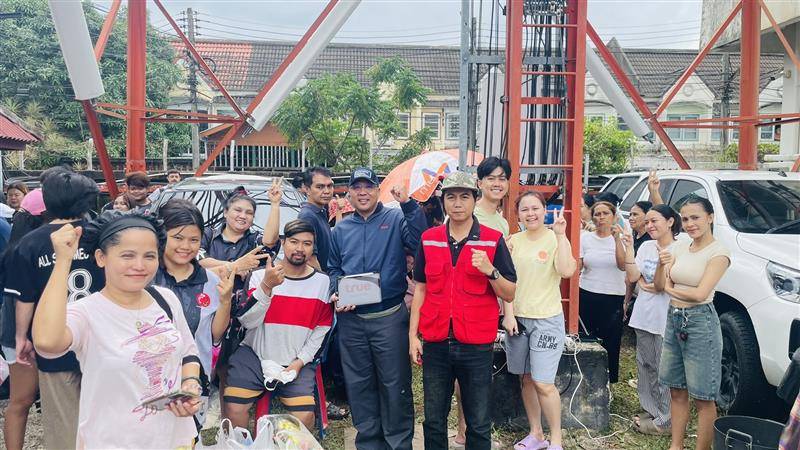
Beyond maintaining network infrastructure, they ensured that communication signals remained active, enabling people to stay connected, receive critical information, and share care and reassurance with loved ones when it mattered most.
Presented here are three stories of True’s frontline professionals who worked with heart and courage behind this vital mission: Seksak Choplod, Sanong Yumuy, and Suwikrom Keawsongmueang. Their commitment exemplifies what it truly means to serve with purpose.
In recognition of their selfless efforts, they were honored at the 5th “CP Goodness 24hrs” Awards Ceremony, as outstanding contributors to flood relief in Southern Thailand, having risked their own safety to restore communication networks during the disaster.
These stories go beyond account of work in a time of crisis. They are powerful reflections of the power of goodness driven by the hearts of employees who stand beside society, even in its most difficult moments.
Standing Firm with Heart, Even as Victim
Seksak Choplod, Head of Regional Operation overseeing True’s Southern network, was himself a flood victim in Hat Yai District. From 21 to 26 November 2025, he was trapped inside his home for six days as flood waters rose above roof level. Food supplies were scarce, electricity was cut, and communication was completely disrupted.
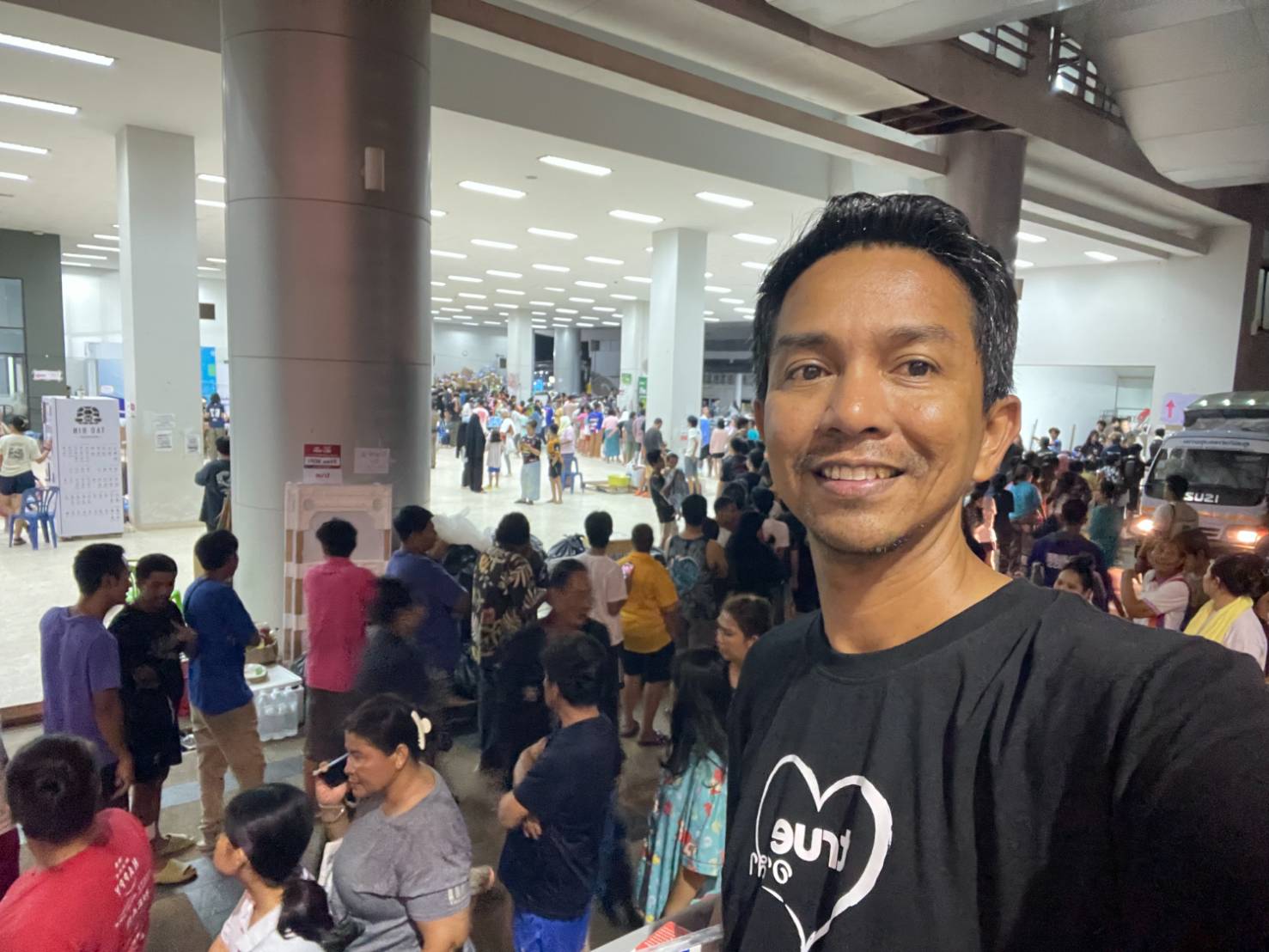
“Rain was relentless. Once the power was cut, communication stopped entirely. There was no mobile signal. I couldn’t call my relatives, seek advice, or contact anyone. That was when I truly realized how vital communication is,” Seksak recalls.
When the rain subsided, he swam from his home to the evacuation center at Prince of Songkla University, where nearly 10,000 displaced residents had gathered. “I saw how many people wanted to use their phones to contact family members. Some had no battery, some lost their phones or SIM cards, and others had SIMs but no internet access. As a True employee, I felt we had to help.”
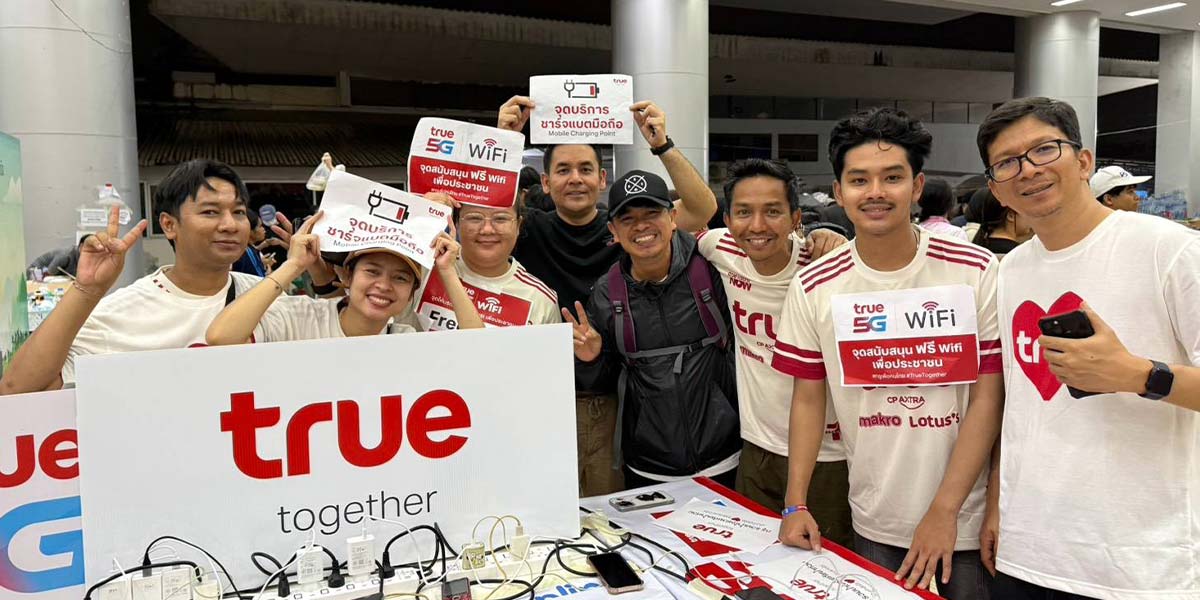
Transitioning from victim to volunteer, Seksak coordinated with True headquarters. The network team swiftly restored signal coverage, while he mobilized fellow True employees from the evacuation center and nearby areas to set up a True Service Booth, offering phone charging, free calls, free internet access, and replacement SIM cards for those who had lost theirs. This allowed evacuees to reconnect with their families once again.
“Everyone here was affected by the disaster. We understood how important it was for people to reach their loved ones. As True employees, we wanted to support the public through communication, which becomes critical in times of crisis. I am deeply grateful to every team member who came together to make this happen. Everyone truly worked from the heart,” Seksak says.
Racing Against Time to Keep Communication Alive
On another front of the crisis, True’s frontline teams worked tirelessly to protect central offices from flood damage, ensuring that communication services remained operational even when electricity had to be cut for safety reasons. At that time, many central offices relied solely on backup generators.
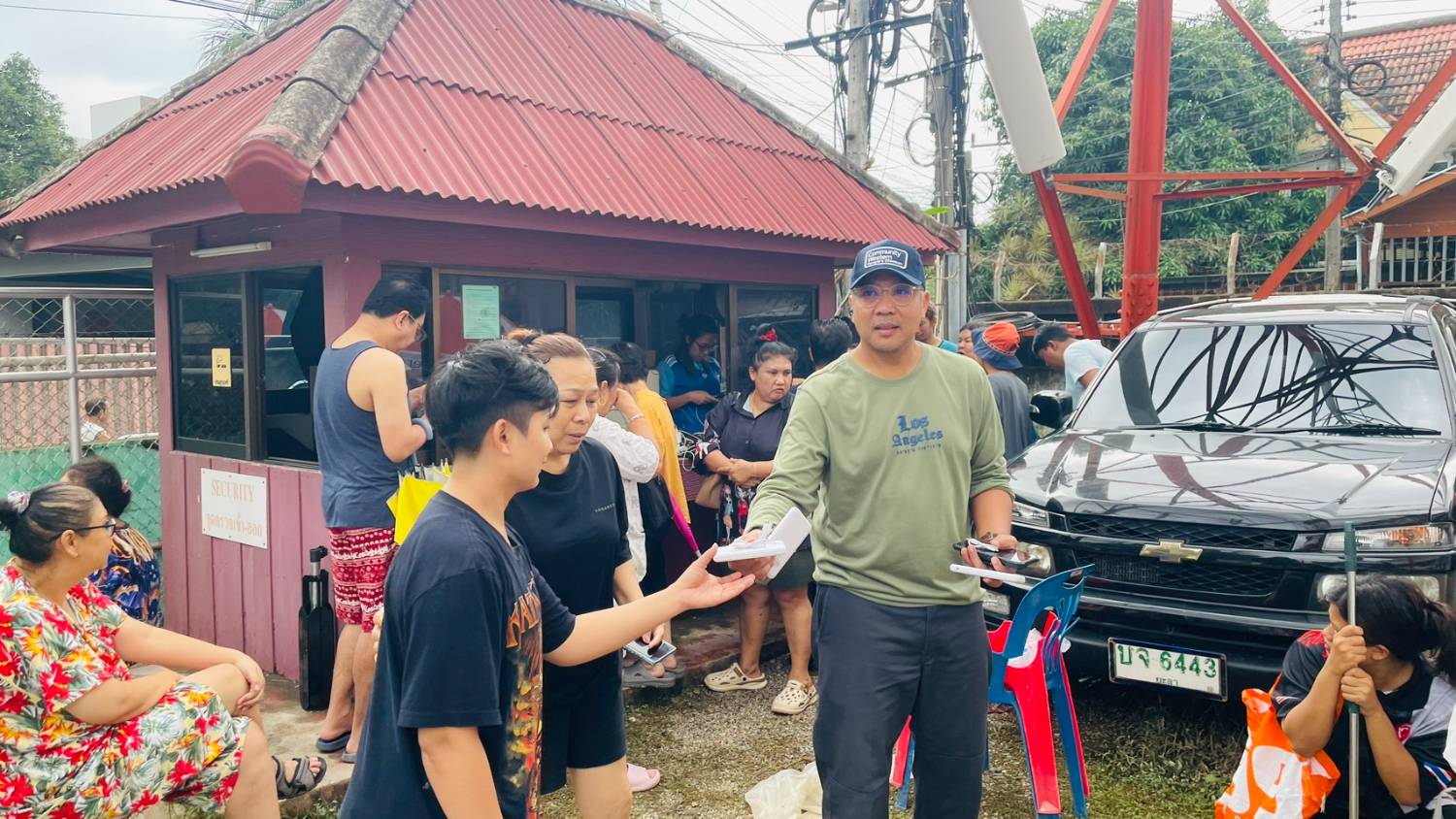
Sanong Yumuy, Head of Regional Network Rollout and Operation, identified a critical risk when floodwater rose so high that access to affected areas became impossible: generator fuel was running dangerously low. If the generators stopped, communication services would cease immediately.
“The most critical moment was on 25 November, when water levels surged, electricity was cut, and our generators were running out of fuel. We received fuel support from the military but transporting it was extremely difficult due to continuously rising water levels,” Sanong explains.
Facing severe time and access constraints, Sanong and his team made an on-the-spot decision. They siphoned fuel from a secondary generator and from remaining reserves in a pickup truck parked near the site, transferring it to the main generator to keep the system running.
“My team and I worked together with full commitment to ensure the central office could continue operating, so people in the area would still have mobile and internet access. It is a source of great pride for all of us,” he says.
Protecting Signals and Saving Lives Amid the Floods
Delivering fuel to central offices became one of the most challenging missions during the flood crisis. True’s frontline teams explored every possible way to complete this task.
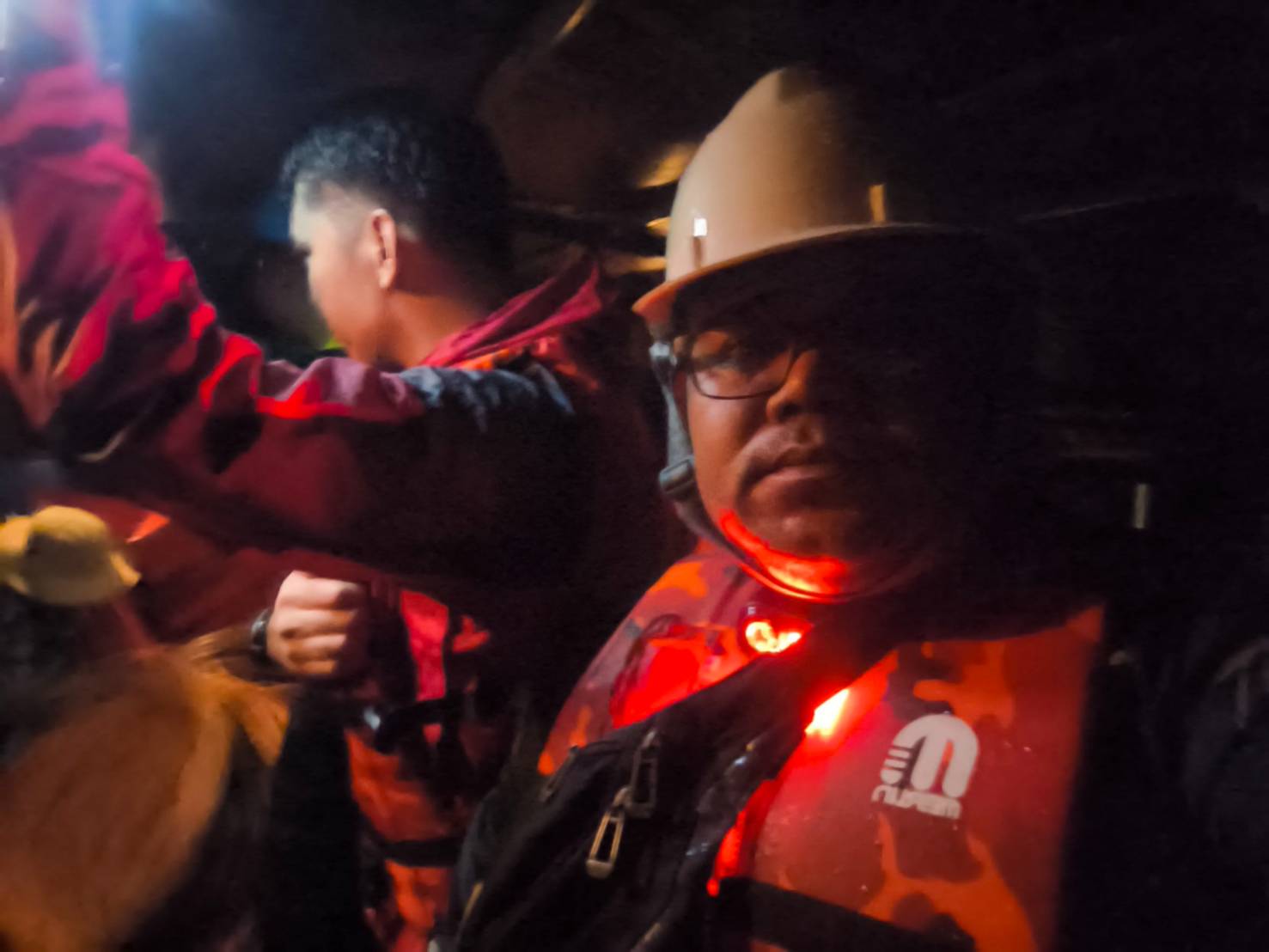
Suwikrom Keawsongmueang, a Wire & Wireless engineer working on the front line, describes the situation:
“We were informed that a central office was affected by a power outage due to heavy rain and rapidly rising water levels. Fuel reserves were reaching a critical point, while access routes were becoming increasingly difficult. We had to coordinate with rescue units to transport both personnel and fuel to the site.”
What was expected to be an accessible route turned into a maze of submerged vehicles, collapsed walls, and debris hidden beneath fast-flowing water. The journey was fraught with danger, and a small boat nearly capsized. Even then, the fuel delivered during the first attempt was insufficient.
The team made several more attempts to refuel the generators. Later that night, they received support from 42ⁿᵈ Military District, who deployed flat-bottom boats and high-clearance vehicles. However, the mission became even more challenging in darkness, with no lighting to guide the way.
During the operation, Suwikrom encountered flood victims stranded in the rushing water and immediately decided to help.
“Along the route, we found two elderly people floating in the water and two others trapped on a rooftop. We rescued them first, then assisted more than 20 people to reach the Prince of Songkla University evacuation center before returning to continue our mission,” he recounts.
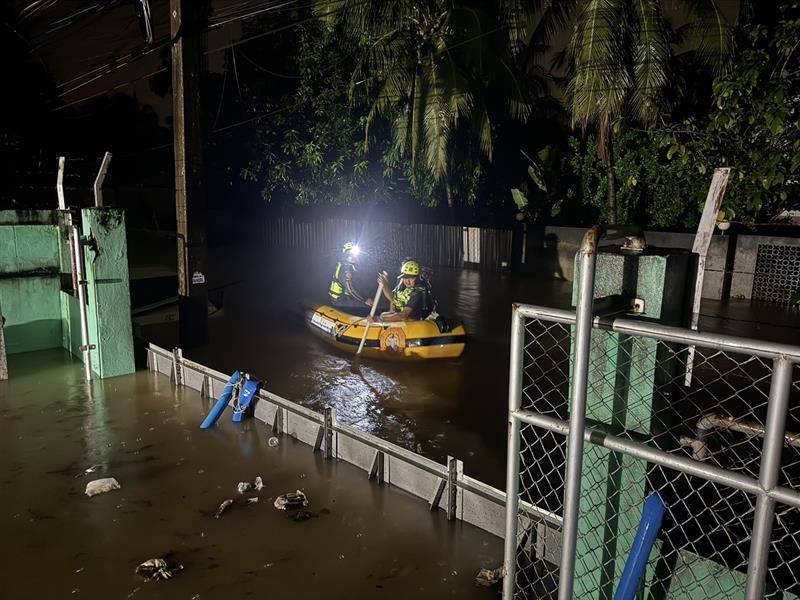
Working against time, rising water levels, and dwindling generator fuel, the team shared a single goal: to keep communication networks across seven southern provinces connected.
“I kept thinking about how many lives were waiting for hope, how many calls were waiting to reach someone, how many families were desperate to know whether their loved ones were safe. My team and I were just one small cog, helping to keep everyone’s care and concern connected.”
In the end, the team successfully secured the central office. Yet their work did not stop there. They continued traveling to other sites to support affected communities.
“Once our central office was safe and fully operational, we moved on to restore other sites, opening services so people could charge their phones using our vehicles. Hearing them tell someone on the other end of the line, ‘I’m safe now,’ made all the exhaustion disappear instantly,” Suwikrom concludes.