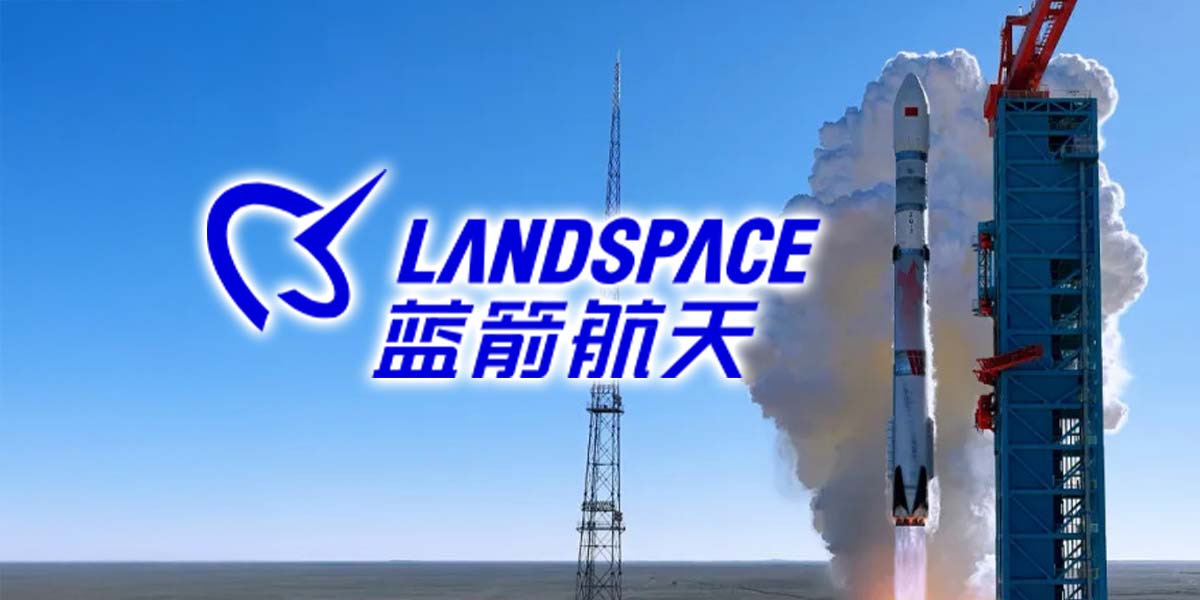
LandSpace, a Beijing-based private rocket company, is accelerating its ambitions to become a major player in the global space sector, modeling its strategy closely on Elon Musk’s SpaceX.
Earlier this month, LandSpace became the first Chinese company to attempt a reusable rocket flight—a milestone that has prompted renewed industry focus as the startup contemplates an initial public offering (IPO) to finance its future ventures. The development comes as SpaceX itself considers going public.
Although LandSpace’s Zhuque-3 booster failed to complete a controlled landing during its test, the company’s aspiration to establish itself as China’s leading force in reusable rockets represents a marked break from the traditionally risk-averse approach of state-owned space enterprises in the country.
Dai Zheng, chief designer of Zhuque-3, told state broadcaster CCTV that SpaceX’s willingness to push technological boundaries and iterate quickly—even at the risk of failure—was a critical influence on his decision to leave the state-owned China Academy of Launch Vehicle Technology in 2016 to join LandSpace. Dai was motivated by the goal of offering China a homegrown, cost-effective launch capability similar to SpaceX’s reusable Falcon 9.
According to Dai, SpaceX’s emphasis on reusability and its access to deep capital reserves have given it the flexibility to absorb losses during high-risk projects like Starship, its next-generation launch vehicle. Although he noted that Beijing’s recent initiative to support commercial space companies in accessing capital markets via IPOs reflected a recognition of these new commercial pressures.
LandSpace’s embrace of a startup mindset and willingness to publicize failures is catalyzing changes within China’s broader space industry, which has traditionally avoided publicizing unsuccessful launches. In a notable shift, state media covered China’s first two failed attempts at recovering a reusable rocket, including a government-backed attempt shortly after Zhuque-3’s inaugural flight.
The company opened its engine manufacturing facility to foreign media for the first time this month, demonstrating a new level of transparency and confidence in its technology.
Export restrictions on the flow of private capital into China’s space industry were eased in 2014, spurring the emergence of startups like LandSpace. The central government is now moving to further assist these firms in tapping public markets.
Interest from overseas has also risen. In October, SpaceX founder Elon Musk acknowledged Zhuque-3’s design, commenting on social media that LandSpace’s rocket combined stainless steel and methalox (methane and liquid oxygen) elements similar to SpaceX’s Starship, but built on an architecture reminiscent of Falcon 9.
The adoption of stainless steel casings and methalox engines is aimed at lowering the considerable costs of rocket launches, but the key to cost reduction is the ability to reuse the engine-equipped first stage—a feat SpaceX only achieved in 2015, after multiple failed landings.
Following Zhuque-3’s botched December landing, when the booster failed to initiate a landing burn and crashed, LandSpace is preparing for renewed launch attempts, likely encouraged by SpaceX’s own early setbacks and eventual breakthroughs.