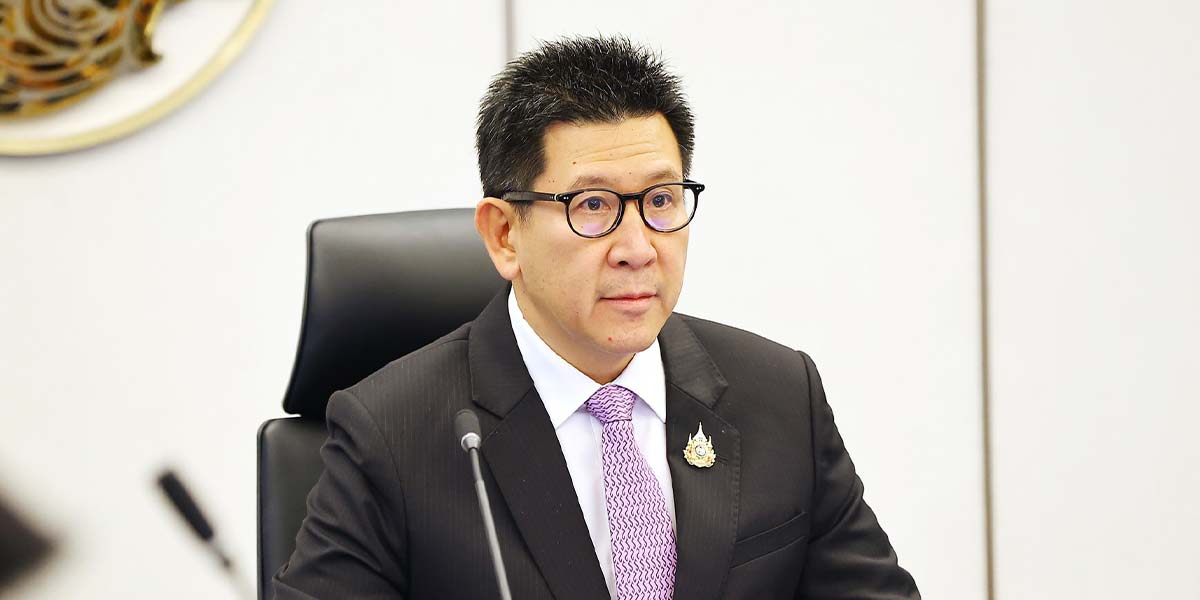
Dr. Ekniti Nitithanprapas, Deputy Prime Minister and Minister of Finance, underscored Thailand’s economic recovery and future outlook during his keynote address at the POSTTODAY THAILAND ECONOMIC DRIVES 2026 seminar.
Highlighting a significant rebound in confidence within the Thai stock market, Dr. Ekniti attributed this to the government’s clear and focused economic strategies, which prioritize targeted measures over populist policies and aim for optimal resource utilization given Thailand’s stable fiscal standing.
He emphasized the Thai stock market’s role as both a barometer of national confidence and a vital mechanism for implementing long-term economic strategy. The government plans to harness the capital market as the primary channel for funding large-scale initiatives, particularly in green infrastructure.
Projects such as expanding state enterprises’ green electricity transmission will instead utilize market-based funding instruments, opening the door for broader domestic and international investor participation, and aligning with the worldwide momentum for environmental investment.
In parallel, the government is working to establish a globally recognized carbon credit market. This new financial instrument is expected to offer further investment options and generate additional income streams for the private sector, as carbon trading is facilitated both locally and internationally.
Since assuming office on September 30, 2025, Dr. Ekniti’s main priority has been rapid economic stabilization—pulling Thailand out of the “ICU” status with sub-1% growth to a recovery rate of 2.5% under “Quick Big Win” policies. Nevertheless, he affirmed the government’s ultimate vision focuses on achieving robust, sustainable growth in the longer term through the new “Big Win” vision.
Looking forward to 2026, he identified three main economic challenges:
- Geopolitical and geo-economic uncertainties from trade barriers and tariffs imposed by global powers, driving volatility in world trade.
- Natural disasters and climate change, which strain public finances due to the costs of disaster response and recovery.
- Ongoing structural weaknesses, including declining investment (down from over 40% of GDP to about 23%), high household debt, and an aging population, which dampen private sector consumption.
To address these, Dr. Ekniti presented a “Three Arrows” strategy:
- The first arrow focuses on investment in infrastructure and green economy initiatives, such as floating solar farms and the use of financial markets to attract FDI into sectors like Smart Agriculture & Food Processing, Smart Electronics & Sensors, and Low Carbon City & Carbon Credit.
- The second arrow targets human capital, promoting AI and digital technology in education through the “Skill Bridge” project and launching the “Half-Half Plus” platform to spread digital skills nationwide.
- The third arrow aims at legislative reform, featuring an Omnibus Law to facilitate investment, streamline fast-track approvals, and introduce visa adjustments to attract skilled foreign workers.
Achieving 2.5% annual growth is only the beginning. The goal is to establish firm foundations in the next four years for inclusive growth, ultimately transforming Thailand from the “sick man of Asia” to a strong, globally competitive economy—driven in large part by dynamic capital markets, Dr. Ekniti concluded.