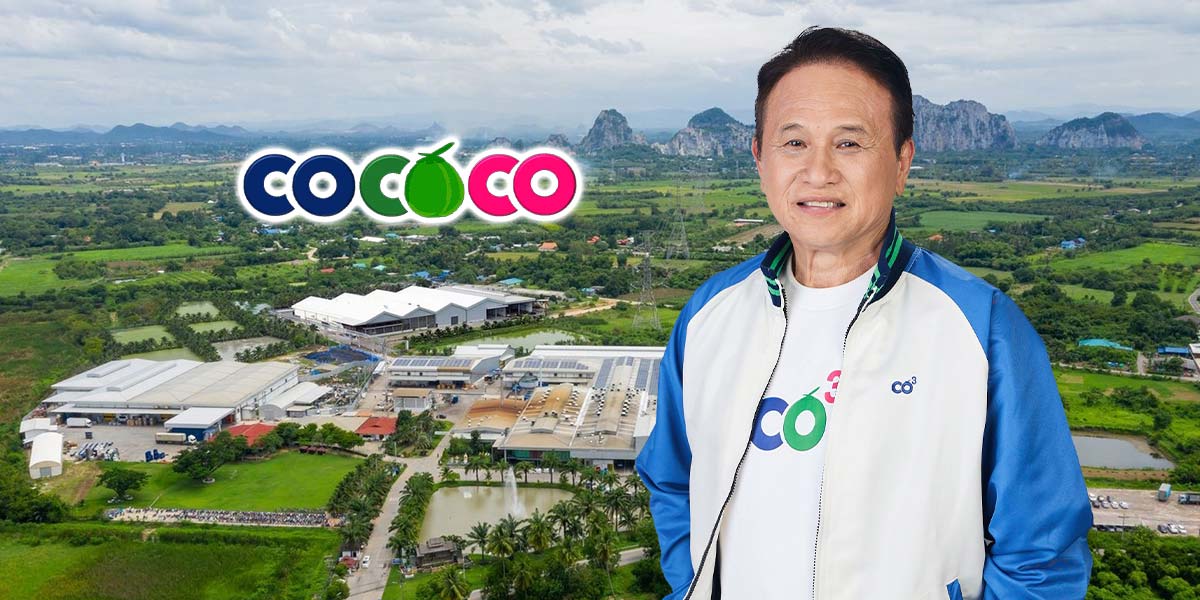
Dr. Worawat Chinpinkyo, Chief Executive Officer of Thai Coconut Public Company Limited (SET: COCOCO), expects the company’s performance in 2Q26 to improve, both compared to the same period last year and the previous quarter. At present, the company continues to see a steady stream of incoming orders.
However, despite concerns about conflicts in certain regions that could impact oil prices, product demand has not been directly affected. The company continues to export products to Middle Eastern countries, with consistent product acceptance.
COCOCO believes that the food and beverage sector has an advantage as these are essential goods for daily living. Moreover, the company’s products are priced accessibly, leading to continuous growth every year.
For the overall performance in 2026, the company continues to pursue its targets, aiming for revenue growth of 25-30%, despite uncertainties regarding freight costs or customers’ purchasing decisions. COCOCO plans to launch four to five new products in the second half of the year, a significant proportion that is expected to push operational results towards the targets.
Recently, COCOCO participated in the THAIFEX event, with exports as the main goal. The company took this opportunity to introduce newly-launched domestic products to an international audience, aiming to expand the customer base and increase sales from overseas buyers—a core strategy that the company pursues annually to reinforce its market leadership, Dr. Worawat stated.
Dr. Worawat added that in 2026, the company has intensified efforts to expand its domestic market through continuous launches of new products. In 3Q26, COCOCO plans to introduce a new product line in collaboration with the “Ichitan” brand. The company aims to increase the revenue share from domestic sales to 15% within the next three years, up from the current 7%. At the same time, the marketing budget is set at THB 40 million to reach target customers.
As for logistics costs, expenses have increased by about 5%, mainly due to rising oil prices affected by the Middle East conflict. However, the company believes it will not be negatively impacted as the depreciation of the Thai Baht offsets increased costs.