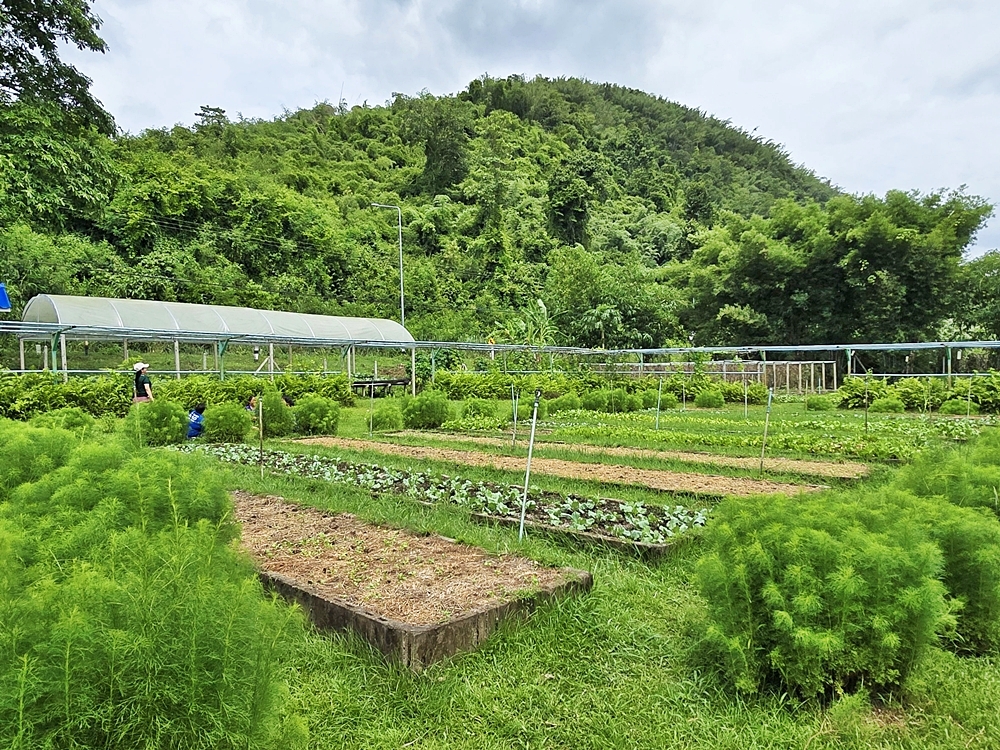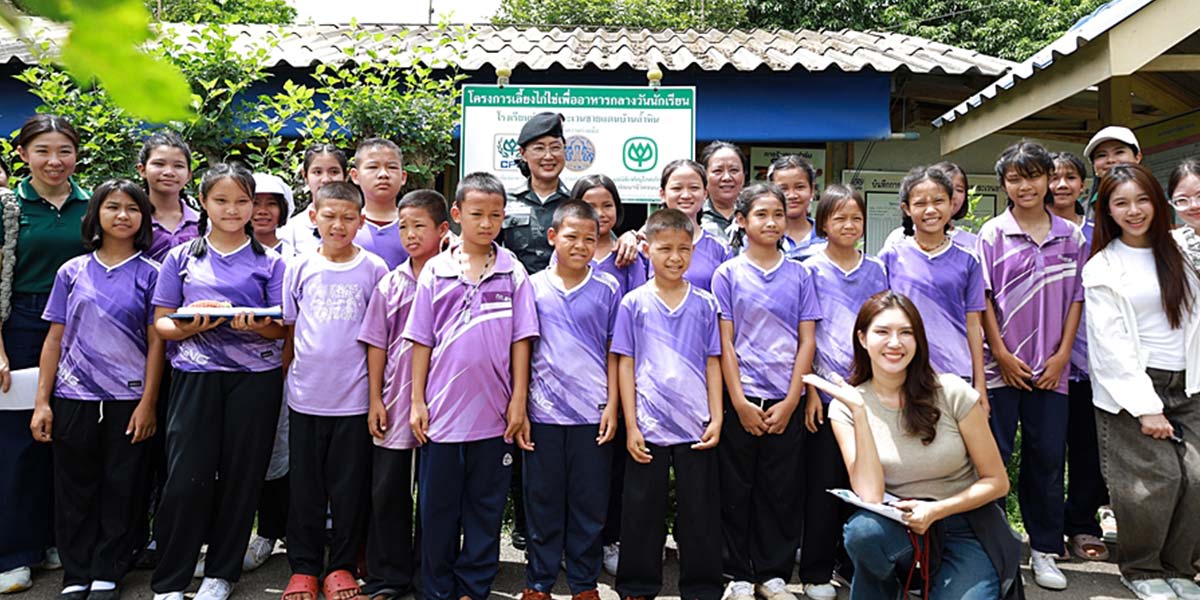
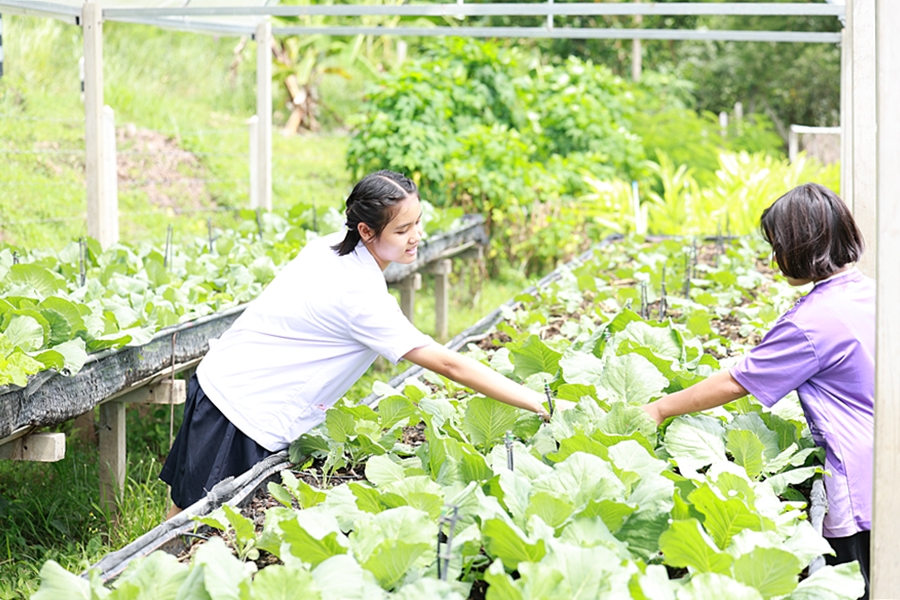
Every morning before the school bell rings, students at Ban Tham Hin Border Patrol Police School gather at the henhouse and in the school’s home-grown vegetable plots. They refill water containers, scatter feed, count and record the eggs, observe the hens, and carefully collect fresh eggs and vegetables that will become part of their lunch only a few hours later.
For children in remote communities in Thailand, reliable access to safe and nutritious food cannot be taken for granted. At Ban Tham Hin, a simple school-based food production system is helping ensure that every child has access to quality protein while teaching lessons in responsibility, sustainability, entrepreneurship, and food security.
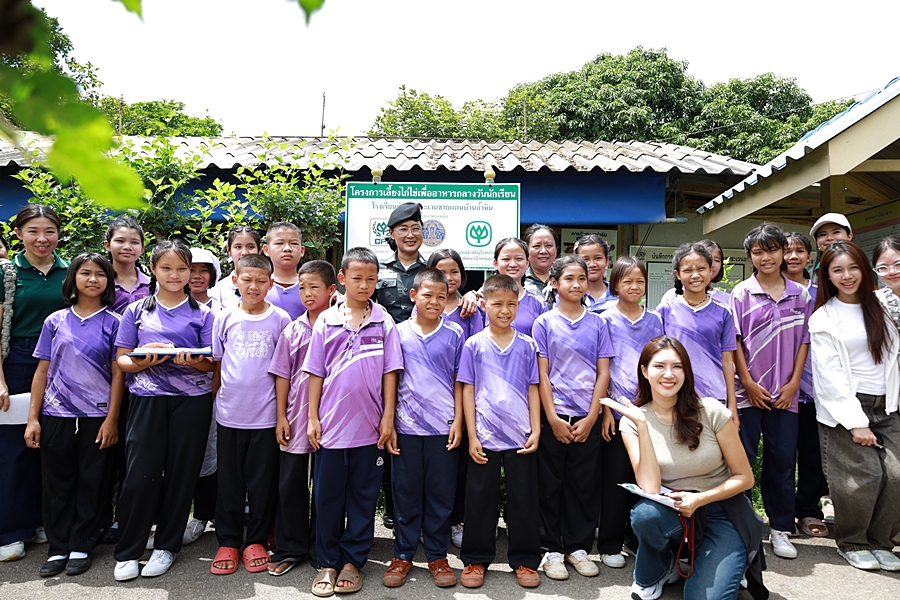
Around the world, food security is not only about producing enough food; it is also about ensuring that people have reliable access to safe, nutritious, and affordable food. In remote communities, schools can play an important role in strengthening that access by providing healthy meals while building local food systems that communities can sustain themselves.
Instead of simply donating food, Charoen Pokphand Foods Public Company Limited (CPF) and The Charoen Pokphand Foundation for Rural Life Development chose a different approach. The “Raising Layers for Students’ Lunch” project helps primary schools across Thailand establish their own reliable and sustainable sources of nutritious food. The initiative has reached 1,028 schools, particularly in rural and remote areas where access to nutritious food can be affected by distance, household income, and local supply conditions.
For 26 years, Ban Tham Hin Border Patrol Police School in Suan Phueng district, Ratchaburi province—about 170 kilometres from Bangkok and close to the Thai–Myanmar border—has demonstrated what sustainable food access can look like.
Each morning, students care for nearly 200 laying hens before heading to class. By lunchtime, the eggs collected just hours earlier have become part of nutritious meals. Surplus eggs are sold within the local community, generating income that helps the school maintain and expand its food-production system.
For the students, the henhouse is also a living classroom. They learn that food safety begins long before a meal reaches the plate—with healthy animals, clean production areas, proper handling, and careful record-keeping.
“Students do not only learn how to raise chickens,” said Pol Snr Sgt Maj Malinna Sangkaew, the school principal. “They learn that every meal comes from the responsibility and contribution of many people.”
Pol Snr Sgt Maj Nannippus Waewphet, the teacher responsible for the project, guides the children through each activity. Older students also pass their knowledge on to younger pupils, helping the school retain the skills needed to continue the project from one generation to the next.
Knowledge as the foundation of food security
The experience of Ban Tham Hin demonstrates that school food security is not created by inputs alone. Laying hens may provide the starting point, but knowledge, hygiene standards, production planning, and financial management are what allow the system to continue.
Through its partnership with The Charoen Pokphand Foundation for Rural Life Development, CPF is helping schools build sustainable food systems. By combining agricultural expertise with education, the project is contributing to a future where food security is built from within the community itself.