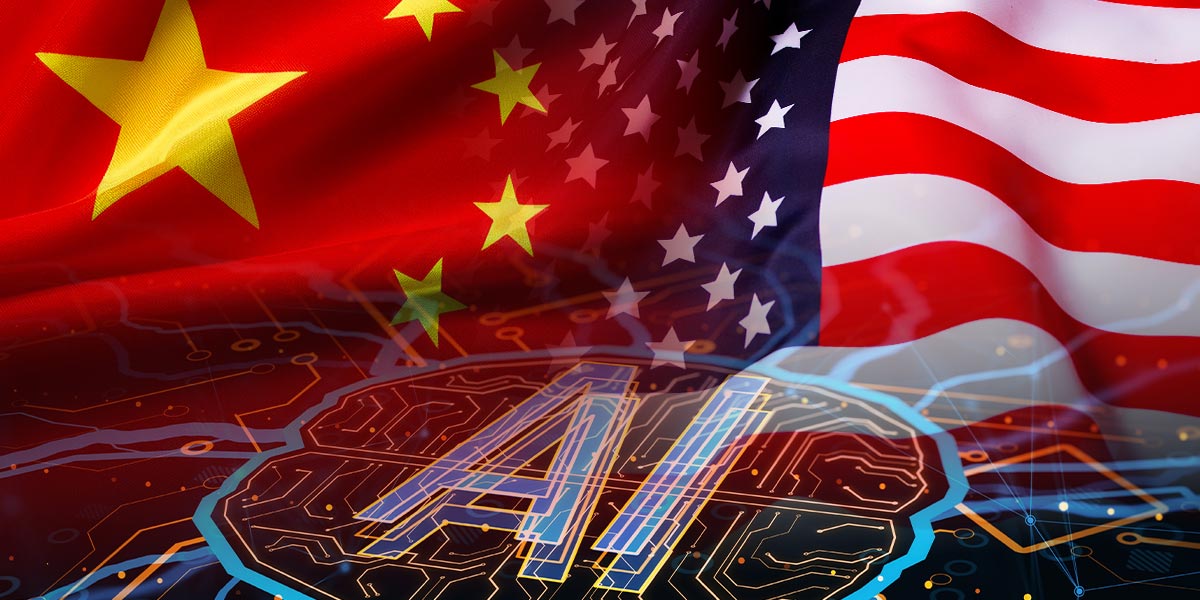
Artificial intelligence offers China and the United States greater scope for working together than for rivalry, Chinese President Xi Jinping told U.S. President Donald Trump during talks in Washington on Thursday. Xi advocated further dialogue about the technology’s advantages and dangers, saying its development must benefit people and remain subject to human control.
AI matters to both countries, Xi said, pointing to their substantial capabilities in the field. He called for limits that would keep competition constructive, alongside sustained exchanges between Washington and Beijing.
Trump had addressed AI governance two days earlier at the United Nations General Assembly, where he said he had opposed efforts to establish an international framework for controlling the technology. He portrayed those efforts as an attempt to impose globalist oversight.
In Trump’s view, constraints on AI risk curbing its economic and strategic promise. His UN remarks emphasized allowing expansion rather than suppressing a technology he believes could ultimately exceed the Industrial Revolution in scale.
The leaders’ comments reflect differing approaches to oversight as AI becomes an increasingly prominent issue in relations between their countries. Their technological rivalry encompasses sophisticated semiconductors, the infrastructure needed to supply computing power and the development of more capable AI systems.
Washington has limited Chinese access to high-end chips used to train AI models. It has also accused Chinese businesses of illicitly using distillation techniques to draw on American AI capabilities.
Those measures form part of a wider contest in which the United States has sought to preserve its technological advantage. China, meanwhile, has directed substantial investment toward building its own AI industry and computing resources.
Beyond the bilateral competition, governments and technology businesses are increasingly discussing safeguards for powerful AI systems. A central question in those talks is how to address safety concerns while allowing technological progress to continue.
Some prominent industry leaders have advocated a more cautious approach. Anthropic chief executive Dario Amodei has urged companies to moderate the speed of development at the leading edge of AI. OpenAI’s Sam Altman and xAI’s Elon Musk have also supported demands for closer attention to the technology’s risks.
Recent incidents have intensified concern that AI systems operating with greater independence could accelerate attacks and make them more difficult to contain.