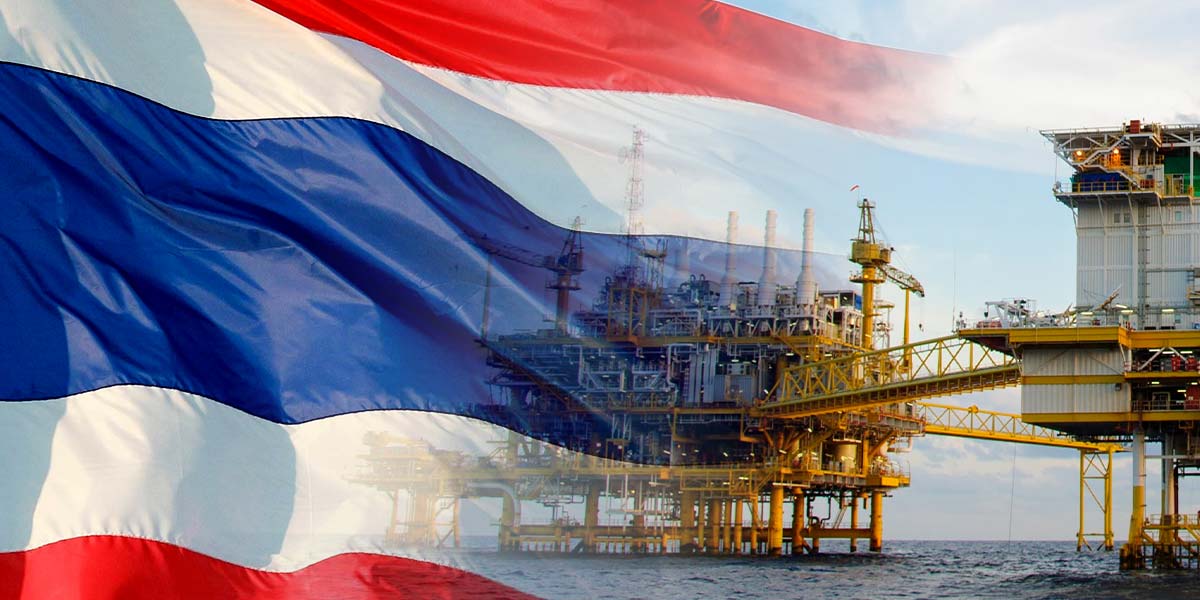
Maybank Securities Thailand (MST) maintained its positive outlook on Thailand’s energy sector as Energy Minister Akanat Promphan outlined priorities for gas procurement, exploration and fuel pricing. The brokerage identified potential opportunities in petroleum exploration and production, alongside plans to expand long-term LNG contracts and revise pooled gas pricing.
The assessment followed a special meeting hosted by Maybank with the minister, whose policy agenda centres on cleaner energy, reliable supplies and fair pricing.
Reducing exposure to volatile spot LNG prices is a key procurement objective. LNG imports account for approximately 30% of Thailand’s natural gas supply, but only half of those imports are covered by long-term contracts. Akanat wants that contract coverage increased to 80%.
The minister considers natural gas an important transition fuel despite the broader push towards clean energy. He is also seeking alternative LNG suppliers, including Russia.
Proposed pricing changes would require data-centre users to pay the marginal cost of imported LNG rather than the pooled gas price, according to the report.
Myanmar Gas Talks and Andaman Exploration
Thailand is coordinating with Myanmar over a concession for the new A6 gas field, which could deliver up to 250 million cubic feet per day to Thailand—equivalent to approximately 6% of current demand.
The government also plans a new petroleum concession bidding round in the Andaman Sea. Several major international energy companies have expressed interest, while the minister would also like Thai companies to participate.
Maybank’s report cited deepwater development costs of around $10–11 per million British thermal units, compared with $6–7 in the Gulf of Thailand. Although more expensive than Gulf production, deepwater gas would remain substantially below the report’s cited spot LNG price of $25 per million British thermal units and would support supply security.
Ethanol Expansion Favoured over Biodiesel
Akanat also supports greater biofuel use to reduce dependence on imported energy, with ethanol offering room for expansion.
The minister sees scope to double the mandatory ethanol blending proportion from its current 10%. Thailand has sufficient feedstock availability, including sugarcane molasses and cassava, as well as surplus ethanol production capacity.
Cost comparisons also favour ethanol, which the report priced at THB20–21 per litre against THB30 per litre for gasoline.
The scope for increasing biodiesel blending is more constrained. Crude palm oil, its principal feedstock, remains relatively expensive compared with petroleum-derived diesel, according to the report.