
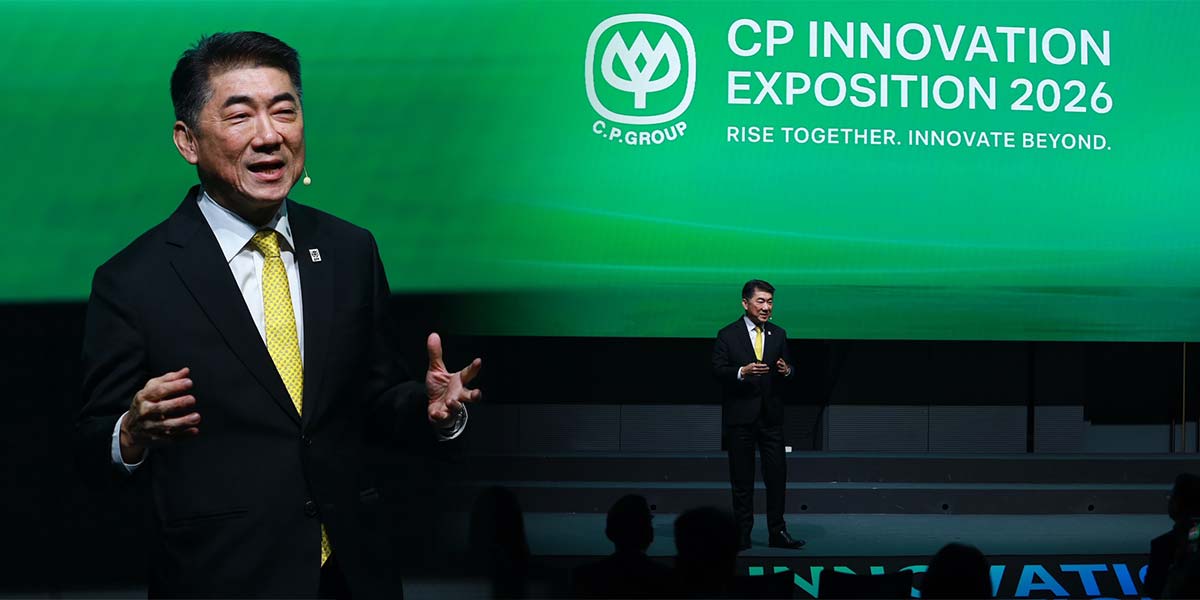
Charoen Pokphand Foods Pcl (SET: CPF) CEO Prasit Boondoungprasert warned that food could emerge as a critical strategic asset for nations over the next decade, urging Thailand’s agricultural sector to pivot aggressively from volume exports toward high-value innovation and artificial intelligence.
Speaking at the CP Innovation Exposition on October 22, 2026, the leader of Thailand’s flagship agribusiness conglomerate outlined a transformative roadmap designed to strengthen national competitiveness against compounding global disruptions.
Addressing industry leaders, researchers, and international experts, Mr. Prasit highlighted that intensifying climate instability—manifested in frequent flooding and weather uncertainty—alongside growing geopolitical friction is threatening global food security. Even traditionally resource-rich agricultural exporters like Thailand must adapt rapidly to defend against environmental crises and trade constraints. As international trade restrictions tighten and supply chains fragment, securing reliable, high-quality food supplies is transitioning from a routine commercial function into a fundamental pillar of national security.
Historically, Thailand established its prominence as a global food powerhouse through sheer export volume, a framework that sustained a large agricultural workforce but generated relatively low income for individual farmers. Mr. Prasit stressed that the country must now reorient its economy toward productivity enhancement and value creation to enable Thai enterprises to scale globally. To achieve this, Charoen Pokphand Foods plans to leverage technology and proprietary research to drive higher yields and premium product offerings across global markets.
Artificial intelligence sits at the center of this operational overhaul, with CPF deploying AI tools across every link of its agribusiness value chain. The company is integrating data systems spanning upstream farming, feed mills, aquaculture, processing facilities, logistics, and customer delivery. By linking end-to-end data and utilizing AI for custom animal feed and human food formulations, CPF aims to significantly accelerate product development cycles while optimizing operational efficiency.
To support broader economic resilience, CPF is positioning itself as a “National Capability Builder” by reframing its relationships across the agricultural ecosystem. Rather than treating vendors as mere transactional suppliers, CPF is forging strategic partnerships and uniting internal research teams, academic institutions, and industry networks under a collective “Team Thailand” banner. This collaborative model includes deploying engineering assistance and smart farm solutions to help local partners replace informal practices with standardized, data-driven platforms.
This ecosystem strategy extends to small and medium-sized enterprises, with CPF working alongside 5,500 SME suppliers across five core operational tracks. The initiative provides technical training, operational optimization, and guidance on joining anti-corruption programs. Crucially, financial savings generated from these joint productivity improvements are being reinvested into carbon-reduction and environmental sustainability projects, ensuring long-term supply chain durability.
Highlighting Thailand’s capacity for world-class food safety, Mr. Prasit pointed to CPF’s landmark “Thai Chicken to Space” project, which earned Space Safety Standard approval under NASA’s food safety protocols. Developed over several years in coordination with Thailand’s Department of Livestock Development, the space-grade certification required rigorous health inspections, ingredient validation, and facility audits. On the commercial front, CPF continues to showcase value creation through consumer innovations, such as a fresh chilled sauce line utilizing limes sourced directly from local Thai farmers.