
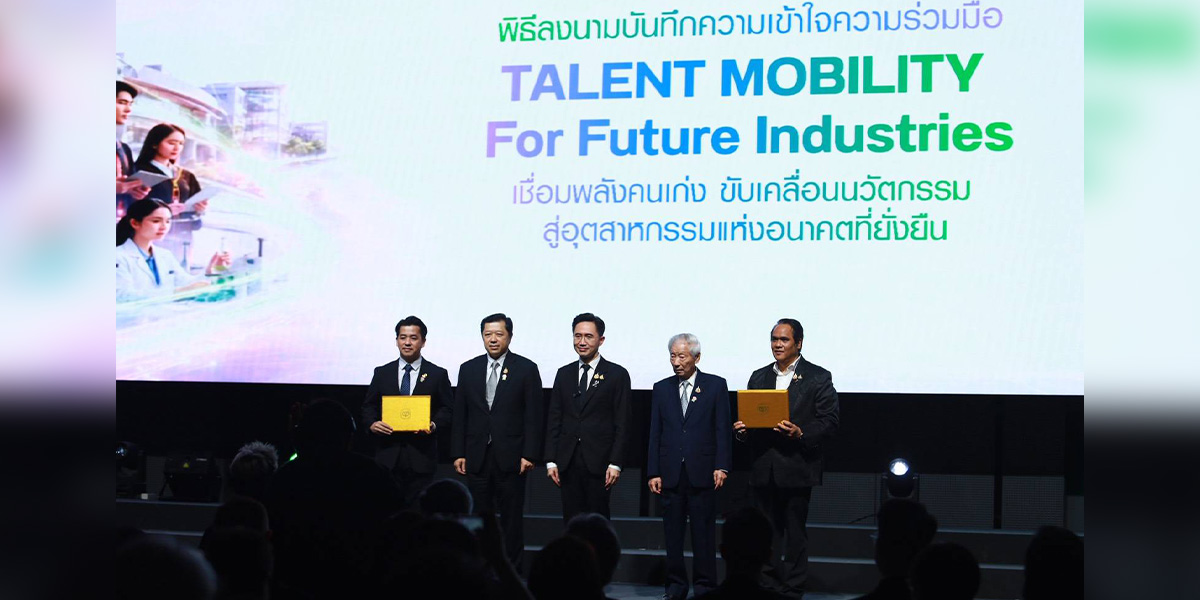
Thailand is reshaping its national economic strategy around human capital, seeking to bridge the persistent divide between academic research and commercial applications through a revamped cross-sector talent mobility program.
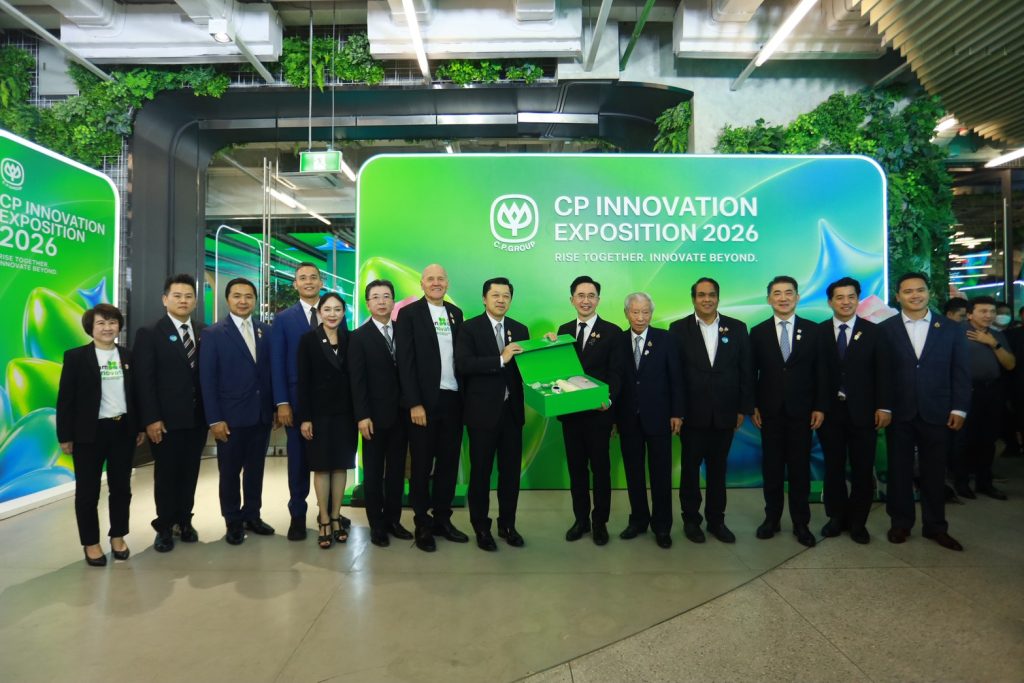
Speaking at the CP Innovation Exposition 2026, Deputy Prime Minister and Minister of Higher Education, Science, Research and Innovation Yodchanan Wongsawat outlined a vision for a “Humanic Innovation Economy,” arguing that rapidly evolving technology renders physical infrastructure investments vulnerable to disruption unless backed by deep expertise in fundamental science.

At the center of the government’s strategy is an expanded “Talent Mobility” framework designed to allow university faculty, researchers, and public institute scientists to work directly inside corporate enterprises while maintaining their academic career progression and tenure track. Building on an initial Cabinet resolution established a decade ago in 2015, recent regulatory updates in 2026 allow personnel to move seamlessly across state universities, public research organizations, and private companies without career or administrative penalties.
Rather than relying on rigid, pre-packaged academic arrangements, the ministry is partnering with conglomerate Charoen Pokphand Group (CP Group) to introduce a customized mobility model tailored to specific industrial requirements. The joint initiative is backed by a joint memorandum of understanding covering eight critical future domains, including artificial intelligence, digital technologies, biotechnology, clean energy, advanced healthcare, and education.
Yodchanan emphasized that individual academic talent among Thai scholars has historically failed to translate into collective industrial leadership due to a lack of institutional bonding between state research and private enterprise. By placing university researchers directly into corporate environments from the onset of projects, the government aims to build trust and convert individual scientific mastery into national competitive advantage.
Underpinning this paradigm shift is a transition away from traditional, degree-centric education toward a flexible “Skill Bank” model focused on micro-credentials and modular lifelong learning. Educational frameworks must align with evolving industry demands by certifying specific modular skills rather than static job titles, enabling workers of all age groups to continuously upskill and cycle back into university systems.
To shield the domestic economy from tech disruptions, Yodchanan advocated for “first-principles thinking” anchored in foundational disciplines such as physics, biology, chemistry, and algorithm development. Investing in core scientific fundamentals rather than surface-level operational formulas equips local industries to continuously innovate and build new value chains even as existing technologies become obsolete.
Ultimately, the administration views talent mobility as a catalyst to transform Thai graduates from job seekers into job creators. Through deeper integration with major private sector players like CP Group, Thailand aims to establish a self-sustaining innovation engine capable of positioning the nation as a global technology contributor.