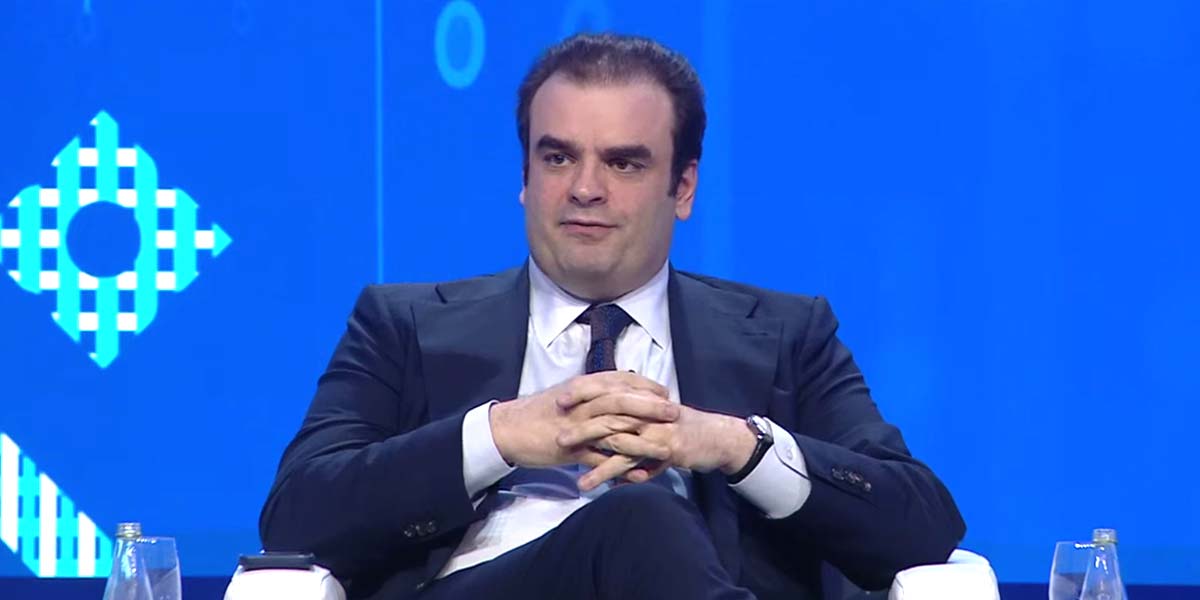
Addressing growing concerns over European fiscal trajectories and rising borrowing costs, Eurogroup President Kyriakos Pierrakakis declared that Europe remains “mindful, but not alarmed,” emphasizing that the continent’s underlying macroeconomic fundamentals and banking sector remain robust.
During a panel on global economic resilience at the IMF-World Bank Annual Meetings in Bangkok, Pierrakakis argued that financial markets scrutinizing sovereign debt trajectories in a high-yield environment should be met with disciplined budget management and deep structural reforms rather than panic.
While European 10-year government bond yields have risen to an average of around 4 percent—up from 1.1 percent a decade ago—Pierrakakis stressed that this shift reflects a broader global high-yield environment rather than structural European fragmentation.
To demonstrate the power of fiscal rectitude, he highlighted that five European nations currently maintain budget surpluses, four of which were crisis-programming countries in the previous decade, including Greece, Cyprus, Portugal, and Denmark.
However, the Eurogroup chief conceded that Europe confronts a daunting structural challenge in its widening productivity gap relative to the United States. Over the past three decades, annual U.S. productivity growth averaged 1.8 percent compared to just 1.1 percent in Europe, causing European labor productivity to slide from 90 percent of U.S. levels in the early 2000s to 75 percent today.
Pierrakakis emphasized that internal market fragmentation functions as a “strategic tax” on the bloc, with internal trade barriers in services and manufacturing equivalent to tariffs ranging from 44 to 110 percent. To dismantle these barriers and boost European competitiveness, finance ministers are pushing forward with the Savings and Investment Union to integrate capital markets, complete the banking union, and facilitate cross-border corporate consolidation to create true “European champions” capable of competing globally.