Thailand will eliminate all import tariffs on US goods and remove major non-tariff barriers under a trade agreement expected to be finalized within weeks, Reuters reported on November 17, 2026, citing US President Donald Trump. Thailand’s Commerce Ministry said the following day that the two countries had not signed a final agreement and that all existing tariff rates remained in place.
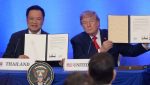
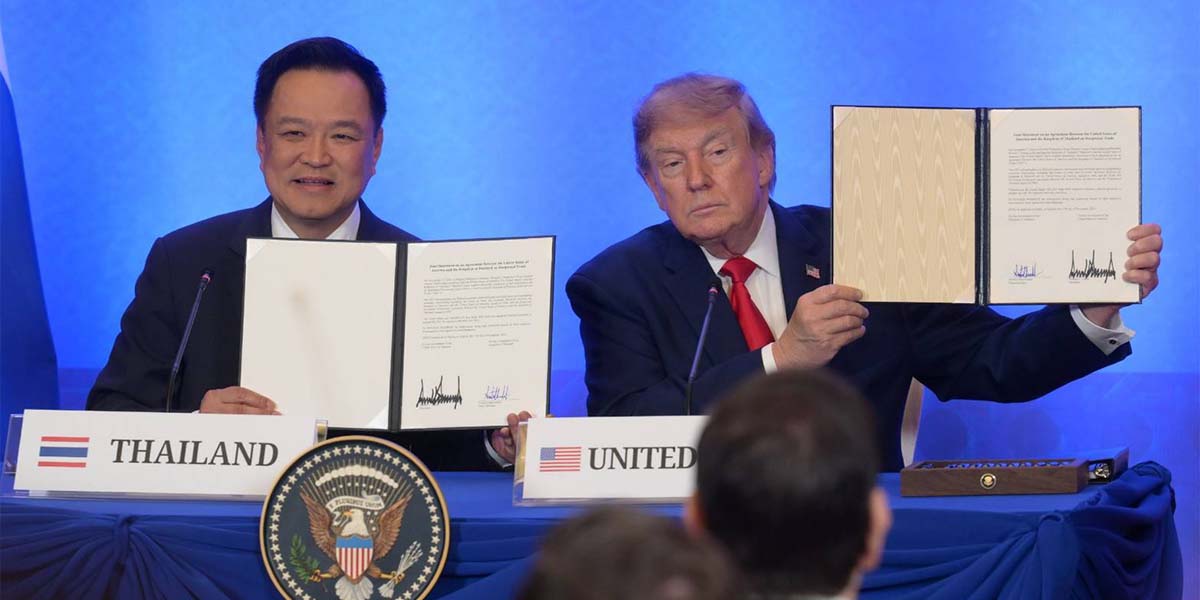
Trump spoke in Manila, where he and Thai Prime Minister and Interior Minister Anutin Charnvirakul signed a joint statement confirming that the two sides had reached agreement on the substance of their negotiations on an Agreement on Reciprocal Trade (ART). Trump said the deal, once completed, would be excellent for both countries.
“Thailand will eliminate all tariffs on US goods, something we’ve been working toward for a long time,” Trump said, just hours after arriving in the Philippine capital to attend the closing stages of the Association of Southeast Asian Nations (ASEAN) summit.
“This is a major victory … I look forward to finalizing the details of our formal agreement in the coming weeks.”
Trump said Thailand would also remove major non-tariff barriers affecting US vehicles, medical devices, pharmaceuticals, ethanol and poultry products. He said Thailand had pledged to buy an additional $2.6 billion (about 88 billion baht) worth of US agricultural goods.
The United States is Thailand’s largest export market, accounting for 24.6% of its exports by value so far in 2026, according to Reuters. That makes the negotiations particularly important for Thailand, Southeast Asia’s second-largest economy.
In 2025, the US threatened to impose a 36% tariff on imports from Thailand before lowering the rate to 19%, the same rate it applied to several of Thailand’s regional competitors.
The two countries announced a preliminary trade framework in October 2025 under which Thailand would eliminate tariffs on about 99% of US goods, including both industrial and agricultural products, and ease other barriers to US exports.
Anutin said he was confident the agreement would soon be ready to sign.
“I believe this agreement will give our trade ties new momentum and open up new opportunities for everyone involved,” he said, adding that “our partnership extends beyond trade and investment.”
In its November 18 clarification, Thailand’s Commerce Ministry said the joint statement confirmed only that the two sides had agreed on the substance of the negotiations. It was not the final agreement and did not require Thailand to cut tariffs. All goods imported from the US remained subject to the same tariff rates as before, the ministry said.
The ministry also said tariff cuts would not apply across the board. Before any cuts can take effect, both sides must complete a legal review of the text and sign the final agreement, and Thailand must complete the procedures required under its laws and constitution. Only once the agreement enters into force will Thailand begin reducing tariffs, according to a schedule that sets out the terms for each product.