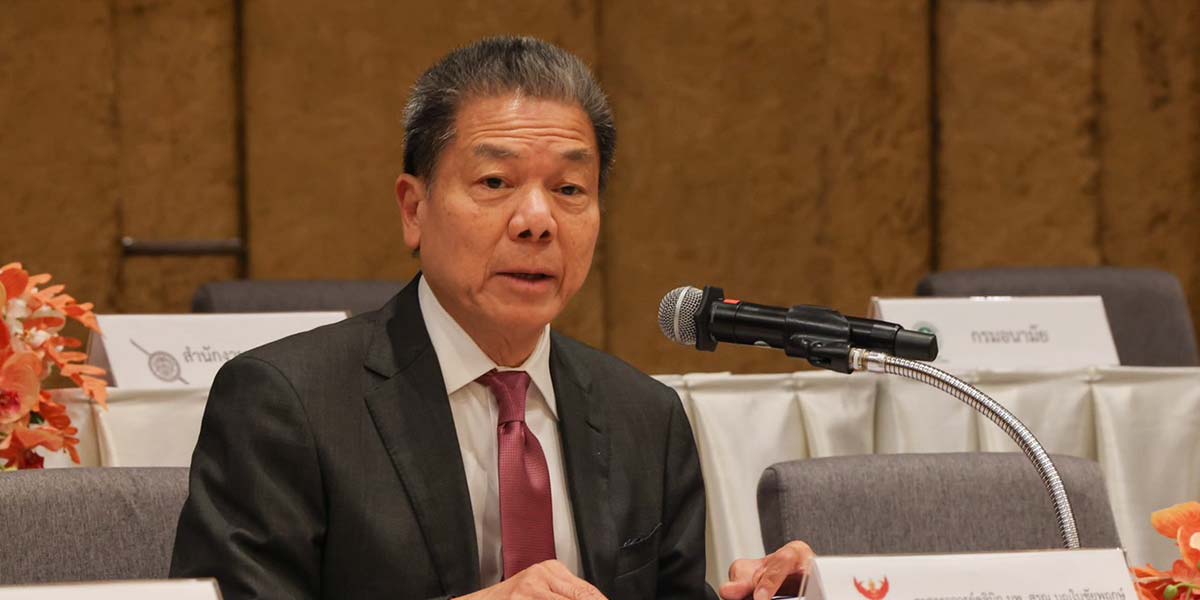
Thailand’s Central Administrative Court on Friday dismissed a lawsuit filed by National Broadcasting and Telecommunications Commission (NBTC) Chairman Sarana Boonbaichaiyapruck seeking to overturn a selection committee ruling that found him unqualified to serve as an NBTC commissioner and chairman.
The court ruled that the NBTC selection committee had the legal authority to determine the qualifications and prohibited characteristics of an NBTC commissioner, even after the person had been appointed by Royal Command, as the relevant conduct in Sarana’s case occurred before his appointment.
The case stems from a July 21, 2026 decision by the NBTC selection committee, which concluded that Sarana possessed a prohibited characteristic under Section 8(2) of the NBTC Act and had effectively forfeited his right to take up the position.
At the center of the dispute was Sarana’s work as a physician at Ramathibodi Hospital. Although Sarana argued that he had resigned from his university position and continued treating patients at the hospital only as an independent professional paid on an hourly basis, the court found that the actual nature of his relationship with the state hospital was relevant, rather than simply the form of his contract or tax status.
The court noted that Sarana continued to use the hospital’s facilities, equipment and systems and received remuneration and medical benefits through the state agency. It therefore concluded that his status was that of an employee or worker at a state agency rather than solely an independent professional.
The court said the arrangement fell within the prohibited characteristics stipulated under Section 8(2), which is intended to prevent conflicts of interest and safeguard the independence of NBTC commissioners.
The court also found that the selection committee had a valid quorum and that its chairman did not have a prohibited age-related qualification. It further determined that Sarana had been given an opportunity to challenge the committee’s findings and submit evidence during the administrative process.
As a result, the Central Administrative Court upheld the selection committee’s ruling that Sarana lacked the required qualifications and was deemed to have forfeited his right to assume the position.
The ruling means the selection committee’s July decision remains legally effective. However, actions and work already carried out by Sarana in his capacity as NBTC chairman prior to the ruling will not be retroactively affected under the relevant law.
Sarana is expected to appeal the ruling to the Supreme Administrative Court, according to the report.
The case has significant implications for the leadership of Thailand’s telecom and broadcasting regulator. The dispute has already contributed to divisions within the NBTC board, with several meetings reportedly failing to proceed due to disagreements over Sarana’s status.
The legal dispute began after the Central Administrative Court initially declined to accept Sarana’s lawsuit. The Supreme Administrative Court subsequently overturned that decision in September and ordered the lower court to accept the case, ruling that the selection committee’s decision affected Sarana’s legal rights and obligations and therefore constituted an administrative order subject to judicial review.