
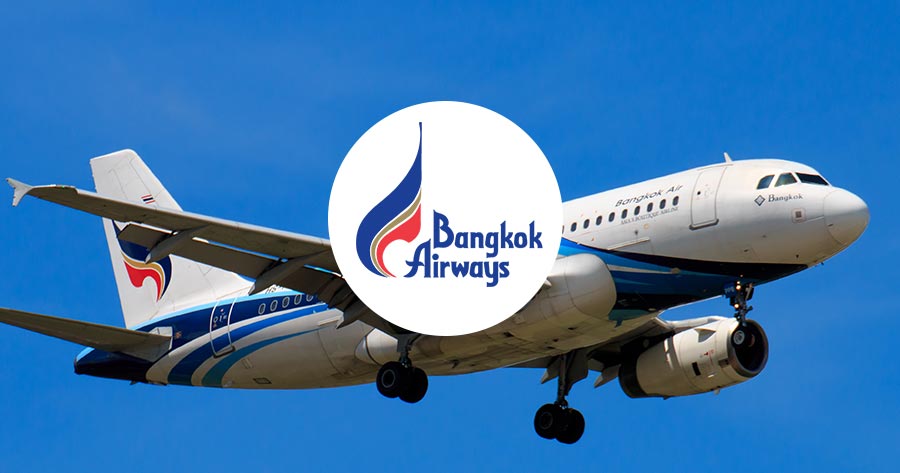
Bangkok Airways Public Company Limited (SET: BA) has outlined its business strategy for 2027, focusing on optimizing its route network, modernizing its fleet to meet evolving travel demand, and strengthening its airline, airport, and aviation-related businesses. Guided by its integrated Aviation Ecosystem strategy, the airline aims to enhance competitiveness and build a solid foundation for sustainable long-term growth.
Mr. Puttipong Prasarttong-Osoth, President of Bangkok Airways Public Company Limited, said, “Amid ongoing volatility in the aviation and tourism industries, Bangkok Airways remains focused on aligning its route network with travel demand, improving fleet utilization, and maintaining cost efficiency. At the same time, we continue to strengthen our aviation-related businesses under our Aviation Ecosystem strategy to enhance competitiveness and support sustained long-term growth.”
Bangkok Airways currently operates three interconnected core businesses: airline operations, airport operations, and airport-related services, supported by additional aviation businesses, including aircraft maintenance and aviation training.
In airport operations, the company owns and operates three airports in Thailand: Samui, Trat, and Sukhothai. Its airport-related businesses include Bangkok Flight Services (BFS Ground), which provides ground handling services; WFS-PG Cargo (BFS Cargo), which specializes in air cargo services; and Bangkok Air Catering (BAC), which provides airline catering services. Together, these businesses form an integrated aviation ecosystem that supports the group’s overall growth.
The aviation industry continued to face challenges in 2026, driven by geopolitical uncertainty, fluctuating fuel prices, and uneven recovery in travel demand across markets. During the first nine months of 2026, Thailand welcomed 20.02 million international visitors, while arrivals from Europe and the Middle East increased by 4% in the third quarter.
Advancing Fleet Modernization and Route Network Efficiency
Bangkok Airways currently operates 19 routes, comprising 14 domestic and five international routes, with a fleet of 22 aircraft. As part of its fleet renewal and capacity enhancement strategy, the airline plans to acquire 10–12 ATR 72-600 aircraft. The first two aircraft are scheduled for delivery in early December 2026, followed by another two during the first half of 2027.
Alongside its business development initiatives, Bangkok Airways continues to advance its sustainability commitments through Boutique Footprints, an initiative designed to create positive value for people, local communities, and the destinations it serves.
Nine-Month Revenue Growth Supported by Strong Performance Across Aviation-Related Businesses
Mr. Anawat Leelawatwatana, Senior Vice President – Finance and Accounting of Bangkok Airways Public Company Limited, said, “For the first nine months of 2026, Bangkok Airways recorded total revenue of THB 21.09 billion, up from THB 19.99 billion in the same period last year. Passenger transportation revenue accounted for THB 14.05 billion, while passenger service revenue contributed THB 4.44 billion.”
During the period, the airline carried 3.2 million passengers across 36,616 flights, achieving an average passenger load factor of 81%, an increase of five percentage points year over year. The improvement reflected more efficient capacity management. Samui remained the airline’s core market, accounting for 72% of total passenger traffic, with an average load factor of 87%.
Europe and the Middle East continued to represent the largest point-of-sale markets, contributing 55% of total passenger revenue, up 4% year over year. Germany, the United Kingdom, and France remained the leading source markets.
E-commerce remained the airline’s primary distribution channel, accounting for 47% of passenger revenue, followed by travel agents at 25% and codeshare and interline partnerships at 21%.
The company’s airport-related businesses also delivered solid results during the nine-month period. Bangkok Air Catering (BAC) generated revenue of THB 1.02 billion, an increase of 9%, while net profit rose 37% to THB 156 million. BFS Ground reported revenue of THB 2.58 billion, up 1%, with net profit of THB 324 million. BFS Cargo recorded revenue of THB 2.27 billion, an increase of 12%, while net profit grew 8% to THB 951 million compared with the same period last year.
In addition, Airports of Thailand Public Company Limited (AOT) has approved an extension of the operating periods for three airport-related business activities at Suvarnabhumi Airport. The extension will remain effective for an additional three and a half years beyond the original contract expiration dates, or until AOT appoints new private operators, whichever occurs first. This development will help ensure continuity across the company’s airport-related operations.
2027 Outlook: Balancing Growth and Profitability
Mr. Anawat added that advance bookings for travel between December 2026 and June 2027, as of November 16, 2026, continued to reflect strong demand for Samui routes, which accounted for 66% of total bookings. Other domestic routes represented 28%, while international routes accounted for the remaining 6%.
Looking ahead, Bangkok Airways will continue to closely monitor market conditions and travel demand, adjusting flight operations and optimizing resource allocation as needed. At the same time, the company remains committed to strengthening its aviation-related businesses under the Aviation Ecosystem strategy to enhance competitiveness, maintain profitability, and drive stable, sustainable growth over the long term.