
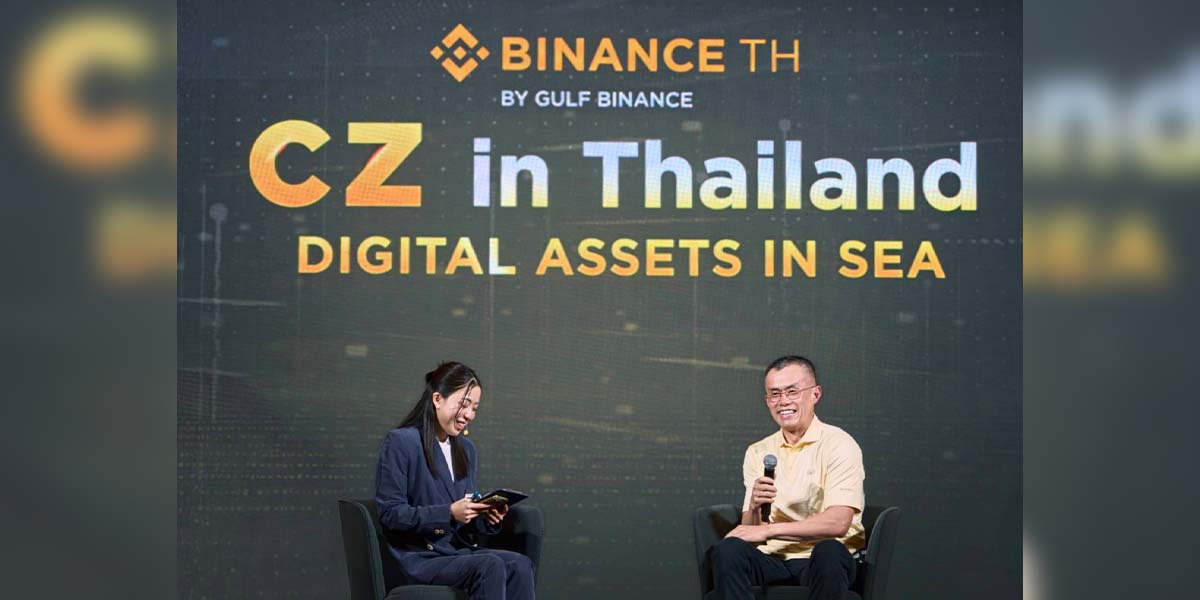
Binance co-founder Changpeng Zhao (CZ) sees the digital asset industry entering a new phase of development, with long-term value increasingly tied to real-world applications rather than speculative trading, highlighting the potential for tokenized stocks, government bonds, and stablecoins to attract foreign investment and transform Thailand’s capital market.
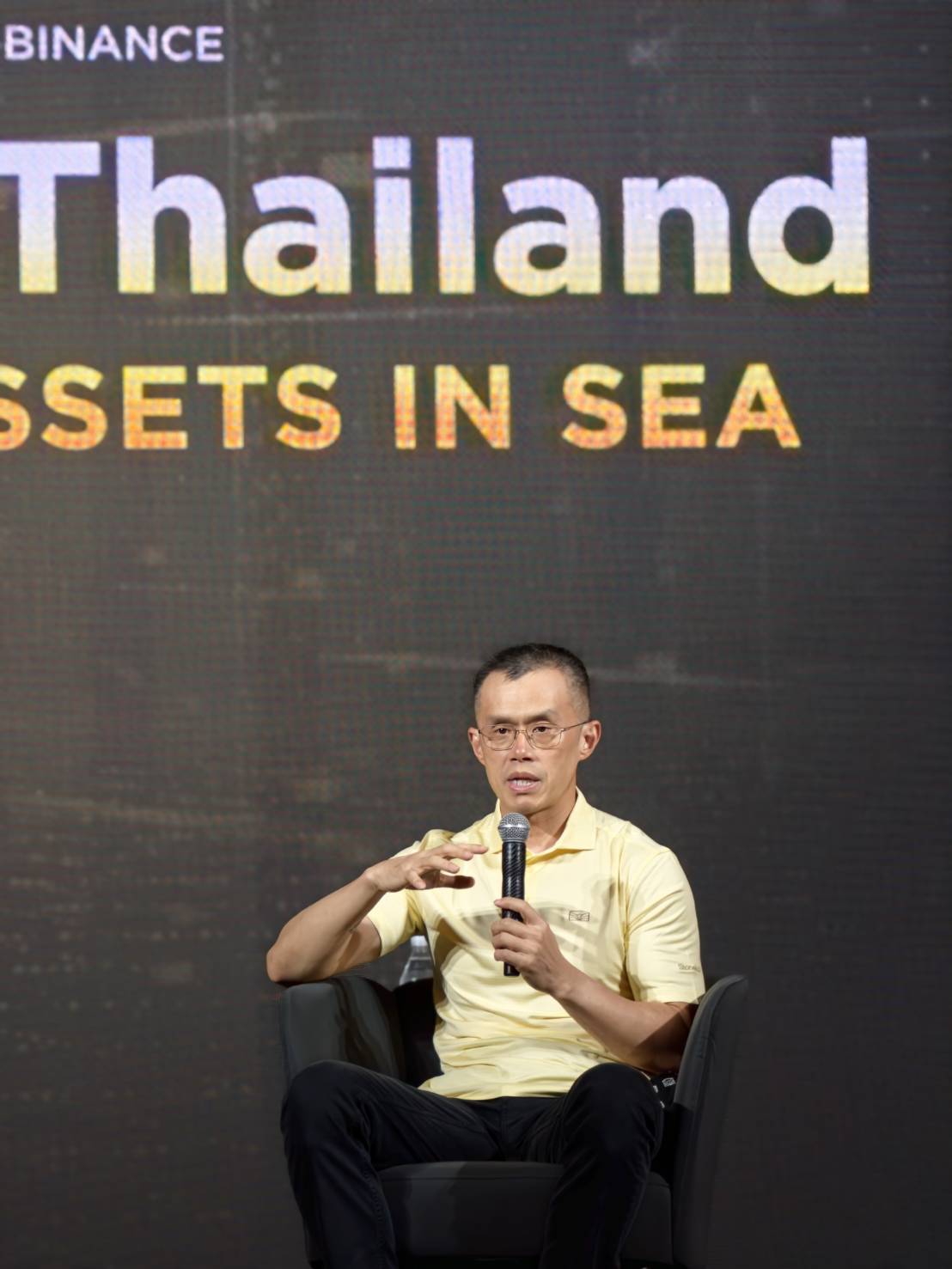
Speaking at a CZ in Thailand: Digital Assets in SEA event organized by Binance TH on November 27, Zhao said that while cryptocurrency prices remain heavily influenced by market sentiment, the industry’s sustainable growth will depend on technological innovation, practical utility, and broader adoption.
Despite artificial intelligence (AI) drawing considerable investor attention and capital away from other technology sectors, Zhao believes blockchain remains an integral part of the evolving digital economy. He described the internet, blockchain, and AI as three major technological transformations that complement rather than replace one another.
“AI is really sexy, but AI does not replace money,” Zhao said, adding that the diminished excitement surrounding blockchain could mark the beginning of a period of more meaningful development.
Tokenization to Unlock Global Liquidity
Zhao highlighted digital assets as a potentially effective channel for Thailand to attract foreign investment, particularly through the tokenization of traditional financial instruments.
Issuing tokenized government bonds could significantly expand Thailand’s access to international investors, subject to regulatory approval. Zhao pointed to Binance’s global user base of approximately 330 million as an example of the potential distribution reach of blockchain-based financial products.
Stock tokenization could similarly broaden the investor base of Thai listed companies by reducing geographical barriers and providing access to liquidity beyond conventional stock exchange trading hours.
Zhao questioned the limitations of traditional capital markets, where trading remains confined to designated hours despite market-moving developments occurring around the clock. He believes blockchain-based securities could fundamentally change how investors access financial markets and how companies raise capital internationally.
Traditional financial assets, particularly liquid equities and government bonds, are among the most suitable candidates for tokenization given their established benchmark prices and existing liquidity. Real estate, by comparison, presents greater challenges due to the absence of continuous price discovery and relatively limited trading activity.
Thailand’s expanding AI and data center infrastructure could also present opportunities to tokenize computing resources, creating additional fundraising channels for infrastructure development while broadening international access to computing capacity.
Making the Thai Baht Relevant in Digital Finance
Zhao also emphasized the strategic importance of developing a Thai baht-backed stablecoin, arguing that countries risk diminishing their currencies’ influence in an increasingly blockchain-based financial system without digital representations of their national currencies.
A baht-backed stablecoin could facilitate cross-border remittances, international payments, and transactions involving tokenized Thai securities, while potentially strengthening demand for the local currency.
From a regulatory perspective, Zhao advocated full one-to-one reserve backing as a fundamental consumer protection requirement. Allowing commercial banks to support stablecoin issuers could simplify reserve verification and auditing while potentially increasing deposits within the banking system.
He believes Southeast Asian countries that establish effective regulatory frameworks early could gain a competitive advantage in the emerging digital financial economy.
Security Remains Critical to Mainstream Adoption
Despite the industry’s growth potential, Zhao acknowledged that cybersecurity remains a major obstacle to wider adoption, particularly as AI accelerates the discovery and exploitation of software vulnerabilities.
Discussing the recent security breach at Binance, Zhao stressed the importance of strengthening operational security, improving software safeguards, and reducing exposure to potential losses.
While cybersecurity challenges could intensify in the near term, he expects the frequency of incidents to decline over the next six to 12 months as businesses improve their defenses.
Zhao also anticipates blockchain becoming a foundational infrastructure for autonomous AI payments, although existing networks may require significant improvements in transaction processing capacity.
Meanwhile, Zhao described Binance’s partnership with Thailand’s Gulf Group, led by Sarath Ratanavadi, as one of its most successful local collaborations globally.
Recalling their initial meeting in Dubai, Zhao credited Sarath with helping Binance navigate earlier regulatory challenges and understand Thailand’s business environment. He also highlighted Sarath’s personal involvement in developing the local platform, which he said had grown substantially from an initial market share of less than 2%.