Following a two-day visit to the Philippines and the ASEAN Summit, U.S. President Donald Trump announced more than $17 billion in commercial deals and strategic investments across Southeast Asia.
The official White House statement framed the tour as a major diplomatic and economic milestone, highlighting expanded market access for American exports and strategic regional investments. However, as with many high-profile announcements from Washington, the full reality of these agreements—particularly for Thailand—remains contingent on formal bilateral signing.
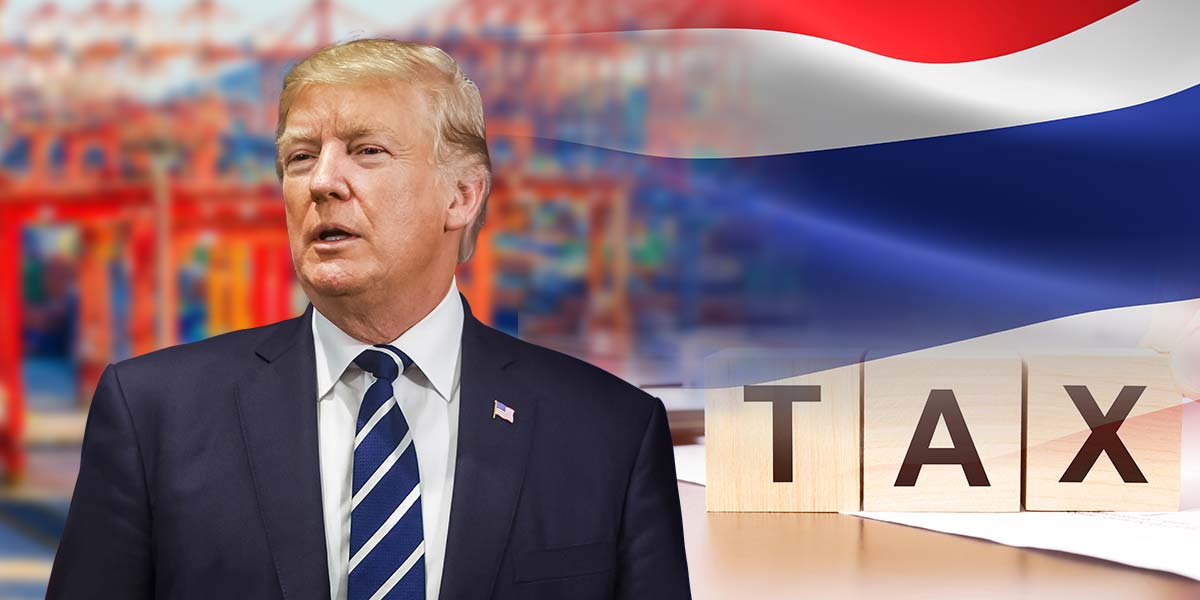
Regarding Thailand, the White House highlighted the “substantial conclusion” of a trade framework designed to eliminate tariffs on 99 percent of goods and remove non-tariff barriers on U.S. vehicles, medical devices, pharmaceuticals, ethanol, and poultry. The announcement also noted commitments regarding intellectual property enforcement as well as Thai labor and environmental standards. Separately, Thailand intends to allocate up to $123 million toward purchasing High Mobility Artillery Rocket Systems (HIMARS), marking the first defense deal of its kind in mainland Southeast Asia.
While initial White House headlines emphasize substantial market access for American commercial interests, public concern in Thailand over potential economic losses may be premature.
The announcement represents a characteristic, one-sided statement from the Trump administration, echoing a pattern seen since the start of the trade war where broad unilateral gains for American workers are claimed before an official agreement is executed. In practice, such announcements rarely materialize in full without a formally signed bilateral treaty. Until both governments complete official negotiations and sign a binding pact, the full context and balanced reciprocal terms remain to be seen.
Beyond Thailand, the announcement detailed extensive economic engagements across the rest of ASEAN. In the Philippines, key highlights included a $12 billion purchase of Boeing aircraft by Philippine Airlines, a $2 billion defense financing initiative, and satellite technology projects. In Indonesia, negotiations were announced for a $2 billion clean energy coal project alongside a $1 billion battery materials agreement. Malaysia featured a $100 million U.S. coal supply agreement and plans for a sovereign AI cloud, while Brunei signaled intent for a nearly $1 billion data center buildout.
While the White House presents this regional package as a decisive economic win, Southeast Asian nations will await concrete legal frameworks. For Thailand and its regional partners, the true economic impact will only become clear once formal documents are signed and implemented.