
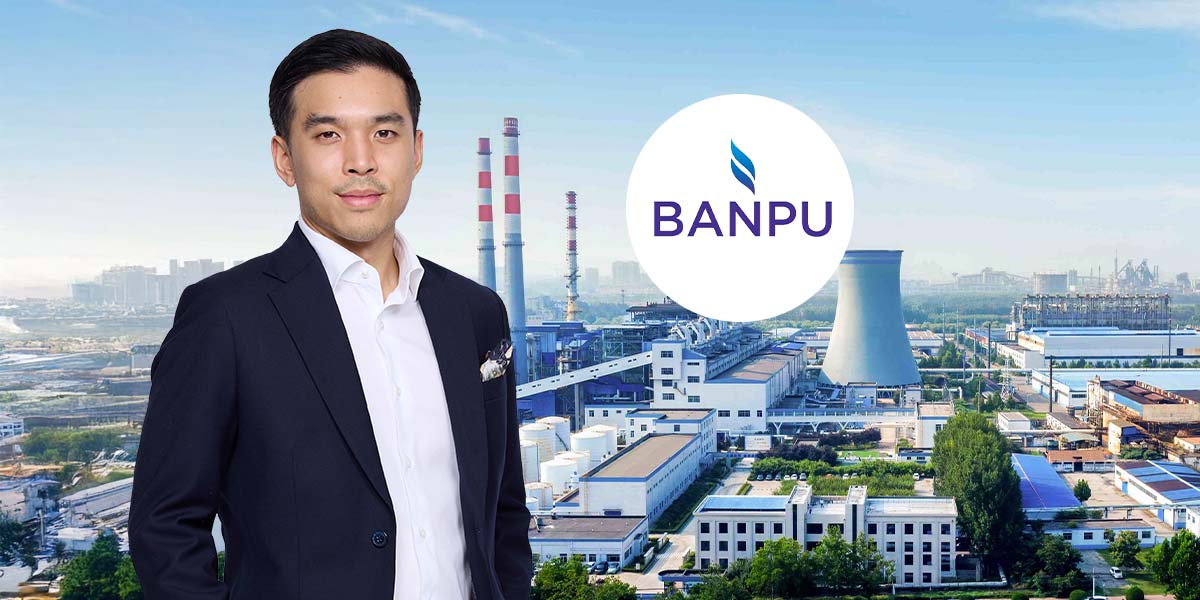
Sinon Vongkusolkit, Chief Executive Officer of Banpu Public Company Limited (SET: BANPU), disclosed that Banpu is expanding the implementation of biomass co-firing operation across all three of its combined heat and power (CHP) plants in China, extending from the Zhengding power plant to two additional facilities.
This expansion is projected to reduce total carbon dioxide emissions by approximately 148,000 tons per year by 2027, demonstrating the company’s potential to lower carbon output while enhancing business value from existing assets.
The Zhengding power plant has commercially operated its biomass co-firing project since June 2025. In September 2026, it successfully reduced cumulative carbon emissions by more than 47,000 tons by blending biomass fuel with the primary fuel at a 10% ratio.
In 2027, the project is expected to reduce carbon emissions by roughly 70,000 tons annually and save approximately CNY 1 million (equivalent to THB 4.7 million) in fuel costs during the same year through reduced consumption of conventional fuels.
Building upon the success of the biomass co-firing project at the Zhengding facility, Banpu has extended biomass co-firing operations to the Zouping and Luannan power plants, both targeting a 10% biomass co-firing ratio. The Zouping plant has already commenced operations and achieved a reduction of approximately 10,000 tons in cumulative carbon emissions by September 2026. Meanwhile, the Luannan plant is currently under construction, with completion expected by the end of 2026, and is estimated to cut carbon emissions by about 34,000 tons in 2027.
Furthermore, reducing carbon emissions and maximizing asset efficiency align with policies promoting carbon dioxide emission control among businesses in China. The Chinese government utilizes a carbon emission allowances (CEAs) trading mechanism, enabling qualifying companies with emissions below the mandated threshold to sell their surplus carbon allowances to entities needing additional emission rights. For Banpu, carbon asset management in China encompasses high efficiency, low emissions (HELE) operations, targeting a total CEA sales volume of 435,000 tons in 2026.
Banpu places strong emphasis on sustainability operations, with the biomass co-firing project serving as a key initiative supporting the Banpu Group’s goal to reduce greenhouse gas emissions by more than 20% by 2030, reflecting its commitment to balancing business operations with long-term sustainability.