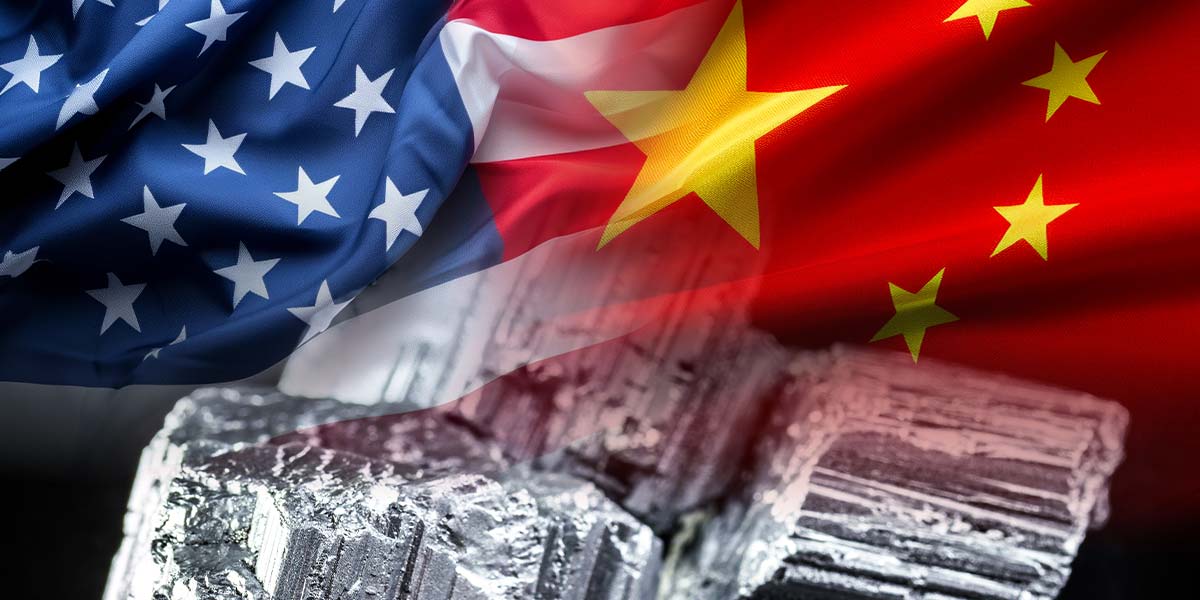
According to a Bloomberg report citing people familiar with the matter, China continues to limit exports of rare earth elements critical to U.S. manufacturing of permanent magnets and related products, despite a deal reached by President Donald Trump and Chinese President Xi Jinping in October to relax supply curbs.
Feedback from more than a dozen producers, consumers, trade specialists, and government officials indicates that, although China has increased shipments of finished goods—primarily permanent magnets—the U.S. industry remains unable to procure the necessary raw materials to produce these items domestically.
The slowdown in trade persists amid ongoing strains in the U.S.-China relationship since Trump and Xi agreed to a truce in South Korea on October 30 for tariff reduction and the restoration of rare earth shipments. Trump said at the time that the deal amounted to the “de facto removal” of several of China’s prior restrictions.
However, by continuing to restrict deliveries of raw materials, China is impeding efforts by the U.S. to establish its own supply chain for processing rare earths into magnets, used across sectors from consumer electronics to defense.
Data released by Chinese authorities on December 20 showed a month-on-month decline of 11% in magnet shipments to the U.S. in November, although these numbers still exceed the lows registered when restrictions tightened in April. Calculations based on official customs statistics indicate that China’s overall exports of rare earth elements and related products, including magnets, grew by 13% in November compared to October.
A spokesperson from China’s Commerce Ministry described monthly fluctuations in trade figures as “normal,” and reiterated China’s commitment to preserving global supply chain stability. Beijing has stated that some applications for rare earth exports have already been approved, yet restrictions remain for shipments that could end up with military contractors.
Nevertheless, industry insiders argue that the situation for U.S. businesses diverges. Industry figures note that U.S. companies are still unable to obtain essential rare earth inputs from China, particularly materials like dysprosium.
Noveon Magnetics, one of the few permanent magnet producers in the U.S., confirms this ongoing challenge and points out that global magnet manufacturing capacity outside China far exceeds available rare earth mineral supply.
Following these developments, uncertainty was raised among buyers as negotiations between Washington and Beijing on rare earth exports have yet to resolve key issues amid fears that temporary licenses expiring soon could lead to approval delays and potential export controls, as was experienced earlier in the year.