
- In November, the Thai economy expanded from the previous month, supported by improvements in both domestic and external demand indicators.
- External demand increased, driven by merchandise export growth across several categories and continued recovery in foreign tourist receipts.
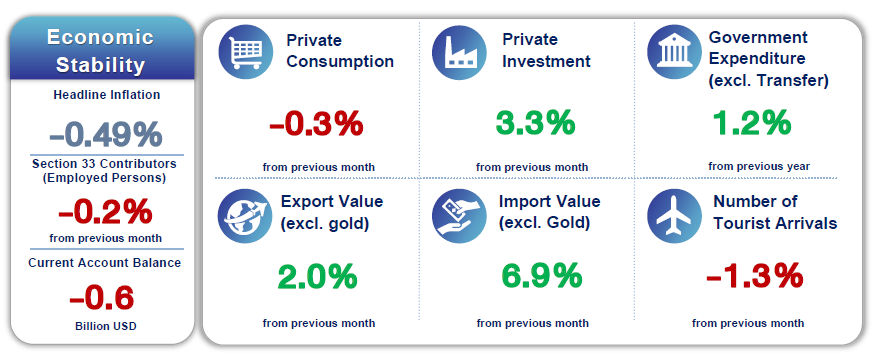
- Domestic demand improved, underpinned by investment from both the private and public sectors. However, private consumption slightly declined, as reflected in lower fuel and electricity usage, despite ongoing growth in spending on consumer goods and services.
- Supply-side conditions remained stable, with the services sector expanding in line with tourism and trade activities, while manufacturing production contracted due to temporary refinery maintenance, flood-related disruptions, and subdued demand for some products.
- Headline inflation became less negative, mainly due to higher raw food prices. Meanwhile, core inflation remained positive and broadly consistent with the previous month.
- Key issues to monitor: The impact of (1) baht appreciation, (2) the Thailand–Cambodia and flooding situation, and (3) U.S. tariff affecting Thai exports
Source: Bank of Thailand (BOT)
The Thai economy improved in November, supported by stronger external demand. Merchandise exports, excluding gold, expanded across several categories, particularly jewelry and electronics. Tourism receipts increased, driven by a higher number of long-haul tourist arrivals, which boosted related service-sector activities. Domestic demand also improved, underpinned by private investment and public capital expenditure. However, private consumption slightly declined, reflected in lower fuel and electricity usage, despite continued growth in spending on consumer goods and services. Manufacturing production contracted due to both subdued demand and temporary factors such as a halt in petroleum production for refinery maintenance and disruptions in food processing caused by flooding in the southern region.
On the economic stability front, headline inflation became less negative than the previous month, mainly due to higher raw food inflation as vegetable prices increased following production disruptions caused by flooding. Core inflation remained positive and broadly unchanged, as higher costs for public transportation, food delivery, and personal care items were offset by lower prices of prepared food. Labor market conditions remained broadly stable. However, the current account recorded a deficit, driven by shortfalls in both the services, income, and transfers accounts and the trade balance.