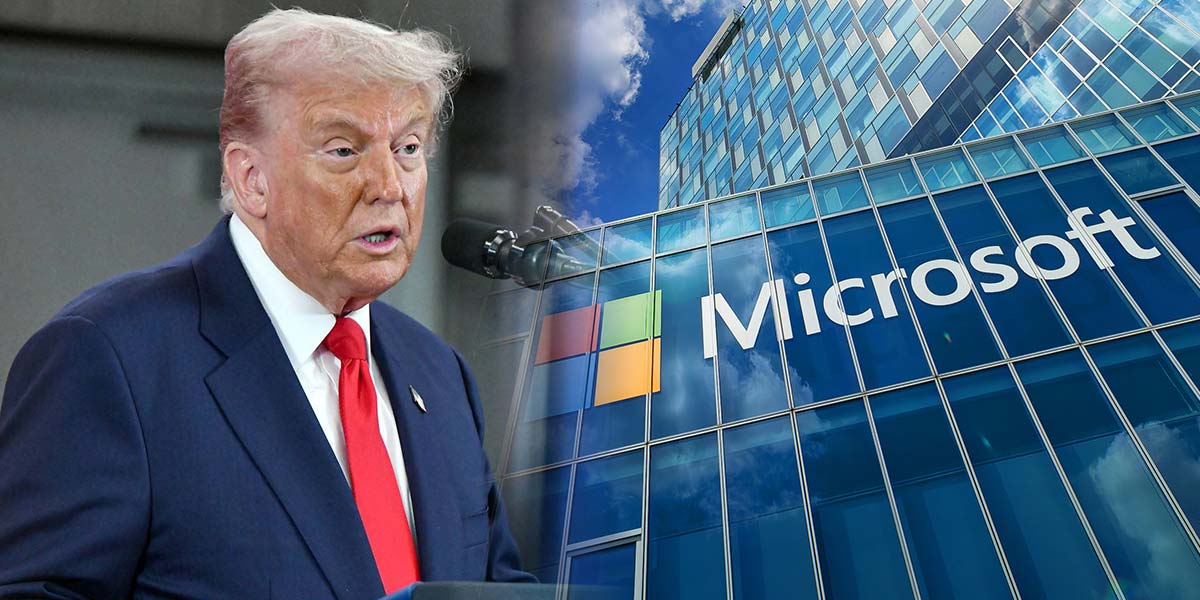
President Donald Trump announced Monday via Truth Social that Microsoft will soon introduce measures aimed at preventing rising utility bills for U.S. consumers as the firm expands its data infrastructure in response to surging demand for artificial intelligence.
“I never want Americans to pay higher Electricity bills because of Data Centers,” President Trump stated, adding that his administration is collaborating with leading technology firms to ensure this outcome. He indicated that further announcements would follow in the coming weeks.
With the 2026 midterm elections approaching, the president has intensified efforts to alleviate pressure on household finances amid the lingering effects of tariffs imposed last year on imported goods. Recent initiatives include a December pledge of a $1,776 “warrior dividend” for U.S. soldiers and a directive earlier this month to purchase $200 billion in mortgage bonds to help lower mortgage rates.
At the same time, major tech firms continue to expand their high-energy data centers to capitalize on the ongoing AI boom, with companies signaling greater capital expenditure to investors. Meta recently disclosed partnerships with three nuclear energy providers to power a new data center in Ohio.
On social media, Trump praised Microsoft’s commitment to stabilizing utility costs and suggested that similar actions from other companies are forthcoming. “First up is Microsoft,” Trump wrote, “who my team has been working with, and which will make major changes beginning this week to ensure that Americans don’t ‘pick up the tab’ for their POWER consumption, in the form of paying higher Utility bills.”
Electricity prices charged to U.S. consumers were reported to be 6% higher in August compared to the previous year, including in states hosting a significant number of data centers.
Microsoft has signaled a focus on mitigating the local impact of its data center projects. The company has reversed plans for a facility in Caledonia, Wisconsin, following strong local resistance. The Caledonia site would have been located approximately 20 miles from Microsoft’s Mount Pleasant data center.