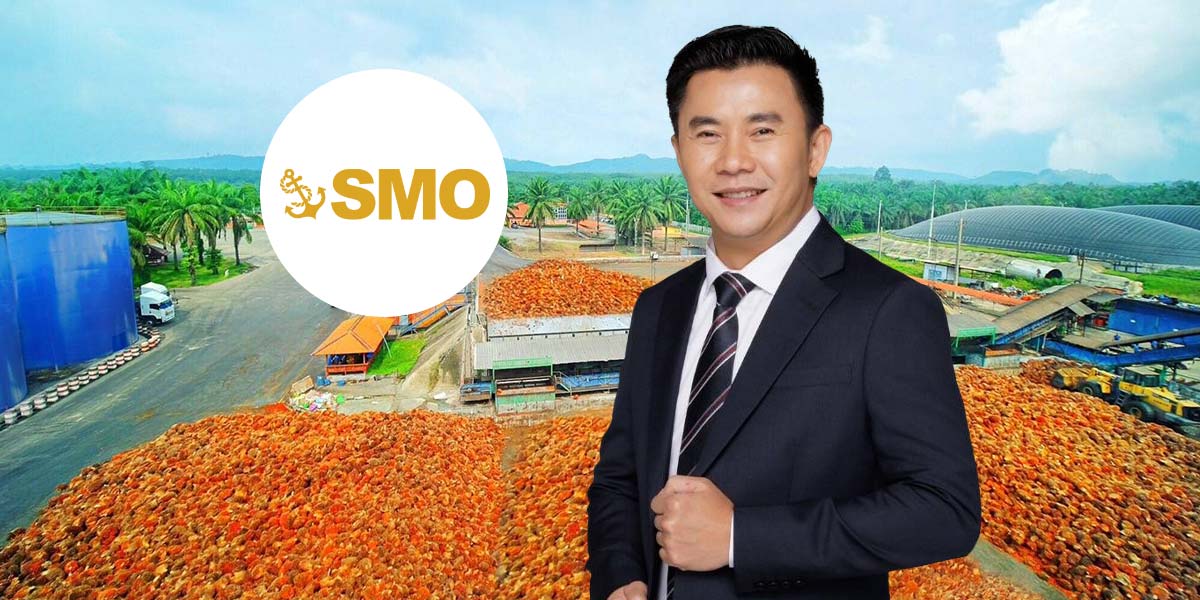
Today, at 2:31 P.M. (GMT+7), the stock price of Smothong Group Public Company Limited (SET: SMO) was at THB 3.82 per share, rising THB 0.22 per share or 6.11%, with a trading value of THB 24.35 million. This followed SMO’s target for 2026 revenue to reach THB 10 billion, driven by a 30% increase in new production capacity.
Previously, Mr. Kittipong Puangmala, Chief Executive Officer of SMO, stated that the company targets 2026 revenue to grow to THB 10 billion, with the main factor being the operation of new capacity at the crude palm oil plant in Surat Thani Province, in 1Q26.
This will increase production capacity by another 30%, or approximately 150 tons of fresh palm fruit per hour, raising total production capacity to about 310 tons of fresh palm fruit per hour from the current 240 tons per hour.
Regarding business operations, the company plans to use funds raised to expand its business and construct a new factory, which is expected to begin operations within this year. This will increase production capacity to approximately 315 tons of fresh palm fruit per hour within two years. The company also estimates that production capacity in 2026 will grow by around 30% and plans to add another factory in 2028 to accommodate future growth.
The company sees business trends for the next 1–2 years to continue growing, supported by increased production capacity and factory expansion, which will significantly boost sales. Meanwhile, the current crude palm oil (CPO) price remains at a level that supports performance and is expected to continue to support future revenues.
The Department of Internal Trade has visited Surat Thani Province to monitor the situation of oil palm production and prepare plans ahead of the large supply expected to enter the market in April–May. It estimates that this year’s output will gradually be released, not peaking sharply as last year, so management must align with the palm oil crushing mill’s production capacity.
Authorities have instructed the mills to plan machinery maintenance in advance and for collection yards and factories to prepare for purchasing in order to prevent queue congestion. There have also been discussions with relevant sectors to manage both queues and volumes purchased from farmers to collection yards and crushing mills, minimizing system-wide impact.
Furthermore, the control of purchase prices for oil palm fruit is to be aligned with crude palm oil prices. In the past, a minimum purchase price of THB 5 per kilogram was set as a safeguard during surplus output, together with close monitoring of production costs and input factors.
Additionally, the provincial industrial office is developing an application to display information about production capacity, plant maintenance closures, and collection points, to assist farmers in planning sales, reducing congestion, and distributing output appropriately.
The Department of Internal Trade confirmed it would oversee purchase processes closely and ensure operators comply with regulations to maintain price stability and fairness for farmers. Currently, the purchasing price for oil palm fruit is THB 6.50 – 7.70 per kilogram, depending on oil percentage quality, which is considered a good level.