
- Robust renewable energy portfolio demonstrates resilience amid energy price volatility
- Advances El Niño preparedness with Hydro Forecasting System
Mr. Thanawat Trivisvavet, Managing Director of CK Power Public Company Limited (SET: CKP), one of the region’s largest producers of electricity from renewables with one of the lowest carbon footprints, announced the continuous growth of CKPower’s Q1/2026 operating performance, with Core Net Profit of Baht 115.9 million, representing an increase of Baht 52.5 million, or 82.9% compared to the same period last year.
The growth was primarily driven by the strong performance of both two main hydroelectric power plants of the Company. The Company recognized a share of core net profit of Xayaburi Power Company Limited (XPCL) amounting to Baht 198.6 million, an increase of Baht 190.7 million year-over-year. This was mainly attributable to higher water inflow through the Xayaburi Hydroelectric Power Plant compared to the same period last year, resulting in increased electricity sales volume. In addition, XPCL benefited from lower financial costs following the gradual repayment of long-term loans and the decline in interest rates in line with the global interest rate trend.
In addition, Nam Ngum 2 Power Company Limited (NN2) reported an improved performance, driven by higher electricity sales year-over-year. This was supported by higher reservoir water levels at the beginning of 2026, as well as increased water inflows during the first quarter of 2026. As a result, CKPower’s overall performance in the first quarter of this year continued to grow steadily, despite the dry season.
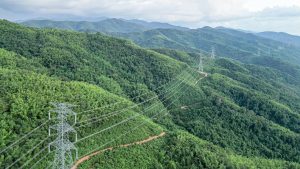
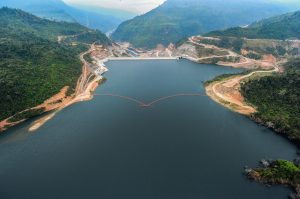

Mr. Thanawat added that the renewable energy-based portfolio of CKPower has helped CKPower to avoid the impacts from conflict in the Middle East and volatility in global energy prices to the Company’s operating performance. The impact is only limited to fuel costs associated with electricity sales to industrial customers of Bangpa-in Cogeneration Company Limited (BIC), which account for approximately 3% of CKPower’s total electricity generation.
“The probability of El Niño condition is expected to gradually increase in the second half of 2026. To mitigate this risk, the Company has proactively made preparation for the El Niño condition by continuing to enhance its Hydrometeorological Monitoring and Forecasting System. This aims to enhance efficiency and accuracy in electricity declaration of the Company’s hydroelectric power plants. As for the Luang Prabang Hydroelectric Power Project, construction progress reached 72% as of the end of March 2026, which was in line with the plan.”
CKPower also maintains a solid financial position. As at March 31, 2026, the Company maintained a Liquidity Ratio of 1.78 times, while the Net Interest-bearing Debt to Equity Ratio remained at a low level of 0.47 times. This reflects effective liquidity management and strong debt servicing capability. Furthermore, any additional reductions in policy interest rates of the United States and Thailand would help lower financial costs and support CKPower’s performance in 2026. The Company will continue to closely monitor interest rate movements and prudently manage its long-term debt to ensure an appropriate capital structure.
Mr. Thanawat stated that, under the Company’s five-year plan (2026–2030), CKPower aims to expand its power generation capacity through solar power projects in the form of Private PPA and participation in government renewable energy bidding, alongside the sale of Renewable Energy Certificates (RECs). In 2025, CKPower Group’s renewable energy facilities supplied over 10 million megawatt-hours (MWh) of renewable electricity to Thailand, representing approximately 17% of the total renewable electricity used in the country. The Group’s operations also helped avoid 5.34 million tons of carbon dioxide equivalent (tCO2e) greenhouse gas emissions. CKPower firmly believes that renewable energy is at the core of the energy transition. The Company continues to drive progress toward achieving net-zero greenhouse gas emissions by 2050.