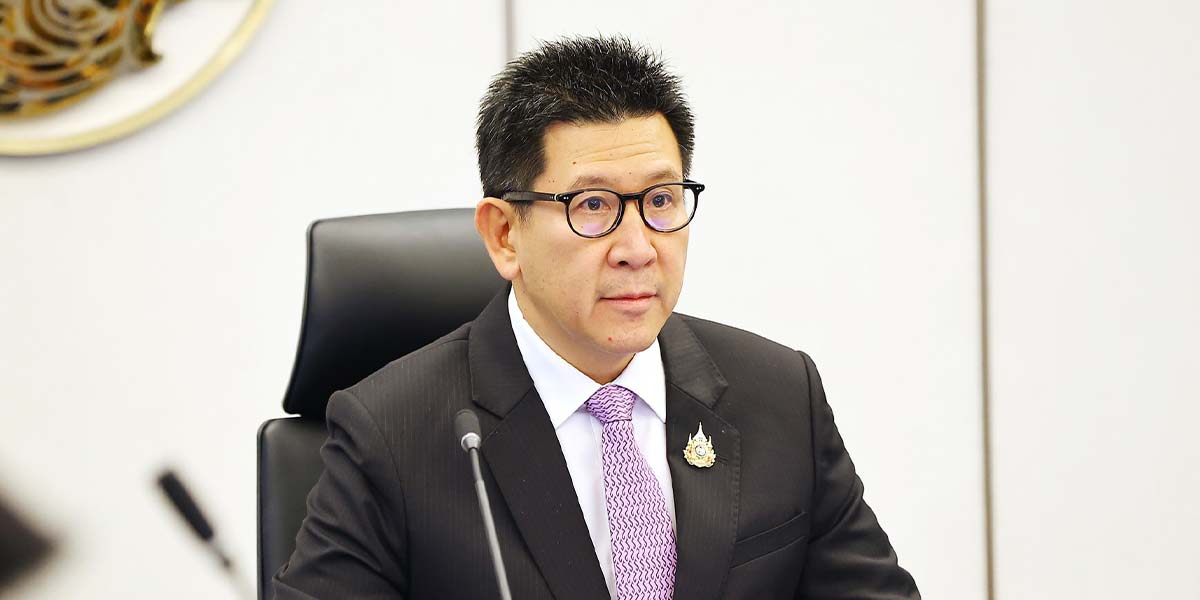
Ekniti Nitithanprapas, Deputy Prime Minister and Minister of Finance, revealed to ‘Kaohoon’ that there are positive signs for Thailand as both analysts and the private sectors have begun raising their GDP forecasts, although the economy continues to face volatility due to geopolitical tensions, which have triggered an energy crisis and elevated costs, while also dampening consumer purchasing power and affecting household well-being.
He emphasized that the government is not complacent with the circumstances and is currently striving to drive Thailand’s economy forward through increased investment. This strategy is intended not only to bolster short-term GDP growth but also to enhance the country’s long-term economic potential.
A recent government mission to France, during which officials met with President Emmanuel Macron and groups of French investors, aimed at strengthening economic cooperation and investing in future industries. The meetings made it evident that there is significant interest from foreign investors wanting to invest in Thailand.
Nevertheless, Ekniti noted that while certain government policies are beginning to take effect, it will require some time before Thailand’s economic engines are fully up and running, given the current volatility. The Ministry of Finance will not revise its own GDP projections in the near term, as adjustments are made according to a set schedule and will depend on a reassessment of the economic situation.
Regarding the Stock Exchange of Thailand, the deputy PM addressed recent analyst upgrades for the SET Index, which is now targeted at 1,600 points. He stated that the government’s focus on investment will restore investor and capital market confidence, as investment is the key driver for strengthening Thailand’s competitiveness.
Previously, TISCO Economic Strategy Unit (TISCO ESU) raised its 2026 GDP growth forecast for Thailand to 1.8%, up from 1.6%, citing the positive impact of the ‘Thai Chuay Thai Plus’ economic stimulus package and increased government spending.
However, TISCO ESU also noted that economic growth remains uneven (K-Shaped), with benefits concentrated in tourism and exports. They observed that recent interest rate cuts have yet to fully stimulate economic activity and anticipate that the Monetary Policy Committee will keep the policy rate at 1.0% throughout 2026. TISCO also warned of downside risks, highlighting the potential weakening of the baht to around THB 34.00 per USD, and global economic uncertainties.
Most brokerage houses assess that the SET Index could surpass the 1,600-point mark. Bualuang Securities (BLS) forecasts that this breakthrough could happen as early as the first half of June, followed by a short pause before renewed buying activity from mutual funds (window dressing) towards the end of the second quarter. This projection is supported by a lack of ‘Sell in May’ activity, renewed net buying from foreign investors, progress in peace talks in the Middle East, and anticipation of additional domestic stimulus measures.
Krungsri Securities (KSS) predicts that the SET Index in June 2026 will rise to test monthly resistance in the 1,595–1,627-point range, with significant support levels at 1,528 and 1,506 points.
Asia Plus Securities noted that the real sector, especially exports, is showing robust signs of recovery. Additionally, a shift toward lower tariffs both internationally and in Thailand, where the average tariff rate has declined to 5.3%, is providing further impetus. The firm believes that capital will soon rotate into Laggard stocks, including BDMS, MINT, THAI, CPF, and TU, after previously favoring the energy and electronics sectors.