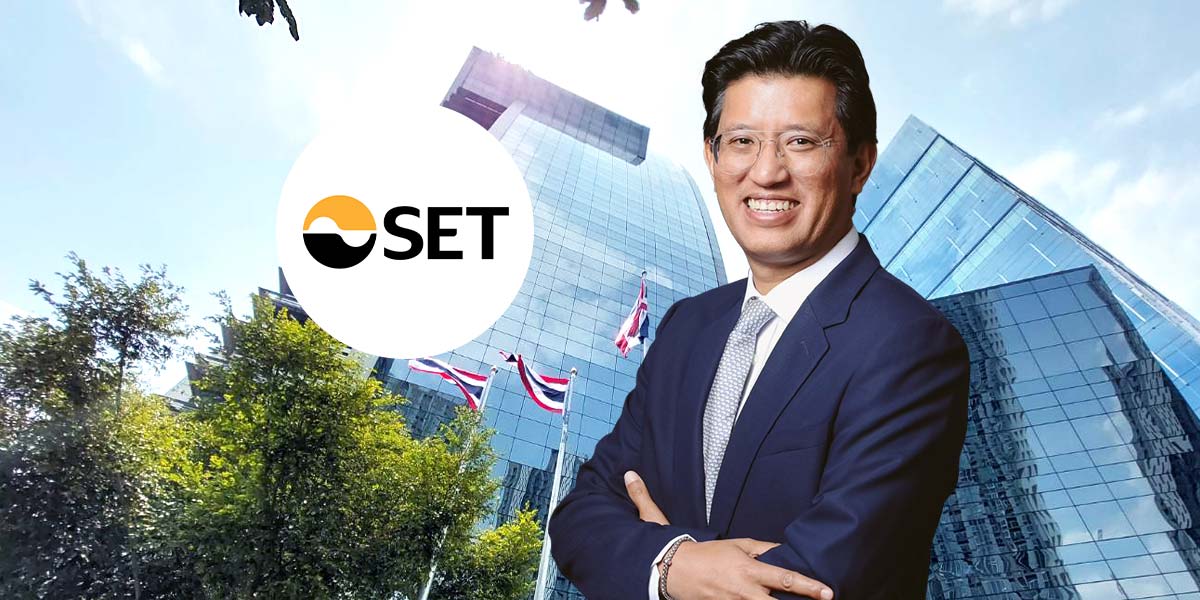
Speaking at the Nikkei Asia Forum APAC 2026 on July 16, Mr. Asadej Kongsiri, President of the Stock Exchange of Thailand (SET), declared that building “moats” around national exchanges to prevent Thai corporates listing outside the kingdon is a “losing game” in the long run, calling instead for deeper regional connectivity to sustain market momentum.
A 30% Surge Driven by Political Clarity
Kongsiri highlighted a remarkable turnaround for the Thai market, which has seen its index rise approximately 30% this year, accompanied by nearly $2 billion in positive net foreign fund flows. He identified the February election results as the primary “trigger point” for this resurgence, noting that the outcome provided investors with hope for a “strong and stable government”.
This stability is a welcome shift for an exchange that has weathered a decade of internal volatility. The election, he argued, gave investors confidence that ambitious government policies would finally be “activated” rather than just announced.
Attracting ‘Sexy’ New Economy Listings
A central theme of Kongsiri’s address was the evolution of the SET from a traditional “old economy” choice to a modern investment hub. To achieve this, the SET has launched a “BOI to IPO” program, targeting multinational subsidiaries and companies receiving Board of Investment (BOI) privileges.
With BOI applications exceeding 1 trillion baht in the first quarter of this year alone, the SET is aggressively pursuing listings in high-growth sectors, including:
- Data centers
- Electric vehicle (EV) manufacturing
- Semiconductors and PCBs
“We are trying to encourage… new economy listings to attract companies that are ‘more sexy’ and attractive,” Kongsiri said, emphasizing the need for local investors to participate in these sectors at the equity level.
ASEAN Connectivity and the DR Revolution
Kongsiri also emphasized that the future of the SET lies in regional cooperation rather than isolation. He pointed to the success of the Depository Receipt (DR) program as a prime example of connectivity. Thailand currently has over 400 DRs listed, allowing local investors to access global giants like the “Mag 7,” Toyota, and Singaporean firms using Thai currency and the local ecosystem.
While the SET is exploring dual listings to further integrate with neighbors like Singapore and Hong Kong, Kongsiri acknowledged significant regulatory hurdles. For instance, he noted a discrepancy in auditing standards where Singaporean auditors sign off on a company basis, whereas Thai accounts are signed by individuals. Despite these challenges, he remains committed to developing “cohesive and synergized” platforms through ASEAN CEO working groups.
A Reflection of Economic Potential
Now in its 52nd year, the SET’s market capitalization represents roughly 100% to 105% of Thailand’s GDP. With nearly 900 listed companies spanning healthcare, tourism, and banking, the exchange serves as a diversified reflection of the national economy.
Kongsiri concluded by stating that while the Thai economy has recently been a “laggard” compared to regional peers, the capital market remains the essential infrastructure to unlock its potential. “If the country doesn’t achieve its potential, it’s also the biggest difficulty for capital markets,” he warned, tying the exchange’s success and challenge directly to the nation’s growth.