Middle Eastern crude exports have climbed to 17.5 million barrels a day, with JPMorgan estimating that flows are now at 98% of their pre-war level. Still, the bank’s research shows a much weaker recovery in refined fuels, while continued shipping threats remain a concern for markets tracking regional supplies.
Saudi Arabia has led the resurgence in shipments through the Strait of Hormuz. The kingdom has also brought part of another export route back into operation. Its east–west pipeline, damaged earlier in September, has recovered roughly half its throughput. The route transports crude across Saudi Arabia to its Red Sea ports.
Nevertheless, JPMorgan’s September 29 assessment shows substantial differences across export categories. Shipments of refined products, including gasoline and diesel, have reached just 58% of their pre-war volume. Combined exports of crude and refined fuels stand at 89% of the level recorded in 2025.
The analysts stressed that the increase in Hormuz crossings did not signal a reduction in danger. Instead, they said, it demonstrated the oil industry’s greater ability to keep shipments moving while operating under persistent risk. Shipping threats continue in both Hormuz and the Bab el-Mandeb.
With the U.S.-Iran conflict in its eighth month, global oil markets remain focused on how much crude and refined fuel the region can export.
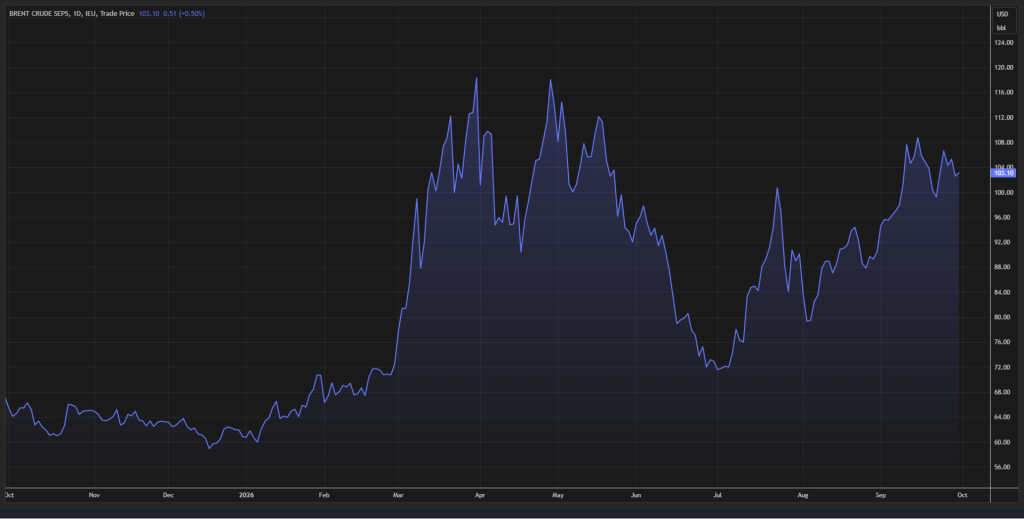
Prices have stayed elevated despite the supply recovery. Brent, the international crude benchmark, trades near $103 a barrel, compared with approximately $65 before the war. It remains below the conflict-period high of $118 reached in March 2026.