
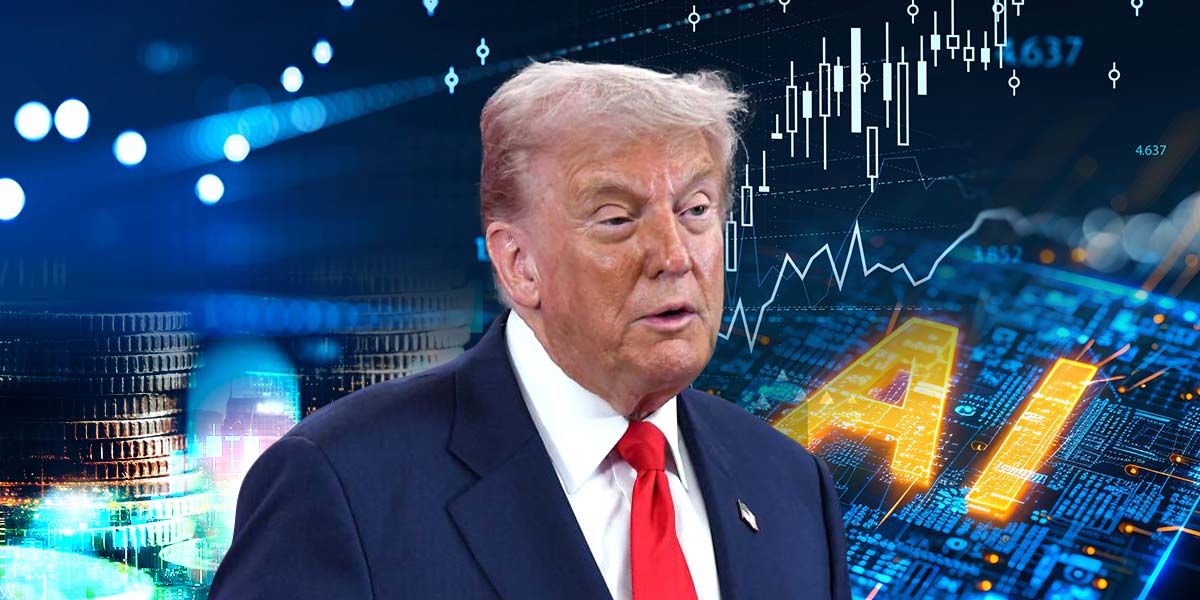
U.S. President Donald Trump announced on November 20, 2026, that his administration is considering measures to prohibit U.S. companies from investing in data center construction abroad. He also threatened to impose high taxes on companies that continue to invest outside the United States, aiming to spur the domestic development of AI infrastructure and enhance U.S. competitiveness against China.
According to Reuters, Trump indicated his intent to use punitive taxation against American companies establishing data centers overseas, with the goal of supporting the AI industry and investment within the U.S. However, these measures are currently only at the policy declaration stage with no official details on tax rates, enforcement scope, or implementation timeline.
This development comes amid heightened pressure on the U.S. tech and AI sectors following stricter controls on exporting advanced processing chips and limiting foreign data center technology access. Investors are increasingly concerned that these restrictions may hinder global digital infrastructure expansion, particularly in Southeast Asia.
The U.S. stock market saw a significant downturn on November 20, 2026, with the Nasdaq Composite ending at 22,617.73 points, down 1,261.47 points or 5.28%. The Dow Jones Industrial Average dropped by 949.73 points or 1.93% to close at 48,147.33, and the S&P 500 fell 3.70% to 6,910.39 points amid heavy sell-offs in technology and AI shares, alongside uncertainty regarding data center investments and AI value propositions.
Kasikorn Securities (KS) assessed that Trump’s proposed restrictions on data center investment outside the U.S. would negatively impact investment sentiment in ASEAN, particularly in Malaysia, Indonesia, Singapore, and Thailand—countries that have attracted significant foreign investment in digital and AI infrastructure development.
If the United States implements these measures alongside stricter AI chip export controls, major technology firms may reconsider or delay overseas investments, impacting the supply chain associated with data center construction, as well as Thailand’s energy, industrial estate, and construction businesses.
According to data from Thailand’s Board of Investment (BOI), in the first nine months of 2026, there were 1,954 investment promotion applications totaling THB 1.707 trillion, a 28% increase year-on-year. Projects related to AI accounted for over THB 1.2 trillion, or approximately 70% of the total, reflecting the vital role of the digital and AI infrastructure sectors in driving national investment.
Kasikorn notes that while most recent foreign direct investment inflows into Thailand have come from Singapore and China rather than the U.S., the combined impact of stricter export controls and foreign data center investment restrictions could dent investor confidence and affect decisions on future projects.
Reuters previously reported that the U.S. government had increased restrictions on exporting advanced AI chips to foreign data centers to prevent Chinese firms from accessing U.S. technologies via third countries. Southeast Asian nations—including Thailand, Malaysia, and Singapore—are among those likely affected.
Kasikorn further recommended investors monitor the responses of large technology companies like Amazon, Microsoft, and Alphabet, all major players in global cloud and data center businesses, as they could face policy constraints both inside and outside the U.S. Moreover, domestic opposition in the U.S. to new data center construction, particularly regarding energy use and local impact, is another potential limit on investment expansion, even as the Trump administration pushes for greater domestic technology investment.
For Thailand’s economy, the brokerage projects that, if enacted, these U.S. policies could have both direct and indirect effects through private investment and import channels. Private investment in 2026 is forecast to grow by 13.5%, with imports up 34%, in part supported by digital infrastructure projects. However, any delay in planned data center investments in Thailand could impact related investment activities, machinery and equipment imports, and service demand, increasing downside risk to 2027 GDP growth forecasts.
In the Thai stock market, concerns over U.S. policy may exert pressure on shares related to data center investments, especially those in the power plant, industrial estate, and construction sectors, which have been expected to benefit from digital infrastructure expansion. The true impact, however, will depend on further U.S. policy details and subsequent investment decisions by major technology firms.
FSS International Investment Advisory Securities (FSSIA) echoed similar concerns, viewing Trump’s latest measures as negative for investor sentiment in Thailand’s data center sector. The brokerage pointed out that this follows Trump’s recent introduction of remote access controls on advanced AI chips, requiring five countries, including Thailand, to obtain prior permission to access such technology and prevent Chinese firms from obtaining U.S. AI chips.
FSSIA noted that both U.S. and Chinese companies play significant roles in data center project approvals in Thailand, together accounting for some 36% of all projects approved by the BOI between 2024 and 2026. The firm concludes that the tightening of U.S. regulations is likely to affect data center investment not only in Thailand but also in other regions, resulting in a more cautious approach by investors and slower progress on new projects.