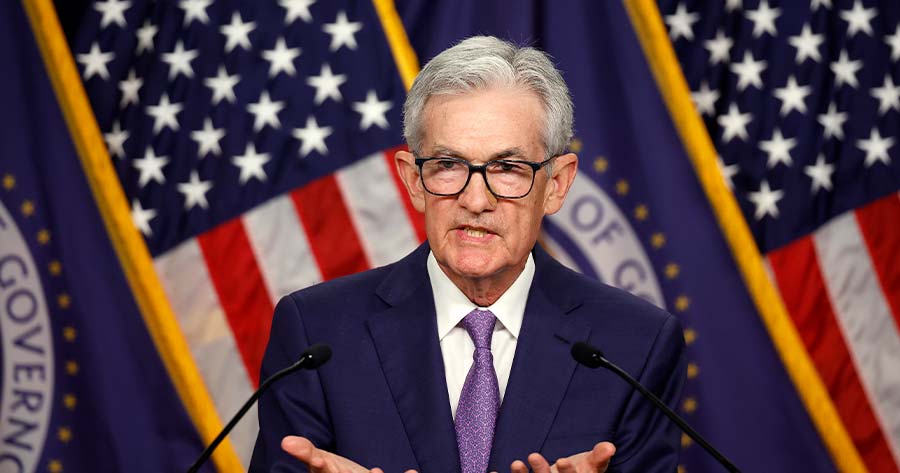
Federal Reserve Chair Jerome Powell warned investors against betting on a third consecutive interest rate cut at the central bank’s December meeting, emphasizing that further policy easing is not assured. “A further reduction in the policy rate at the December meeting is not a foregone conclusion, far from it,” Powell stated during his post-meeting press conference.
On Wednesday, the Federal Open Market Committee voted 10-2 to lower the federal funds target range by 0.25 percentage points, setting it at 3.75% to 4%, the lowest in three years.
His comments appeared designed to temper market expectations that had priced in more than a 90% chance of another quarter-point cut in December prior to the meeting. Following Powell’s remarks, Treasuries yields and the dollar rose while equities turned negative.
The committee also announced plans to halt the reduction of its asset portfolio starting December 1, concluding a process initiated in 2022. Over that period, the Fed reduced its holdings by over $2 trillion in Treasuries and mortgage-backed securities, shrinking the balance sheet to below $6.6 trillion—its lowest since 2020.
In its policy statement, the Fed reiterated concerns about the labor market, noting that “job gains have slowed” and acknowledging that “risks to employment rose in recent months.” The central bank, however, remains divided over the pace of future easing. Some policymakers argue against swift reductions in borrowing costs while inflation remains above the 2% target. According to rate projections released last month, 9 out of 19 officials expect no more than one additional rate cut in 2025, while seven see no further cuts this year.
The statement also referenced data limitations stemming from the government shutdown, which has disrupted the collection and release of key economic indicators, including labor, pricing, and consumer spending data. The Fed’s decision-making has grown more complex in an environment with restricted access to up-to-date figures.
Despite the challenges, policymakers did receive a delayed consumer price index report last week. It signaled that underlying inflation in September increased at the slowest three-month pace, but annual core inflation remained at 3%, still above the Fed’s target range—a point of concern for officials monitoring persistent price pressures.