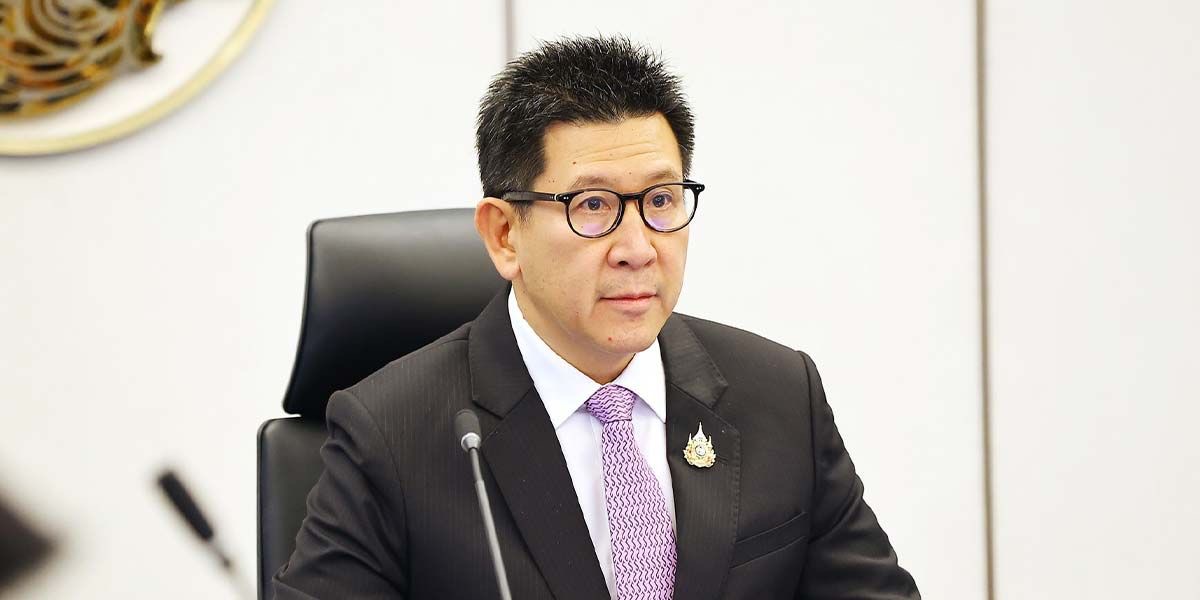
Dr. Ekniti Nitithanprapas, Deputy Prime Minister and Minister of Finance (MoF), stated that today (8 December 2025), MoF will present the country’s long-term savings measures (under the fifth pillar of Quick Big Win policy) at the Economic Policy Committee meeting for approval. This will precede submission to the Cabinet of Thailand for another round of approval on Tuesday (9 December 2025) for official endorsement.
A source from MoF stated that the long-term savings measures will be divided into three sub-measures, one of which is a tax deduction initiative. This aims to encourage long-term savings and stimulate the Thai stock market by allowing individuals who purchase mutual fund units—including Retirement Mutual Funds (RMF), Thai ESG Funds (TESG), and Super Savings Funds (SSF)—to deduct expenses for tax purposes up to THB 800,000 per year.
The policy comes with conditions: an investment account (Thailand Individual Savings Account—TISA) must be opened with an asset management company (AMC) or a commercial bank, with only one account per person. Investments can include listed companies’ ordinary shares, bonds, and mutual fund units. The proportion allowed for investment in offshore asset funds will be determined later.
Taxpayers earnings no more than THB 1.5 million per year can deduct 1.3 times the expense of mutual fund purchases, capped at THB 800,000 per year, from personal income tax. Those earnings over THB 1.5 million can claim a deduction at a rate of 0.7 times the expense, with the same cap of THB 800,000 per year. In cases of dividend or interest payments, the first THB 200,000 will be exempt from the 10% withholding tax.
Additionally, there is an ESG benefit—an increased deduction rate to 1.2 times for investors purchasing mutual funds that invest in companies excelling in Environment, Social, and Governance (ESG) aspects, known as the Thai ESG Fund (TESG).
Krungsri Securities (KSS) estimates that the TISA measure will have a significantly positive impact on the Thai stock market, particularly for high-dividend stocks in the banking sector. Many banks within the SET50 Index offer dividend yields of more than 6%, making them among the primary beneficiaries of this policy.
Although it is unlikely that billions of Thai baht will flow into the market immediately, KSS forecasts it will help reduce market volatility because investors under this scheme will mainly focus on long-term holdings for dividends and tax benefits.
Furthermore, KSS expects that TISA will help sustain a long-term investment base in the Thai market, increase liquidity, and help restore confidence in the market amid the current slowdown. However, detailed regulations on investment allocation and further conditions for the TISA scheme will need to be monitored once they are officially announced.
Regarding investment strategies under the new measures, KSS suggests focusing on large-cap stocks with strong fundamentals and consistent dividend payouts, particularly the banking sector, such as Krung Thai Bank PCL (SET: KTB) and Kasikornbank PCL (SET: KBANK).
Meanwhile, telecommunications stocks like Advanced Info Service PCL (SET: ADVANC), which has a dividend yield of approximately 4%, are also attractive for long-term investment under this policy.