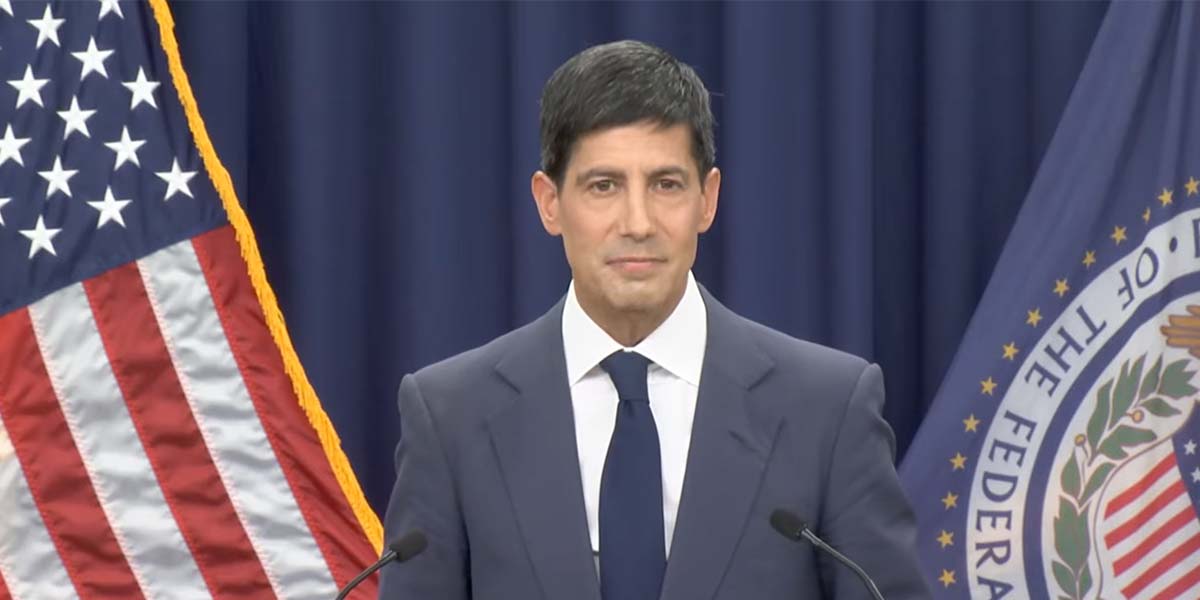
Financial markets are processing a pivotal shift in tone from the Federal Reserve, as Chairman Kevin Warsh indicated that the immediate dangers of inflation have diminished notably in recent weeks.
While the central bank remains steadfast in its mission to restore price stability, the acknowledgment of cooling pressures has strengthened the case for potential interest rate reductions. This development provides a renewed sense of optimism for investors who have been bracing for prolonged restrictive policy, potentially offering a tailwind for global equity indices. Still, Warsh did not indicate any specific figures that could reference his comment.
In his most comprehensive public remarks since his first press conference, Warsh reaffirmed that the Federal Reserve will operate without regard for political considerations. Responding to inquiries about President Trump’s public desire for more accommodative rates, the Chairman asserted that the institution’s long-standing independence remains intact and will see no adjustments under his leadership.
Warsh sent a blunt message to the financial sector and households alike: the central bank will not compromise on its 2% inflation target, regardless of external expectations.
The economic landscape remains complex, characterized by opposing forces. On one hand, energy costs have seen a sharp retreat following the Trump administration’s preliminary agreement with Iran, though the durability of this trend is uncertain due to recurring strikes and stalled negotiations.
Conversely, the rapid expansion of artificial intelligence is being cited as a new inflationary headwind, and the latest Personal Consumption Expenditures (PCE) data showed core inflation climbing to 3.4% in May—the highest mark since late 2023. Consequently, internal Fed projections for headline inflation have been revised upward to 3.6%, with core estimates rising to 3.3%.
Despite acknowledging that inflation risks are receding, Warsh remains reluctant to offer specific forward guidance regarding the trajectory of borrowing costs. He reiterated his preference for using interest rates as the fundamental tool of monetary policy while expressing a desire to further shrink the Fed’s balance sheet.
For now, the Chairman’s focus remains on a data-dependent path toward stability, even as the first signs of a potential policy pivot begin to emerge in his assessment of broader economic risks.