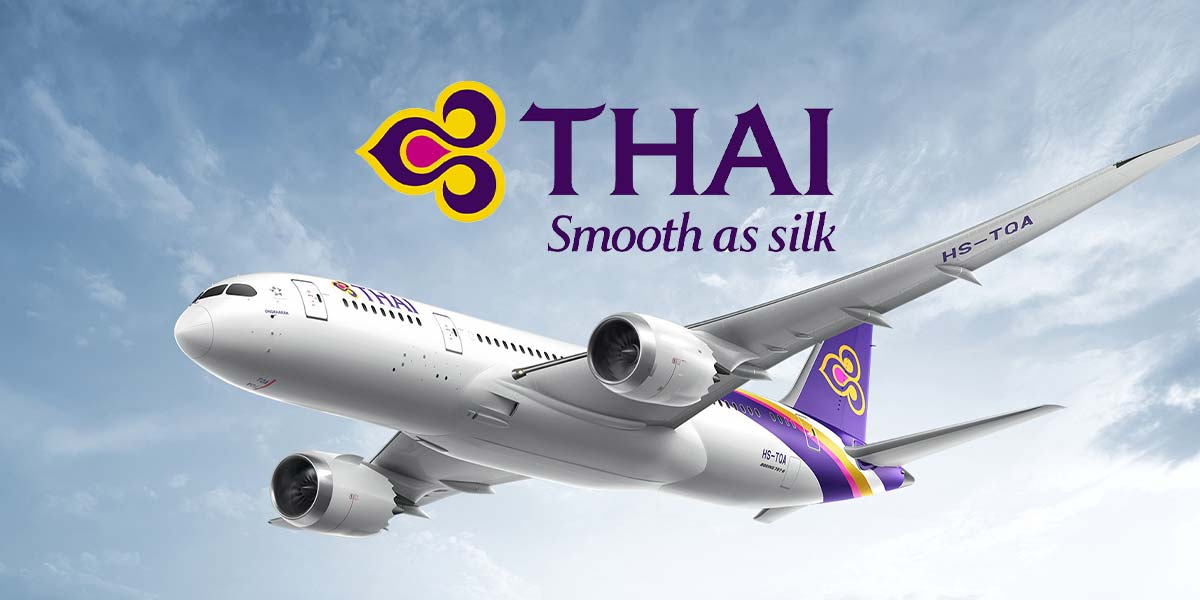
Yuanta Securities (Thailand) delivers a slightly positive view on Thai Airways International Public Company Limited (SET: THAI), following an analyst meeting, with a focus on the airline’s medium-term outlook.
The analyst wrote that Thai Airways’ fleet comprises 80 aircraft in 2025, with plans for substantial expansion in 2026, both through purchases and leases, aiming to operate 102 aircraft by the end of the year.
The additions include 14 narrow-body jets, 4 brand-new wide-body jets, and 10 leased planes—expected to be delivered by the third quarter of 2026. For the medium term, the company intends to lease 27 more aircraft, targeting a total fleet size of 129 by 2028.
Thai Airways will focus on expanding routes across Asia in 2026—specifically to South Korea, China, and Vietnam—alongside further growth into European destinations and Austria. The company’s ‘Network Flights’ strategy aims to capture passenger flows on routes where competition remains limited.
On the expense side, the company has implemented salary-based adjustments and performance-based bonuses for its employees, which are expected to decrease quarter-on-quarter but grow year-on-year in the first quarter of 2026. Aircraft maintenance costs are set to reduce but will likely trend higher year-on-year, mainly due to ongoing fleet expansion.
The carrier has leveraged tax benefits in the fourth quarter of 2025 and anticipates continued tax advantages through 2026 and potentially into 2027.
For this year, company targets include:
- Capacity expansion of 5-6% year-on-year
- Steady passenger yield year-on-year
- Load factor remaining in the 78–80% range
- Operating margin between 13–15%
Geopolitical tensions in the Middle East have affected overall airline capacity supply, boosting demand on European routes for Thai Airways. Elevated passenger yields and load factors are anticipated, while certain routes will require marginal diversions for safety, slightly increasing fuel costs.
However, the impact of rising jet fuel prices will be limited, as the company has hedged 50% of its 1H26 requirements and 30% for 2H26 at Brent oil prices around $70 per barrel. Still, the current high crack spread might exert some pressure.
The cost impact from fuel is expected to manifest from April 2026 onward. The company is now reviewing potential fare adjustments to maintain profitability, aiming for a balance that will not significantly impact passengers.
Meanwhile, a legal case regarding board appointments remains unresolved, as negotiations and subsequent decisions are still pending. Nevertheless, the newly appointed board continues to operate normally.
Yuanta expects a quarter-on-quarter earnings recovery for Thai Airways in 1Q26 due to seasonal trends and reduced SG&A expenses, though results may decline year-on-year because of a high base comparison. For the full-year 2026, despite higher cost bases and fuel price risks, growth will likely be supported by the expansion of wide-body capacity targeting the robust European market in the second half of the year.
The brokerage is revising its forecasts to accommodate Thai Airways’ fleet acquisition strategy and assess potential impacts from ongoing global tensions and cost risks. However, with an attractive valuation—particularly compared to international peers like Singapore Airlines (SIA)—and a solid dividend yield supporting downside protection, Yuanta maintains a ‘Buy’ recommendation with a fair value estimate of THB 9.30 per share.