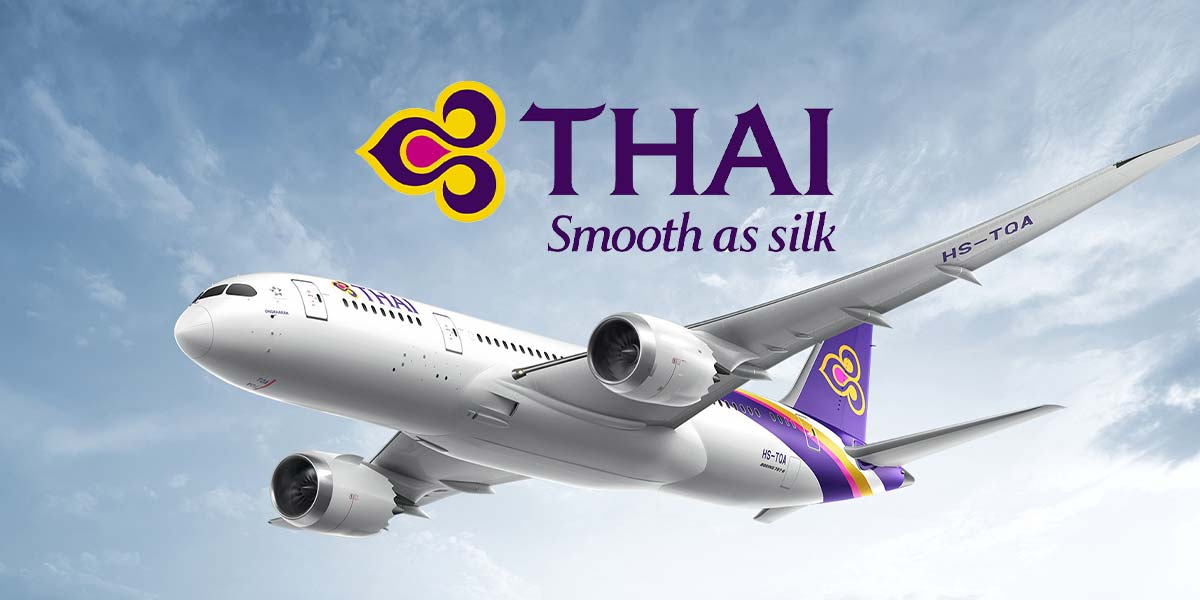
Chai Eamsiri, Chief Executive Officer of Thai Airways International Public Company Limited (SET: THAI), announced that at the upcoming board meeting on March 25, the airline’s management will present a crisis risk management plan in response to the ongoing conflict in the Middle East. THAI has begun to feel the impact in two significant areas: soaring jet fuel prices and a drop in passenger travel demand.
Jet fuel (Jet A-1) prices in Singapore have more than doubled from $80 per barrel before the Middle East tensions to a current $170-220 per barrel. To respond swiftly, THAI has already increased ticket prices by 10-15% overall and is preparing to propose a revision to its fuel surcharge to the Civil Aviation Authority of Thailand (CAAT). If approved, the base fare will be lowered while the fuel surcharge is increased, keeping the net cost to passengers at a reasonable level.
Chai expressed confidence that THAI’s competitive position will remain intact, since other airlines will also have no option but to raise fares amid persistent high fuel prices. Notably, THAI has opted not to further hedge fuel costs, as an additional hedge is deemed too risky when prices are volatile and high—having already locked in half its fuel need at Brent prices for January–June 2026.
The crisis has also prompted a “wait-and-see” attitude among travelers, particularly affecting advance bookings for the upcoming Songkran festival, with lower demand for long-haul destinations like Europe and Australia.
However, management believes the conflict’s impact is unlikely to reach the severity or duration of the COVID-19 pandemic. THAI is maintaining its 2026 revenue target of THB 200 billion—about 5% higher than last year—supported by strong cash reserves exceeding THB 120 billion. Still, the CEO admits operational costs will rise due to sustained high oil prices.
Should the conflict worsen, with extended fighting into May and jet fuel prices spiking to $240 per barrel, THAI may have to further delay non-essential investments and, if necessary, increase fares again.
Despite these challenges, THAI’s plans for new aircraft, increased flight frequency, and expanded routes remain unchanged for 2026. The fleet will grow from 80 to 102 aircraft by year-end, with 99 in regular operation and the remainder under refurbishment, driving a 5% capacity increase.
Summer schedule expansions include increased flights to India (rising from 77 to 91 per week), China (from 42 to 81 per week), plus new services to Chongqing, Changsha, Shenzhen, the return of the Amsterdam route after 28 years, and a comeback flight to Auckland.
THAI also reaffirmed that its THB 10 billion investment in 250-rai Maintenance, Repair and Overhaul (MRO) center at U-Tapao Airport will proceed without delay. The company has also notified the U-Tapao International Aviation Co., Ltd., (UTA) that the project will not be relocated as proposed, following concerns over operational efficiency near dual runways. Yet, discussion on the official MRO contract will be postponed, as resources are currently focused on crisis management.