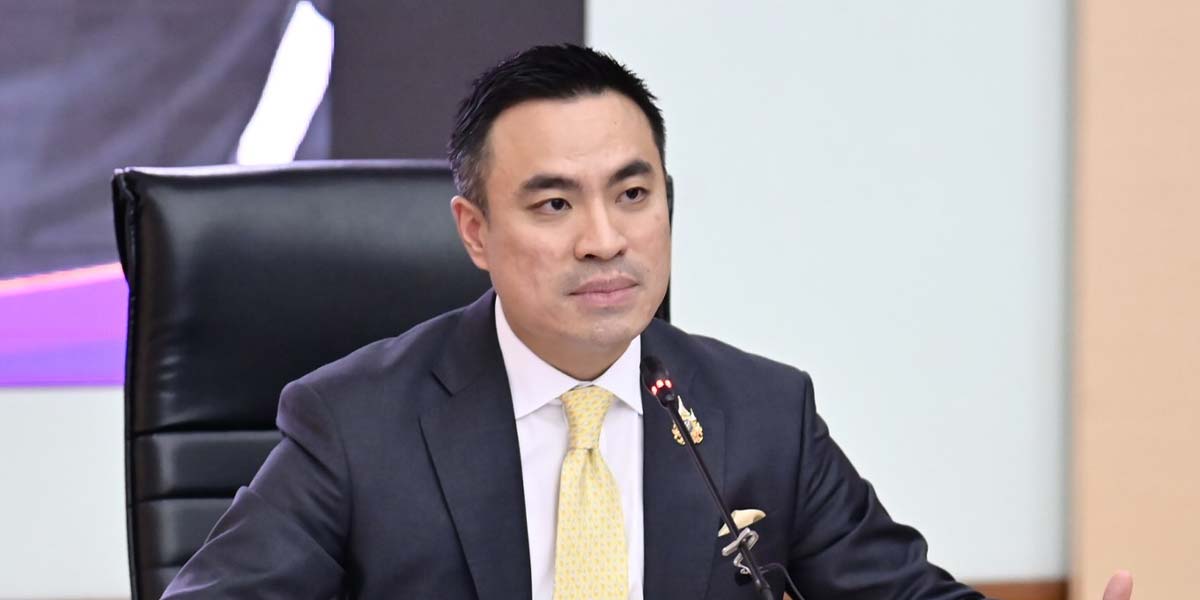
On April 1, Akanat Promphan, the new Minister of Energy, revealed that he had discussed with Anutin Charnvirakul, Prime Minister and Minister of Interior, ways to address the energy crisis, which is a combined crisis of both high oil prices and fuel shortages in certain areas, despite data indicating sufficient crude oil reserves and overcapacity in refineries.
Akanat stated that there should be transparent disclosure of oil flow data throughout the system. Currently, the Department of Energy Business only has monthly reserve figures from traders, but lacks information tracking the movement of oil from refineries, traders under Section 7, to wholesalers, and service stations. Following the Prime Minister’s exercise of legal powers to demand information, more detailed data has started to emerge.
Therefore, there is a need to urgently make this information nearly real-time, so the public can see how many days the oil supply will remain, where it is, and whether there is any stockpiling or leakage. He emphasized that the government can no longer afford to be considerate, because transparency is the solution to reducing public panic in a crisis.
When asked if there were “manipulators” behind the oil problem, Akanat confirmed its existence. He believes the problem consists of two parts: stockpiling and speculation through profiteering. The focus will be on major wholesalers under Section 10 — there are more than 250 but only over 100 are truly active — as well as certain Section 7 traders who might not own refineries or pump stations.
The Minister of Finance also stated that immediate action is needed on the refining margin. The March average exceeded THB 7 per liter, on some days rising to THB 17, then dropping to around THB 12-13, which is unusually high compared to the normal range around THB 2. He acknowledged higher costs during a crisis such as insurance or transport, but said increases should not reach these levels.
He proposed a mechanism to cap the refining margin at no more than THB 3-4, and if operators incur losses in the future, government compensation could be considered. He called on refineries, the Oil Fuel Fund, and all agencies under the Ministry of Energy to urgently review, especially refining margin, stating that any reduction would be immediately passed on to the public.
In the long term, Akanat also suggested establishing a national oil reserve to strengthen energy security in times of crisis, similar to what Japan does, instead of the current system in which reserves are primarily held by private entities.
Regarding electricity rates, the minister noted that the electricity cost for May–August 2026, based on options considered by the Energy Regulatory Commission (ERC), with the lowest at THB 3.95 per unit, could still be reduced to THB 3.88 per unit if the use of Claw Back funds, or unallocated money from the three Electricity Authorities, is reviewed. Should the government adjust evaluation criteria during the crisis, some of these funds can be utilized to reduce the public’s electricity burden.