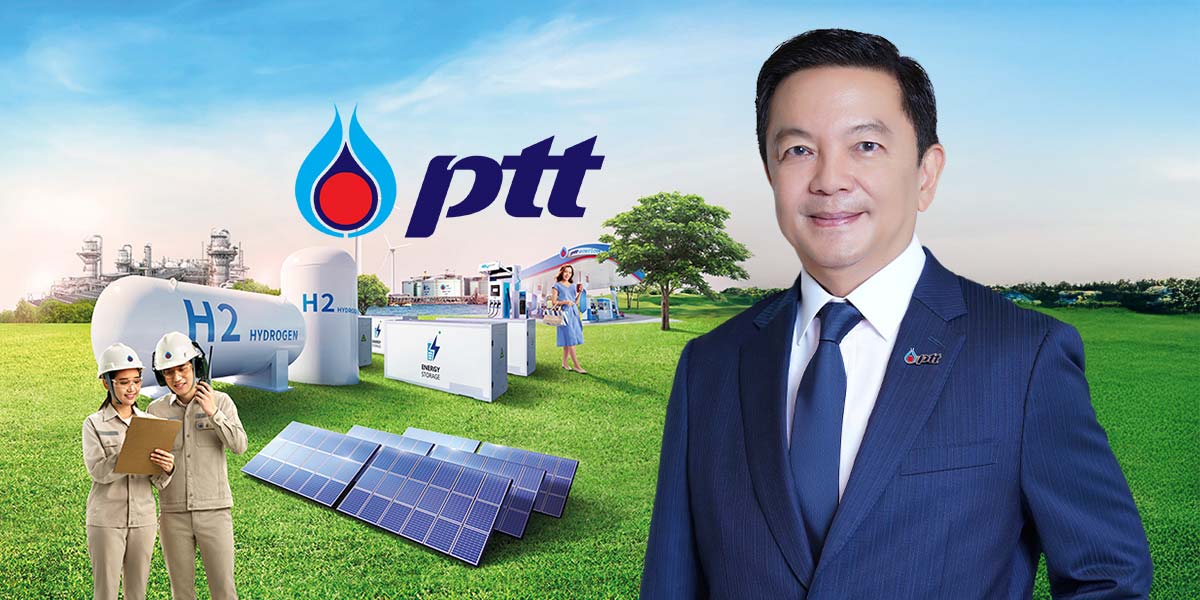
PTT Public Company Limited (SET: PTT) aims to expand its LNG trading volumes to 10 million tonnes by 2030 and 15 million tonnes by 2035, as the company strengthens supply security and pursues growth in global energy markets.
Speaking at the Gastech 2026 conference, President and Chief Executive Officer Dr. Kongkrapan Intarajang said PTT currently trades approximately 3 – 4 million tonnes of LNG, excluding imports for domestic consumption.
The company separates its LNG operations into two roles: importing supplies to support Thailand’s energy security under regulatory oversight, and trading internationally to broaden sourcing capabilities and generate business growth.
Dr. Kongkrapan said natural gas, including pipeline supplies and LNG, remains an important transition fuel because it is available from multiple sources worldwide, is relatively affordable, and is cleaner than coal and oil.
He expects natural gas to remain necessary for another 20 – 30 years, even as the global energy transition advances. However, continued use must be accompanied by emissions reductions, particularly through carbon-capture technology.
Thailand currently sources approximately 50% of its natural gas from the Gulf of Thailand, more than 10% from Myanmar, and over 30% through LNG imports. The fuel supports electricity generation, industrial activity and related downstream industries.
PTT’s strategy continues to rest on three pillars—security, affordability and sustainability—with greater emphasis on security in the current environment. Planned investment will seek new oil and gas sources in the Gulf of Thailand, nearby areas, neighboring countries and globally competitive locations, alongside further trading expansion.
Dr. Kongkrapan said PTT’s exploration, production and trading network enables the company to replace disrupted supplies with alternatives. Its trading operations span London, Singapore, the United Arab Emirates and Houston.
Thailand’s reliance on Middle Eastern oil supplies has declined from approximately 70% previously to around 30%, reflecting greater sourcing diversification.
According to Kongkrapan, Thailand experienced no crude oil shortages during past tensions around the Strait of Hormuz as PTT secured replacement supplies. The company absorbed part of the resulting additional costs, including higher financing and interest expenses, rather than passing on the full burden.
PTT also maintains and regularly rehearses contingency plans. Refinery investments over the past five years have increased flexibility to process crude from the United States, West Africa and other sources, reducing dependence on Middle Eastern feedstock.
He added that disruptions in the Red Sea have forced some vessels to reroute, reinforcing the importance of flexible logistics.
As both a state enterprise and a listed company, PTT must balance national energy security with shareholder returns, growth and financial performance. During energy crises, however, ensuring adequate natural gas and crude oil supplies takes priority, Dr. Kongkrapan said.
He noted that supply continuity also supports downstream industries, including petrochemicals, which depend on refinery products such as naphtha.
Gastech provides an opportunity for PTT to discuss investment, joint sourcing, LNG trading and future cooperation with international partners. The company is also showcasing carbon capture and storage technology, highlighting its role alongside natural gas in the energy transition.