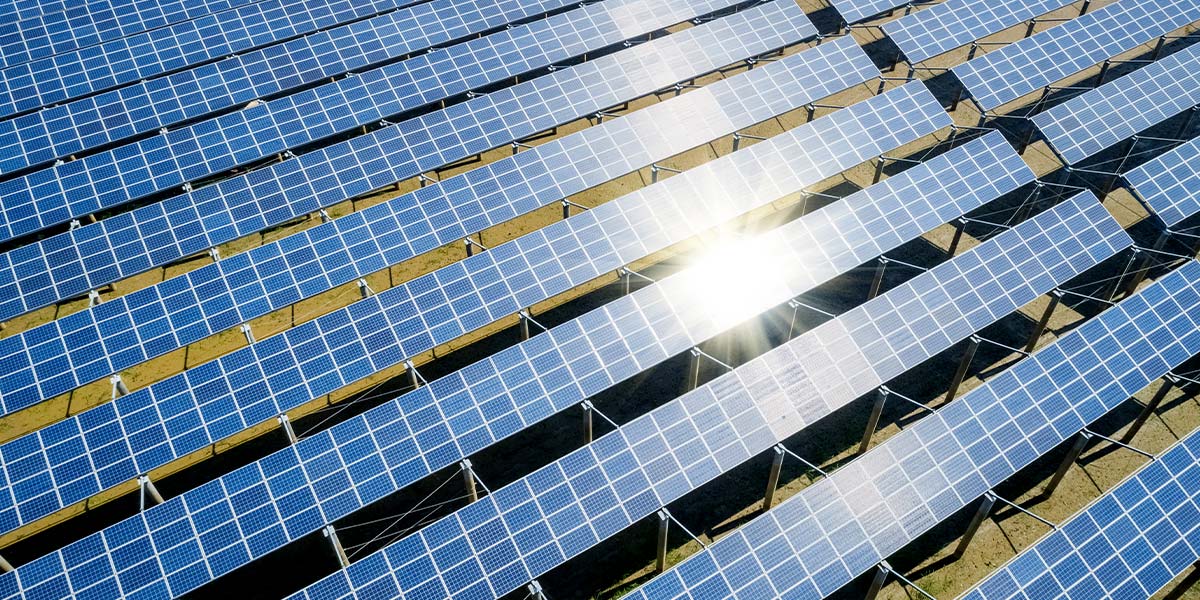
Finansia Syrus Securities maintains a positive outlook for the power sector, highlighting broad opportunities for power producers following the National Energy Policy Council’s recent approval of key energy initiatives. The brokerage notes that the newly-opened 1,500MW community solar farm program stands to benefit a wide range of electricity producers, though new gas pricing rules may create headwinds for some players.
The Energy Policy and Planning Office (EPPO) has endorsed core principles for the community solar farm project, which allows developments of up to 10MW per location, capped at 1,500MW in total. The approved feed-in tariff stands at THB 2.1679 per unit with a 25-year non-firm power purchase agreement. Each developer can be awarded a maximum of 30MW, expanding access across the industry.
Additionally, the EPPO greenlit a revised natural gas pricing structure, which aims to better reflect actual production costs for each user group. While the price of gas heading into and out of gas separation plants—as well as gas used for LPG production—will now match the average price from the Gulf of Thailand, gas for power generation, transportation (NGV), and industry sectors will use a weighted pool price across supplies from the Gulf, Myanmar, and LNG imports. This change, set to take effect January 1, 2026, will see gas separation plants absorb the 10% premium applied to gas sourced from the Gulf of Thailand versus the pool price benchmark.
Finansia Syrus observed that the open and decentralized selection process for the community solar project allows nearly every listed power operator to participate and provides upside for all to varying degrees. However, when evaluating the gas price reform, the firm said in discussions with several major utility players that the main variables will be the unit price and LNG’s share in the new pool formula.
Using current data, Finansia Syrus estimates that the pool gas price may land between THB 5-15 per MMBTU, which would weigh negatively on small power producers (SPPs) who must absorb their own fuel costs. By contrast, independent power producers (IPPs) are largely insulated from these cost increases due to long-term contracts that allow full passthrough of fuel expenses.
The report projects that the 2026 earnings of BGRIM, GPSC, and WHAUP would be the most affected, while GULF, RATCH, EGCO, and CKP would see only minor earnings impact owing to their relatively low SPP exposure (generally less than 10% of total capacity). If natural gas escalates by THB 1 per MMBTU, estimated annual profit impacts are THB 25 million for GPSC, THB 14 million for BGRIM, and THB 4 million for WHAUP. Should the increase average THB 10 per MMBTU, and with the Ft charge unchanged, projected annual profit losses for 2026 are THB 140 million for BGRIM (5.8% of net profit), THB 250 million for GPSC (3.8%), and THB 40 million for WHAUP (2.6%). GULF, RATCH, EGCO, and CKP should be less affected, given that their SPP portion remains limited. BCPG, with 90% of its assets abroad, is not expected to be impacted by either gas price changes or the Ft rate.
Finansia Syrus also points out that PTT’s gas separation plants will face higher feedstock costs—roughly 10% above the pool price—but this adjustment is preferable to the prior average pricing system and is a net positive for buyers like PTT and PTTGC, who will benefit from cheaper ethane supplies.
In summary, Finansia Syrus remains overweight in the power sector. While adjustments to the gas pricing regime will affect near-term profitability, the expansive scope of the new community solar program will enable power producers to offset some of these challenges. The brokerage also expects January to April’s Ft charge to hold steady at THB 3.94 per unit, and sees lower gas prices and interest rates as further positives going into 2026. Top picks are WHAUP, BGRIM, and GPSC, especially those with data center-related exposure.