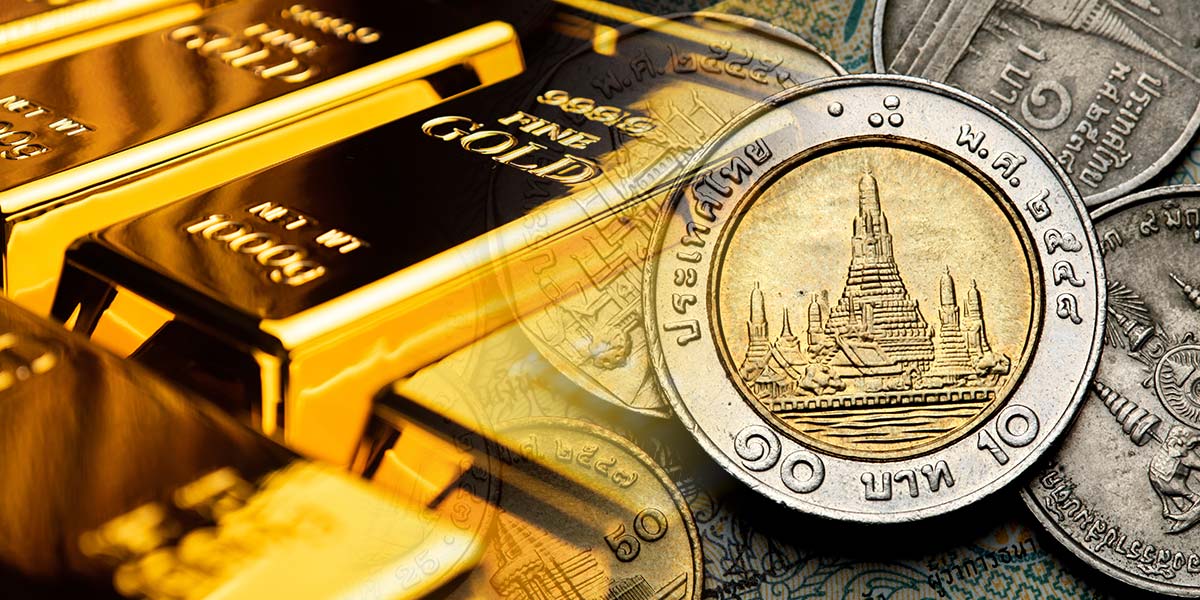
Thailand’s central bank now requires gold traders with over 10 billion baht in average annual transactions to report their dealings, as outlined in a new Royal Gazette announcement. The change comes as authorities introduce measures to address the recent appreciation of the baht, which they attribute in part to active gold trading.
The new regulation compels firms meeting the threshold to submit transaction reports to the central bank and retain records for a minimum of three years, according to the official statement released Friday. The initiative forms part of broader efforts by the Bank of Thailand to address the currency’s continued rise.
Bank of Thailand Governor Vitai Ratanakorn stated previously that an additional step—a cap on daily gold transaction limits via online platforms—would be implemented this week. Under the new measure, daily trading could be restricted to either 50 million or 100 million baht per platform.
Thailand’s currency has appreciated roughly 1% against the US dollar since the beginning of the year, following a 9% increase in 2025. This persistent strengthening threatens the global competitiveness of the country’s export and tourism sectors, according to central bank assessments.
In late 2025 and early 2026, the Bank of Thailand intensified its scrutiny of gold trading primarily to curb currency volatility. Massive sell-offs by Thai investors during global price spikes forced a rapid conversion of USD into Baht, driving the local currency to levels that threatened the country’s export and tourism competitiveness.
Authorities also targeted the shift toward digital “paper gold” speculation, which saw trading volumes swell to over 50% of Thailand’s GDP. This high-frequency activity operated with less oversight than traditional banking, raising alarms about money laundering and “grey money” flows.
To stabilize the economy, the government implemented stricter KYC (Know Your Customer) protocols, daily trading caps, and mandatory reporting for high-turnover traders. These measures aim to decouple the Thai Baht from speculative gold swings and ensure the market remains a tool for genuine investment rather than unregulated financial disruption.