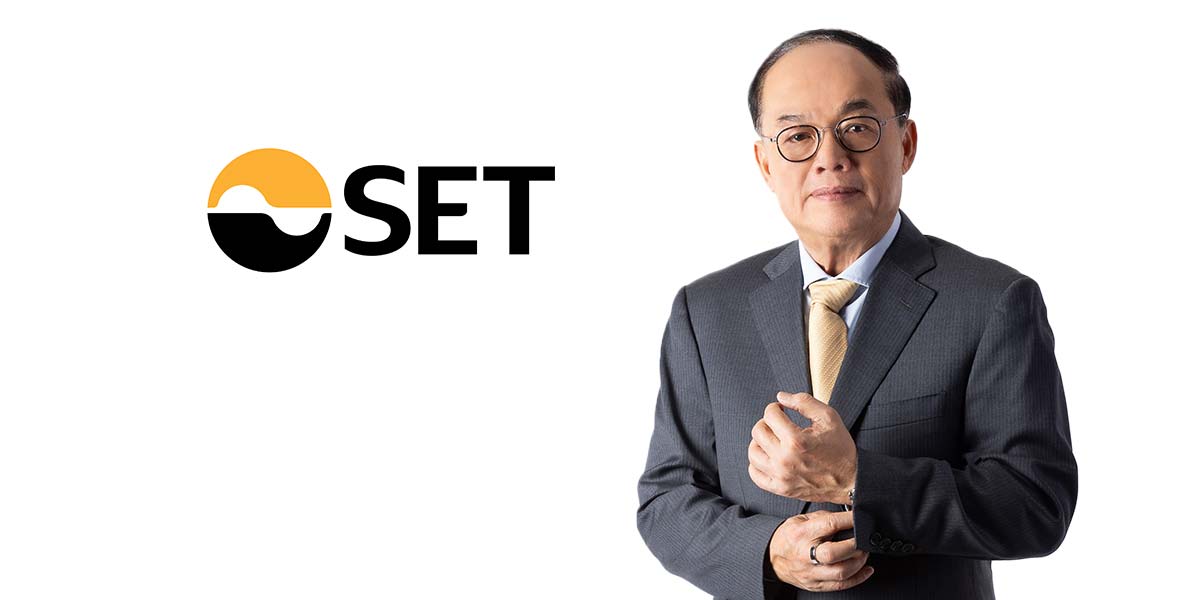
Professor Kitipong Urapeepatanapong, Chairman of the Stock Exchange of Thailand (SET), stated that amidst global economic volatility caused by geopolitical conflicts, energy prices, and supply chain uncertainties, he views the Thai capital market as remaining stable and possessing the potential to be a “Safe Haven” for investors compared to many other countries.
He emphasized that investors should not panic over short-term market downturns, as the fundamentals of Thai listed companies are still sound. Periods of weakness in stock prices might present accumulation opportunities rather than prompt selling.
The net selling by foreign investors and Thai institutional investors during certain periods mainly reflects portfolio rebalancing mechanisms used by global funds and does not indicate fundamental changes in the Thai market. He believes that regulatory improvements to support investment could continuously attract foreign capital back to the Thai stock market.
Another strength of the Thai stock market is its consistent dividend payouts. Last year, listed companies paid out a total of over THB 600 billion in dividends, reflecting an average yield of about 4%. At the same time, there are a considerable number of stocks trading below book value (P/BV under 1x) and an average P/E ratio of around 16x, making them attractive for long-term investment.
Additionally, the SET has plans to push for capital market legal reforms to enhance the competitiveness of the Thai stock market. This will be done by amending multiple laws simultaneously in the form of an Omnibus Law and removing regulatory obstacles to business operations to facilitate investment.
There are also concepts to broaden the investor base by proposing legal amendments allowing youths aged 18 and over to open securities trading accounts themselves, to cultivate a new generation of investors in the long term.
Regarding the progress of the Thai Individual Savings Account (TISA) project, Professor Kitipong stated that a capital market working group is currently reviewing project details to adjust certain conditions before presenting them to the main committee on March 17-18, 2026.
It is expected that TISA project proposals will be submitted to the government within a month after the new administration taking office, or in April 2026, with tangible clarity anticipated by May 2026.
The project’s implementation is a collaborative effort by several agencies under a joint committee, including SET, the Federation of Thai Capital Market Organizations (FETCO), and the Office of the Securities and Exchange Commission (SEC).
Legally, the TISA project may not require the enactment of entirely new laws but can proceed through amendments to ministerial regulation or relevant decrees for prompt implementation.
The project’s core structure remains close to the original proposals, with key points still under discussion, especially tax incentives. Fund industry players have proposed enhancing incentives, such as increasing the investment limit, to encourage the public to save more through the capital market.
At the same time, the project fundamentally aims to broaden the investor base, particularly attracting younger people to start investing early, coinciding with proposals to amend the law allowing youths aged 18 and over to open securities accounts themselves.