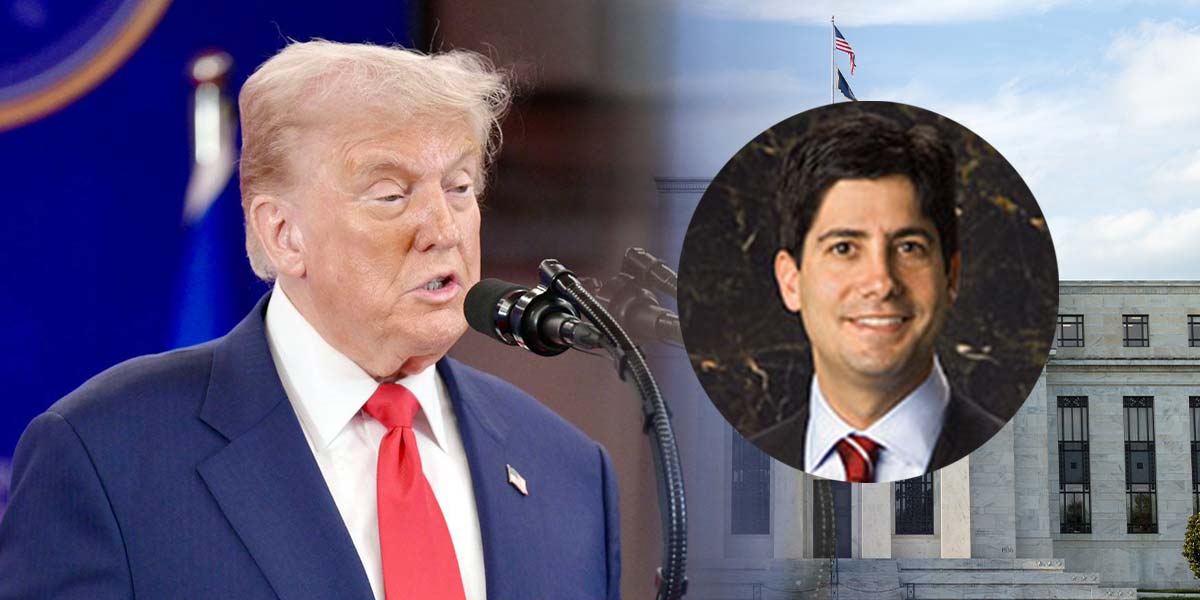
On Friday, President Donald Trump officially nominated Kevin Warsh to lead the Federal Reserve. The selection of Warsh, positioned to succeed Jerome Powell, points to a shift in central bank leadership likely to impact interest rate strategy and policy direction.
Kevin Warsh, recognized for his 2006-2011 tenure as the youngest governor in Federal Reserve history, is set to take over when Powell’s term concludes in May. The nomination comes after ongoing criticism from President Trump directed at Powell for not pursuing faster interest rate reductions. Warsh, age 55, has drawn White House approval for what Trump described as a strong fit for the role.
Historically identified as favoring tighter monetary policy, Warsh has recently called for substantive changes at the central bank, aligning more closely with Trump’s preferences for lower rates. He has also advocated for policy reforms that mirror the administration’s pursuit of regulatory rollbacks and federal spending cuts, which he contends would help contain inflation and allow for easing measures.
The announcement was met with mixed reactions across party lines. Republican legislators, including Senator Tim Scott, cited Warsh’s financial sector expertise as an asset. Meanwhile, Democrats such as Senator Elizabeth Warren have criticized the nomination, questioning the potential for undue influence from both Wall Street and the presidential administration.
Further uncertainty surrounds the confirmation process, given that Senator Thom Tillis has indicated he may delay consideration of any nominee until outstanding questions about Powell, under Justice Department review, are resolved.