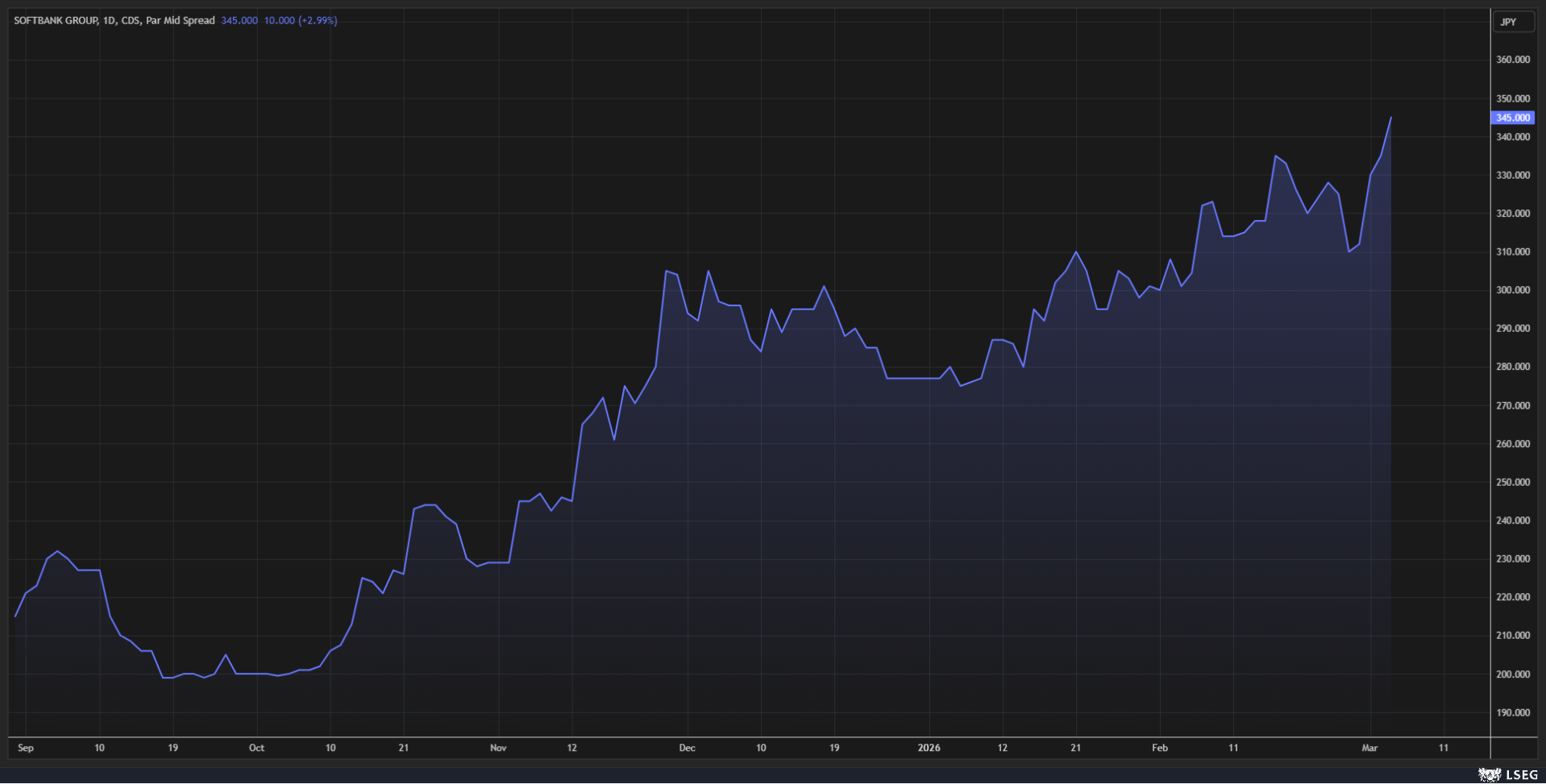
SoftBank Group’s five-year credit default swaps (CDS) have risen to their highest point in nearly a year, reflecting rising concern among investors about the company’s aggressive strategy in artificial intelligence. The move comes after the firm deepened its financial commitment to OpenAI, intensifying scrutiny of its credit health within Japanese corporates.
Recent data indicates that SoftBank’s CDS stands at 345 basis points after surging to about 355 basis points, reaching levels last seen in April 2025. This expansion in credit risk follows S&P Global Ratings’ decision to revise its outlook for SoftBank from stable to negative. The agency cited that SoftBank’s additional $30 billion investment into OpenAI could lengthen the time required to improve both its liquidity and the quality of its holdings.
According to S&P, the company retained its “BB+” long-term issuer credit rating, but softer liquidity and asset quality metrics are forecasted if the current investment pace continues. While the agency pointed out that SoftBank could potentially address financial pressures through asset disposals, it also highlighted heightened risks from its focus on emerging AI businesses.
The ratings provider stressed that many of the group’s AI-backed startups face high innovation risks and fierce industry competition, identifying OpenAI as having some of the weakest credit characteristics within SoftBank’s investment portfolio.
About CDS
A Credit Default Swap (CDS) is essentially an insurance policy against the risk of a borrower (like a company or a country) defaulting on its debt. In a CDS agreement, the buyer makes regular payments to the seller. In exchange, the seller agrees to pay the buyer a specific amount if the borrower fails to pay back its loan or defaults.