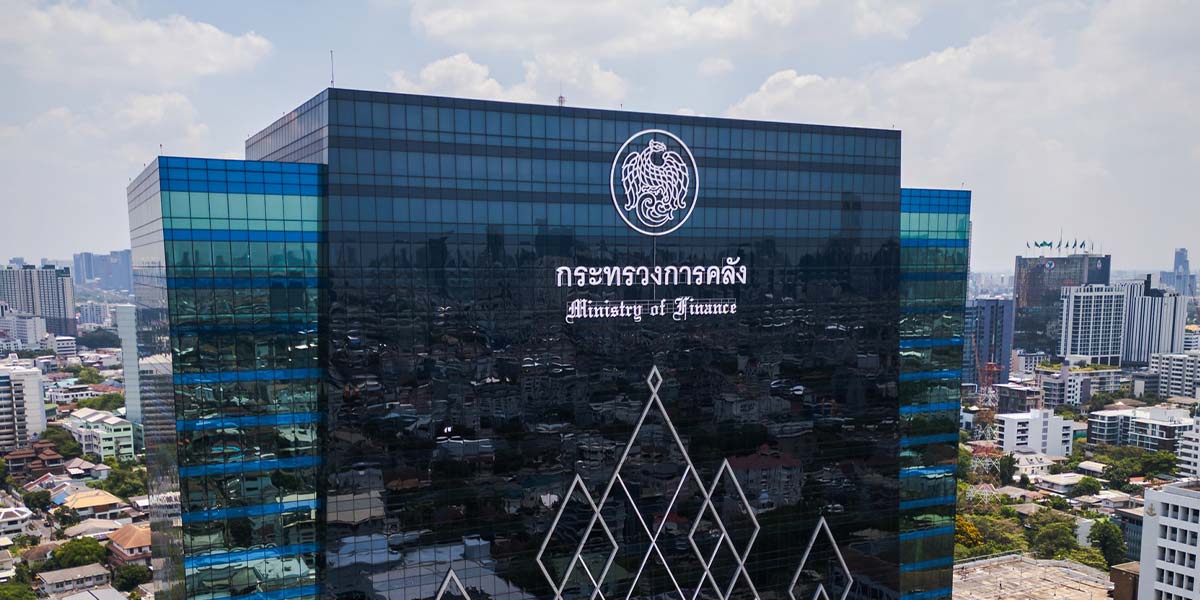
Dr. Ekniti Nitithanprapas, Deputy Prime Minister and Minister of Finance, revealed that the Ministry of Finance (MOF) has discussed with the Securities and Exchange Commission (SEC), requesting further clarification regarding “Supaporn Pimphong” and the current issue of mule accounts, aiming to resolve all related doubts. He also instructed urgent action to address these problems and develop preventive measures.
The MOF has a policy to supervise the capital market, with a focus on restoring investor confidence. Thus, the Ministry has assigned the Permanent Secretary of the MOF, who sits on the board, along with other relevant committee members, to work strictly with transparency as the core principle to build confidence in Thailand’s capital markets. If any additional loopholes are discovered, immediate action will be taken to rectify and close those gaps.
At the same time, there has been a connect the dot and data exchange initiative to update information and discuss data integration between agencies, namely the MOF, the Bank of Thailand (BoT), the SEC, and the Anti-Money Laundering Office (AMLO), under the working group of the connect the dot subcommittee. The aim is to establish a system to plug loopholes and financial leakages.
Initially, there was a plan to set up a centralized data bureau; however, in light of recent events, it was decided to shift towards establishing a direct data exchange system between agencies, as it enables a faster and more efficient process.
Anek Yooyuen, Deputy Secretary-General and Spokesperson of the SEC, said that progress is being made in two major areas: the management of information disseminated through the SEC system and the law enforcement process. Both aspects have been implemented concurrently. Regarding the information disseminated through the system, the SEC has already verified the facts and removed inaccurate data from the system as of July 9.
Besides legal action, this incident has also triggered a review of the form 246-2 reporting system. Currently, the user registration system includes identity verification against the official government database. The accuracy of the reported information remains the legal duty of the reporting party, in accordance with international capital market principles.
Nevertheless, the SEC has received many suggestions from the media, investors, and stakeholders, including calls for additional data verification steps, mandatory attachment of supporting documents, and adoption of technology to aid verification. The SEC is open to considering all suggestions.
Concerning the proposal to delay the publication of information until after verification, Anek noted that the principle of disclosure used in global capital markets stipulates that the reporting party is responsible for their own information and that immediate disclosure without delay is required. Waiting for verification in all cases could delay crucial data from reaching the market and adversely impact information users.
This principle is not only applied to form 246-2 reports, but also to financial statements and the disclosure of significant information by listed companies. If inaccuracies are later found, regulatory agencies will inspect and enforce the law accordingly.
Anek acknowledged that the SEC should further improve communication of information status to the public, especially data under review. He also said the SEC is expediting system enhancements through technology to make it easier for information users to assess the status of data.