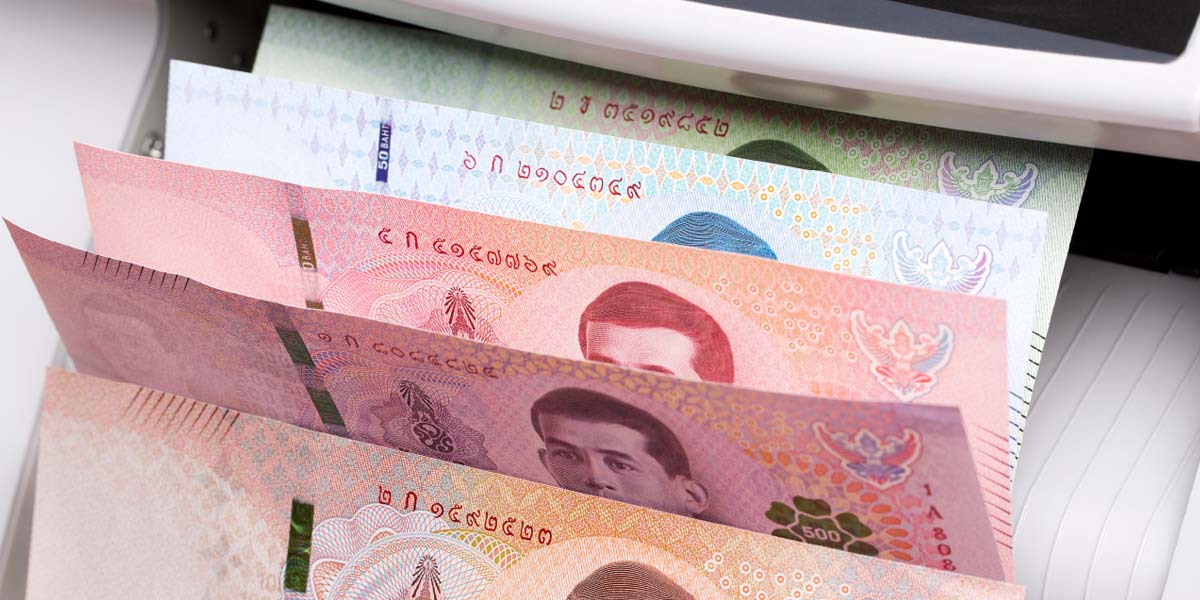
The Thai Baht closed weaker at THB32.94/USD on Friday, August 28, 2026, registering a drop from its previous Friday close of THB32.68/USD, as global market dynamics and domestic monetary policy decisions pressured the local currency.
According to Kasikorn Research Center (KResearch), the Baht experienced notable volatility throughout the week of August 24–28, 2026. While the currency saw a brief early-week appreciation due to selling pressure on the US dollar—stemming from concerns over volatile US Treasury yields and negative market reactions to US Treasury intervention measures—these gains were quickly reversed. The US dollar later found strong safe-haven support following the US Treasury Secretary’s announcement of expanded secondary sanctions targeting five key sectors of Iran’s economy: digital assets, technology, gold, aviation, and maritime transportation.
Multiple Pressures Drag Baht Closer to 33
The downward pressure on the Baht intensified as the week progressed, pushing it closer to the THB33.00/USD threshold. This decline was aligned with a wave of profit-taking in the global gold market. At the same time, the US dollar was bolstered by climbing US Treasury yields after better-than-expected July PCE inflation and weekly jobless claims data reinforced expectations that a Federal Reserve rate hike remains possible before the year-end.
On the domestic front, the Baht traded on the weaker side from midweek onward after the Bank of Thailand’s (BOT) Monetary Policy Committee (MPC) voted to maintain the policy rate at 1.00%, signaling that monetary policy will remain accommodative to support the Thai economy.
Heavy Capital Outflows Recorded in Equities and Bonds
The Baht’s weakening was accompanied by substantial capital outflows. During the week of August 24–28, 2026, foreign investors were net sellers of Thai equities totaling THB12,228 million. Concurrently, the Thai bond market recorded net outflows of THB375 million, which consisted of net bond purchases of THB129 million offset by THB504 million in maturing debt instruments.
Outlook and Key Factors to Watch
Looking ahead to the upcoming week of August 31 – September 4, 2026, KResearch expects the Baht to fluctuate within a range of THB32.60–33.40/USD. The firm advised market participants to closely monitor critical domestic and international factors, including:
- Thailand’s July current account balance and foreign capital flows.
- Geopolitical developments in the Middle East.
- Key US economic data: July job openings and factory orders, August ISM and PMI manufacturing/services indices, nonfarm payrolls, the unemployment rate, weekly jobless claims, and the Fed’s Beige Book.
- Global economic indicators: August manufacturing and services PMI data from China, Japan, the Eurozone, and the UK, as well as the Eurozone’s August inflation figures.