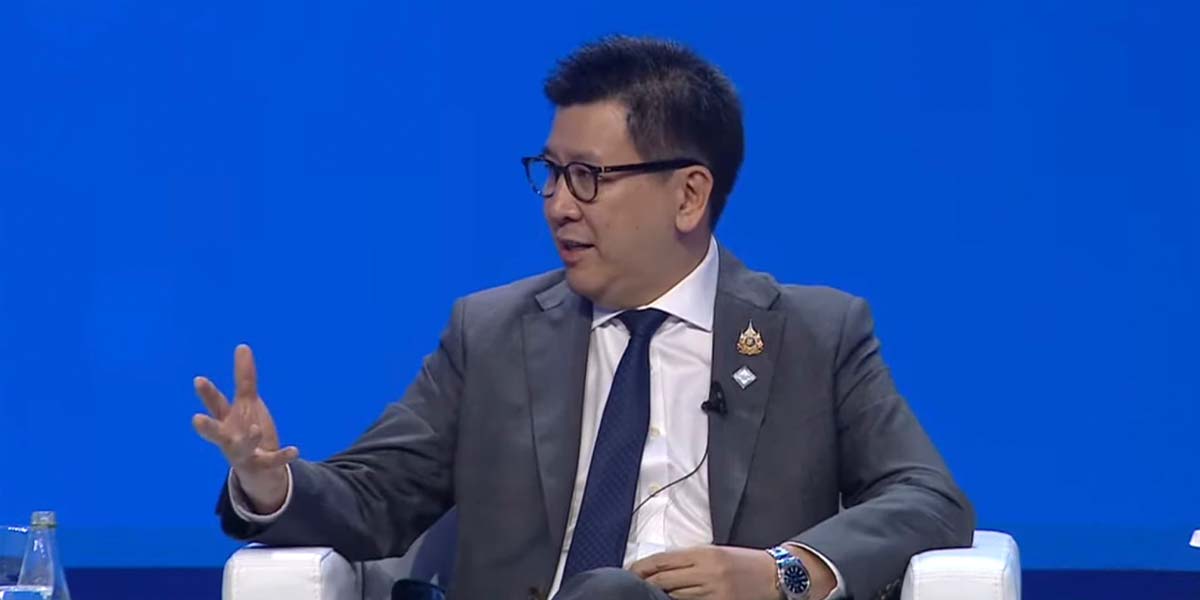
Describing Thailand as a “small boat navigating multiple severe storms,” Deputy Prime Minister and Finance Minister Ekniti Nitithanprapas outlined how the host nation of the 2026 IMF-World Bank Annual Meetings is maintaining economic stability amidst rising energy import costs, geoeconomics fragmentation, high global interest rates, and rapid AI technological disruptions.
Speaking in Bangkok, Ekniti underscored that Thailand’s unwavering commitment to fiscal discipline has anchored its 10-year government bond yield at approximately 2.3 percent—substantially lower than prevailing yields in the U.S. and Europe—providing a solid macroeconomic foundation to withstand external shocks.
Ekniti emphasized that while macroeconomic stability is vital, it is merely a prerequisite rather than the ultimate destination, urging governments to execute structural reforms that accelerate economic transitions for businesses and citizens.
Thailand has capitalized on global supply chain realignments to attract investment in emerging sectors such as artificial intelligence, smart electronics, and electric vehicles. Foreign direct investment applications jumped by 47 percent year-on-year in the first half of the year to approximately $44 billion.
To ensure these capital inflows translate into local productivity gains, Thailand launched the Skill Bridge program, connecting multinational investors with local universities to facilitate knowledge transfer, upskill the workforce, and integrate domestic firms (SMEs) into global value chains.
In tandem with workforce initiatives, Thailand has aggressively cut red tape and simplified permit processes, driving private investment growth above 10 percent for two consecutive quarters.
On the regional stage, Ekniti championed deeper ASEAN integration to buffer member states against external economic volatility. Key regional initiatives include the ASEAN Power Grid—which connects clean hydroelectricity from Lao PDR to Thailand, Malaysia, and Singapore—the Digital Economy Framework Agreement (DEFA) to standardize cross-border digital infrastructure, and interoperable cross-border QR payment systems. Furthermore, Thailand is actively expanding international trade partnerships, including ongoing bilateral negotiations with the European Union.