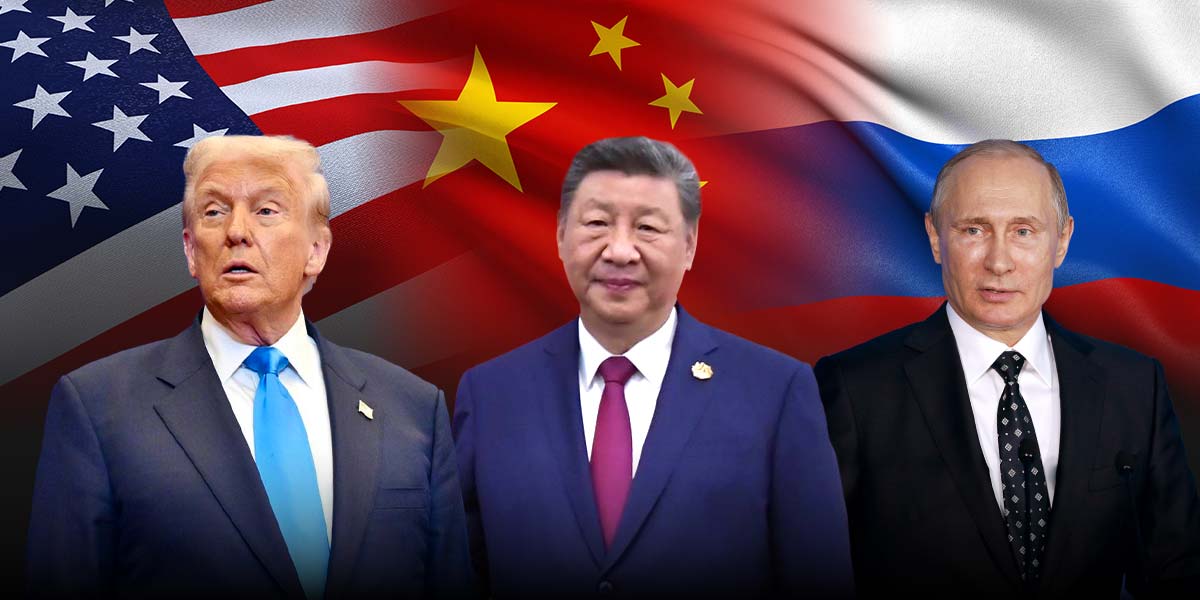
U.S. President Donald Trump, alongside Russian President Vladimir Putin and Chinese President Xi Jinping, convened for an unprecedented trilateral meeting on Thursday during the APEC summit in Shenzhen, China.
Trump stated that the United States, Russia, and China, as the nations with the largest nuclear arsenals, hold a distinct responsibility to engage in discussions aimed at reducing nuclear stockpiles and minimizing the possibility of their use.
He acknowledged the difficulty of cutting nuclear weapons and raised concerns about preventing Iran from acquiring such capabilities. Additional topics on their agenda included the ongoing conflict between Russia and Ukraine, while Trump criticized international bodies such as the International Criminal Court.
In turn, Xi Jinping, in translated remarks provided by Chinese state media, emphasized that major powers like the U.S., China, and Russia must maintain solid communication, describing it not as a choice but a need. He highlighted China’s ongoing partnership with Russia and called for constructive approaches to relations with the United States, urging all three nations to respond cooperatively to international challenges.
Xi outlined four essential principles for interaction between large countries: respecting each other, coexisting peacefully, pursuing mutually beneficial cooperation, and committing to dialogue. He also echoed Trump’s focus on nuclear arms, urging that nuclear weapons should be universally banned and ultimately destroyed.
Putin, for his part, expressed hope that cooperation among the U.S., China, and Russia could reinforce international stability, suggesting discussions should include energy security and global issues, with particular emphasis on the Ukraine conflict.
Trump described both Xi and Putin as friends and spoke favorably about the U.S. relationship with China, noting improvements since his return to office.
The trilateral summit was scheduled amid the broader APEC agenda, which saw regional leaders focus on expanding openness and encouraging innovation-led growth. Observers have noted that substantive agreements on issues such as arms control or the Ukraine conflict remain unlikely, given longstanding differences, but the outcomes remain to be monitored.