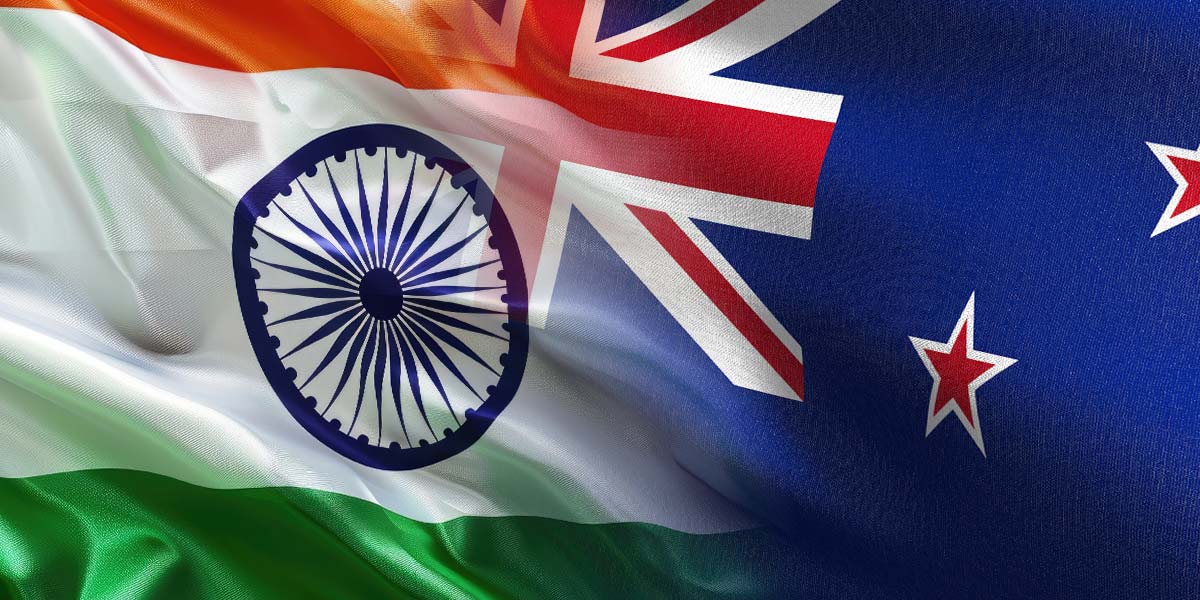
According to officials, India and New Zealand have reached a free trade agreement aimed at strengthening economic ties and bolstering growth amid shifting tariffs, geopolitical tensions, slower growth, and mounting protectionism.
This initiative is part of New Delhi’s ongoing effort to broaden export markets, a strategy designed to counter the effects of sharply increased U.S. import tariffs. According to India’s chief negotiator Petal Dhillon, a formal signing of the agreement is anticipated in the first quarter of next year, following a legal review of the negotiated text.
Negotiations for the India-New Zealand deal spanned nine months and focus on reducing tariffs, loosening regulatory restrictions, and enhancing cooperation across goods, services, and investment sectors.
Under the deal, India will secure zero-duty export access for all its products to New Zealand. In return, New Zealand will receive tariff concessions and phased market access on about 70% of India’s tariff lines, accounting for roughly 95% of Wellington’s exports, officials indicated.
India’s industries set to benefit from duty-free exports include textiles, apparel, engineering goods, leather and footwear, and marine products. As for New Zealand, it stands to gain mainly in horticulture, wood, and sheep wool, along with other sectors. As part of the pact, New Zealand has pledged to invest $20 billion in India over a 15-year period, according to India’s Trade Ministry.
India has excluded certain dairy imports—such as milk, cream, whey, yoghurt, and cheese—as well as select animal and vegetable products like goat meat, onions, and almonds, citing domestic sensitivities.
Bilateral trade between the two countries currently remains limited compared to India’s larger trading partners, with merchandise and services exchanges totaling $2.4 billion in 2024. Trade Secretary Rajesh Agarwal stated that the two sides aim to double this figure within five years.
New Zealand Prime Minister Christopher Luxon noted that the country’s exports to India are forecast to increase by $1.1 billion to $1.3 billion annually over the next twenty years as a result of the agreement. India also described the accord as a catalyst for expanded trade, investment, innovation, and shared opportunities for both countries.