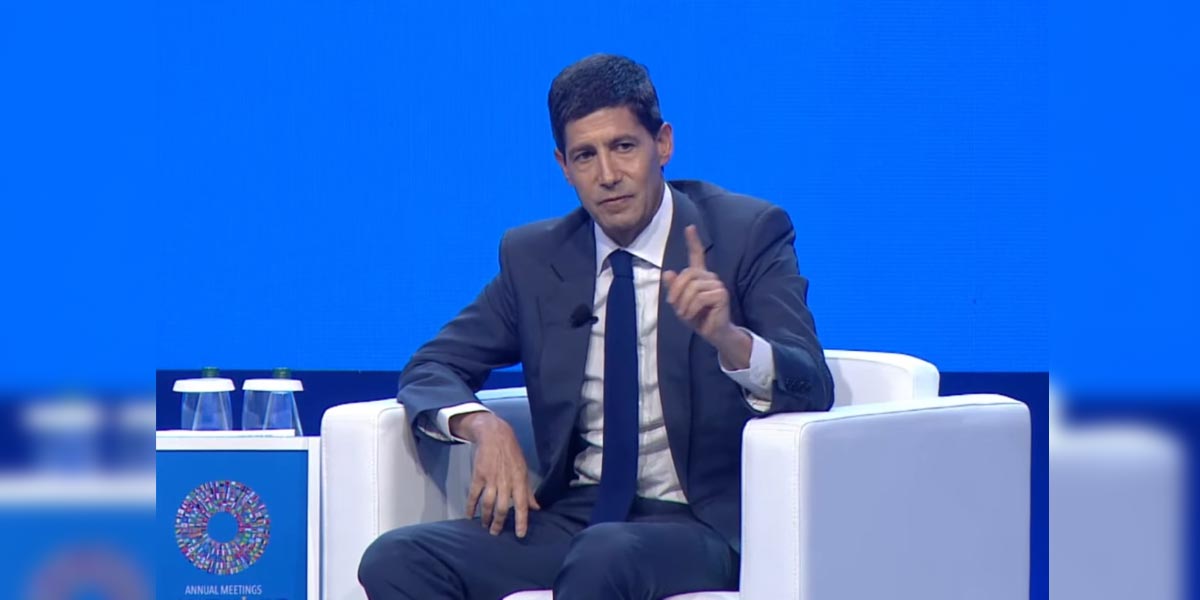
Federal Reserve Chairman Kevin Warsh firmly declined to offer forward guidance on upcoming U.S. interest rate decisions during a fireside chat with International Monetary Fund Managing Director Kristalina Georgieva at the IMF-World Bank Annual Meetings.
Addressing the panel, Warsh offered no forward guidance or interest rate signals for upcoming Federal Open Market Committee (FOMC) meetings. Speaking on his 148th day as Fed chair, Warsh explicitly stated that he does not prejudge upcoming committee decisions and that the central bank under his tenure is “not in that business anymore”. Rejecting heavy reliance on backward-looking data or long-term forecasting models, Warsh articulated a strategy of “looking out the window” at real-time indicators of output, employment, and inflation at each individual policy meeting.
Warsh also underscored a major misalignment between public perception and the Fed’s actual operational focus. While markets and media remain fixated almost exclusively on monetary policy, Warsh revealed that 75 percent of Federal Reserve personnel work on non-monetary policy duties. He emphasized that Congress has mandated the Fed with critical responsibilities across bank supervision and regulation, payment systems, and consumer and community affairs.
Acknowledging that he intends to grant equal leadership focus to these operational divisions over his next 100 days, Warsh stressed that maintaining institutional credibility across every Fed function is vital to the central bank’s overarching authority and effectiveness.
Beyond monetary policy and governance, the discussion touched on structural trends shaping the global economy. Warsh highlighted a massive investment surge in the United States, propelled in part by artificial intelligence, which he categorized as a potential positive supply shock over the medium to long term. To analyze these transformations, Warsh established five external task forces, including a panel on productivity and jobs scheduled to hold its first field hearing in the San Francisco Bay Area on November 16.
Both leaders concluded by addressing persistent global inflation, noting that central banks worldwide have engaged in synchronous monetary policy tightening to ensure price stability. Warsh reiterated that despite diverse geopolitical and economic headwinds, maintaining price stability and protecting institutional credibility remain the Fed’s primary commitments.